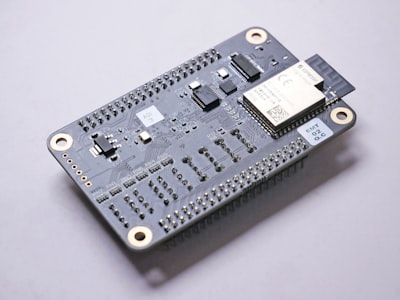
Integrating an ESP32 with a Bambu Lab 3D printer unlocks a wide range of possibilities far beyond what factory systems offer. This low-cost microcontroller, with built-in Wi-Fi and Bluetooth, enables remote monitoring, intelligent automation, and real-time data analysis. In this article, we explore seven practical ways to use an ESP32 to enhance your Bambu Lab, from environment control to enterprise cloud integration. Additionally, we’ll see how Q2BSTUDIO, a software and technology development company, can help you take these ideas to a professional level with custom software applications, artificial intelligence, and cybersecurity solutions.
1. Remote monitoring with a custom web dashboardThe ESP32 can connect to the printer via serial port or local network to read status codes from the Bambu Lab firmware. By hosting a small web server on the ESP32 itself, you can view real-time hotend temperature, bed temperature, print progress, and errors. This information can be exposed through a REST API for any modern dashboard. For a more robust solution, Q2BSTUDIO can design a monitoring system that integrates not only the ESP32 but also production plant data sources, using Power BI to generate historical reports and predictive alerts.
2. Remote on/off control and emergency managementBy adding a relay to the ESP32, you can control the printer’s power supply from anywhere. This is especially useful for safely shutting down the equipment if overheating or extrusion failure is detected. Additionally, you can integrate smoke or gas sensors to trigger an alarm and cut power automatically. Cybersecurity is crucial in these connected environments; that’s why Q2BSTUDIO offers pentesting and cybersecurity consulting to ensure your IoT infrastructure is not vulnerable to unauthorized access.
3. Smart filament manager with digital scalePlacing a load cell connected to the ESP32 allows real-time measurement of the filament spool weight. The microcontroller can calculate remaining material and send push notifications when it’s about to run out, preventing failed prints. Combined with a humidity sensor, it can maintain optimal conditions for hygroscopic filaments. This functionality can be extended to a cloud-based inventory management system using AWS or Azure. Q2BSTUDIO can implement the necessary cloud integration layer through its AWS and Azure cloud services, allowing filament status to be queried from any device.
4. Power failure detection and resumeAn ESP32 with a small voltage drop detection circuit can record the exact print point before a power outage. When power is restored, the ESP32 can send a G-code command to resume printing from that location. Although Bambu Lab already includes power-loss protection, an external ESP32-based system adds redundancy and detailed logs for post-analysis. For projects where continuity is critical, Q2BSTUDIO can design a complete process automation solution combining the ESP32 with backup batteries and intelligent recovery logic.
5. Smart camera with computer vision and AI agentsBy attaching a camera to the ESP32 (or using an ESP32-CAM module), you can capture periodic images of the print. With a lightweight AI model like TensorFlow Lite, the ESP32 can detect anomalies: lifted layers, tangled filament, or early signs of failure. If more processing power is needed, images can be sent to a cloud service where a custom-trained AI agent performs deeper analysis. Q2BSTUDIO develops custom AI agents that integrate with the ESP32 to monitor part quality in real time, reducing waste and improving productivity.
6. Cloud platform connectivity and Business IntelligenceThe ESP32 can act as a bridge between the printer and cloud services like AWS IoT Core or Azure IoT Hub. It sends temperature, humidity, progress, and energy consumption data to the cloud for storage and processing. With Business Intelligence tools like Power BI, you can create dashboards that correlate environmental variables with print success rates, identify failure patterns, and optimize print parameters. Q2BSTUDIO offers BI consulting to design these custom dashboards, turning your workshop data into informed decisions.
7. Automation of repetitive tasks with conditional rulesFinally, the ESP32 can execute local automation scripts, such as adjusting fan speed based on ambient temperature, activating a fume extractor when printing ABS, or sending emails upon certain events — all without relying on an external computer. For more complex automation involving multiple printers or devices, Q2BSTUDIO can design an orchestrated system through its process automation software service, integrating ESP32, sensors, and cloud platforms into a single workflow.
These seven ideas demonstrate that the ESP32 is far more than a simple add-on for your Bambu Lab: it is the gateway to an intelligent digital manufacturing ecosystem. From basic monitoring to advanced artificial intelligence, the possibilities are vast. If your company seeks to scale these solutions with a professional approach, Q2BSTUDIO accompanies you throughout the process, offering custom software, cloud integration, cybersecurity, BI, and AI agents. Combining open hardware like the ESP32 with quality enterprise software will enable you to optimize your additive manufacturing processes and gain a real competitive edge.