When a cybersecurity expert tells you not to enable the guest network on your home router, the logical thing is to nod and follow their advice. But I decided to argue with them. Not out of rebellion, but because from my experience at Q2BSTUDIO —a software development and technology company— I know that security is not an all-or-nothing switch, but a spectrum of tactical decisions. This article is not a chronicle of a confrontation, but an explanation of why, after a deep technical debate, I managed to get an expert to admit that a guest Wi-Fi network, when properly implemented, is a reasonable layer of protection for homes and small businesses.
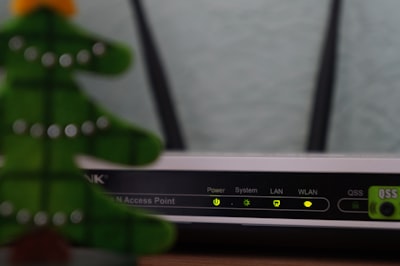
The debate started with a seemingly solid premise: home routers do not isolate guest traffic as reliably as corporate equipment. That is true. In enterprise environments, VLANs are managed by managed switches and dedicated firewalls; at home, the same firmware chip must separate two networks. The expert argued that this separation is fragile and that any router vulnerability could expose the entire local network. But I presented the reality of non-technical users: they have smart fridges, cheap surveillance cameras, voice assistant speakers, and most importantly, visitors who connect their phones without asking. Asking them to install a second router or to give up those devices is not realistic.
In cybersecurity we do not seek perfection, we seek risk reduction. Placing IoT devices on a separate network prevents a Chinese speaker with backdoors from scanning your personal computer or a friend's infected phone from stealing your banking credentials. It's like putting bare wires in an insulating conduit: not invulnerable, but it drastically reduces the chance of a short circuit. The expert finally relented when I presented data from our cloud AWS/Azure team: in cloud environments, virtual network segmentation (VPC, subnets) is considered a basic security practice, even though there is a remote possibility of jumps between containers. No one stops using subnets because of that risk; they simply accept it as a mitigating control.
From that dialogue, a hybrid solution emerged that we now implement for clients: using prosumer routers like Ubiquiti, which explicitly document their traffic isolation, and complementing them with monitoring tools based on AI to detect anomalies on the guest network. For example, an AI agent trained with normal traffic patterns can alert if an IoT camera starts sending data to unknown servers, even while on the separated network. We do this by integrating BI/Power BI to visualize flows and make quick decisions. It is not a full corporate solution, but it raises the security level without requiring advanced user knowledge.
Another key point of the debate was trust in firmware. The expert insisted that home router manufacturers do not explain how they implement guest networks, so you cannot know if they truly isolate. My response was that the same happens with many operating systems or applications we use daily: we trust them because they have been audited by the community or because the risk of not using them is greater. At Q2BSTUDIO we develop custom software that, when deployed in cloud environments, includes micro-segmentation as a standard feature, and we always document each security layer. But for a home or a small business, demanding that level of transparency is unfeasible. That is why we recommend combining a guest network with basic policies: disable remote router access, use strong passwords, and keep firmware updated.
The final result of the debate was a pragmatic agreement: guest Wi-Fi is not a magic solution, but it is a reasonable barrier when its limitations are understood. For a user who cannot afford a second ISP, who has insecure but useful IoT devices, and who receives frequent visitors, enabling that network reduces the attack perimeter. From our experience at Q2BSTUDIO, where we combine AI, cloud, and cybersecurity to deliver turnkey solutions, we know that perfect security does not exist, but practical security does. And winning a debate with an expert is not about imposing a truth, but about demonstrating that in technology, binary decisions are almost never the right ones.