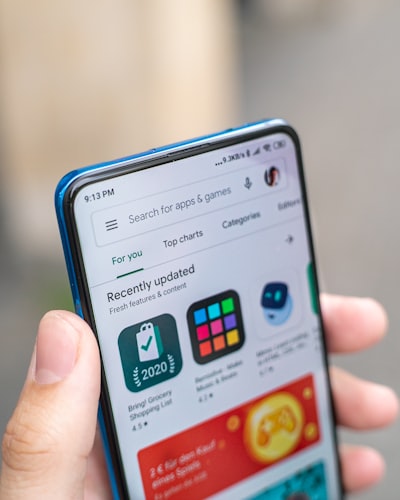
In 2026, the Google Play Store hosts nearly 1.9 million apps and generates tens of billions of dollars annually. Yet for any business needing store data —whether for competitor analysis, ASO optimization, market reports, or academic research— the reality is surprising: there is no official Google Play API to read third-party app listings, search results, or reviews. The Google Play Developer API only manages apps published by the developer; the rest of the ecosystem is left without a public endpoint. This gap, odd for a platform of this size, forces reliance on scraping. And scraping Google Play is not trivial: data travels inside deeply nested, unlabeled JavaScript arrays whose indices shift several times a year. The real engineering question is not 'how do I get Google Play data?' but 'how do I keep a Google Play scraper alive long-term?'.
From a business perspective, having reliable store data is strategic. Ratings, download counts, reviews, and competitor prices feed product, marketing, and positioning decisions. At Q2BSTUDIO, as a software and technology development company, we understand that building a robust infrastructure for capturing this data requires combining smart scraping, cloud processing, and advanced analytics. For example, a typical pipeline can start with a Node.js scraper, continue with storage on AWS or Azure, apply AI models for sentiment analysis on reviews, and end with a Power BI dashboard for trend visualization. All of this is part of the custom software solutions we offer, tailored to each client's specific needs.
The open source community has filled the gap left by Google with libraries like @mradex77/google-play-scraper, a modern Node.js package written in strict TypeScript that extracts app details, search results, category listings, paginated reviews, permissions, and data safety info. Its design prioritizes resilience against Google Play's structural changes: it uses specification layers with fallback paths, runtime validation with Zod, and daily tests against the real store. For a technical team, this drastically reduces maintenance. But for a business, the key lies in integrating that extraction into a broader ecosystem: automating periodic collection, storing data in a cloud data lake (AWS S3, Azure Blob), processing with AI agents that classify reviews or detect anomalies, and exposing results in Business Intelligence reports. At Q2BSTUDIO we have developed architectures that combine AI agents with scrapers to deliver real-time competitive intelligence.
The technical scraping process involves handling pagination tokens (especially for reviews, which use Google's batchexecute endpoint), respecting rate limits via throttling and exponential backoff, and caching results to avoid hammering the store repeatedly. The mentioned library offers functions like app() for full details (55 typed fields), search() for up to 250 results, list() for top charts by category, reviews() with infinite pagination, and extras like permissions() and datasafety() for the data safety panel. All of this works without an API key, headless browser, and with native fetch support from Node.js 22+. Migration from previous versions of the classic scraper is straightforward: swap the import and enjoy strict types and typed errors like NotFoundError or SpecError that indicate exactly which field failed and what paths were tried.
Beyond the technical aspect, there are legal and ethical considerations. Scraping public pages is legally a gray area; each organization must review Google Play's Terms of Service and local data protection regulations (especially GDPR for reviews containing personal data). Best practices include spacing requests (e.g., max 5 per second), aggressive caching, and not republishing content en masse. At Q2BSTUDIO we incorporate these safeguards into our cybersecurity and compliance projects, ensuring data extraction respects legal and technical boundaries.
The combination of scraping with cloud computing (AWS, Azure) allows horizontal scaling: launching dozens of workers to collect data from thousands of apps simultaneously, using message queues (SQS, Service Bus) to manage load and serverless functions for processing. The data can feed AI models that predict download trends or classify reviews by sentiment. And all of it can be visualized in Power BI dashboards integrating multiple sources (Google Play, App Store, social media). At Q2BSTUDIO we offer BI with Power BI and cloud AWS/Azure services to build these end-to-end solutions.
In summary, the lack of an official Google Play API is not an insurmountable obstacle, but an engineering challenge that requires planning, robust tools, and an integrated vision. With the right library, a well-designed cloud architecture, and support from custom software development experts, any business can access data from the world's largest store to make informed decisions. At Q2BSTUDIO we help our clients build these systems from scraper to dashboard, combining scraping, AI, cybersecurity, and Business Intelligence. Because when there is no API, engineering builds the bridge.