The interaction between humans and robots has reached a tipping point where simply performing tasks is no longer enough. In dynamic environments such as hospitals, warehouses, or public spaces, robots need to interpret subtle social cues — like gaze direction, walking cadence, or torso orientation — to move safely and naturally. The HumAIN (Human-Aware Implicit Social Robot Navigation) framework tackles this challenge by combining knowledge distillation with transformer models to equip robots with 'implicit human awareness.' This approach allows resource-constrained machines to predict trajectories and human behaviors by integrating multimodal information without requiring expensive sensors or heavy processing.
The key to HumAIN lies in a two-phase process. First, a teacher model based on transformers processes historical images, human skeletal keypoints, robot state, and its goal. It learns rich, context-sensitive representations that capture intentions beyond the visible. Then, through distillation, a lightweight student model replicates that knowledge using only the minimal inputs needed for real-time inference. This architecture bridges the gap between prediction and planning, enabling cost-effective robots — such as those deployed in logistics or assistance — to react fluidly to changes in human behavior.
From a technical perspective, HumAIN not only improves trajectory prediction metrics by 29.8% over traditional methods, but also redefines how we understand social navigation. Instead of relying on predefined rules or explicit behavior models, the system infers complex dynamics from subtle signals: a slight shoulder turn can anticipate a direction change, a pause in gait can indicate hesitation. This opens the door to applications where safety and human acceptance are critical.
For companies developing robotic solutions, adopting frameworks like HumAIN means rethinking the software architecture. It's not enough to integrate sensors; you need custom software that adapts AI models to available hardware, optimizes cloud resources (AWS or Azure), and ensures sensitive data protection through robust cybersecurity. At Q2BSTUDIO, we understand that artificial intelligence cannot operate in a technical vacuum. That's why we combine AI agent development with scalable cloud platforms and Business Intelligence solutions like Power BI, enabling our clients to monitor their robotic fleet performance in real time and make data-driven decisions.
Implementing HumAIN in production environments requires a comprehensive strategy. Distillation models, though efficient, need to be trained with representative datasets; here our expertise in AI comes into play to design data pipelines that capture the variability of human behavior. Moreover, integration with cloud infrastructure (AWS or Azure) allows remote model updates, while cybersecurity audits protect biometric information derived from skeletal keypoints. BI/Power BI reports, in turn, facilitate analysis of navigation patterns and route optimization.
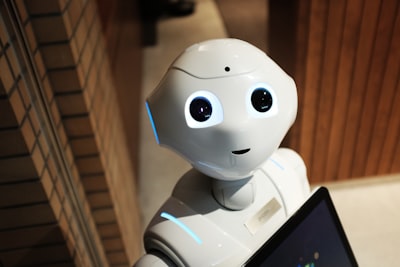
But the true value of HumAIN lies not only in the technology, but in how it transforms the user experience. A robot that anticipates our movements — that politely stops when detecting hesitation or speeds up when perceiving urgency — ceases to be a cold machine and becomes an empathetic collaborator. For businesses, this translates into greater operational efficiency, lower accident risk, and faster acceptance by employees and customers. In sectors like hospital logistics, where robots share hallways with gurneys and medical staff, precision in reading implicit cues can mean the difference between a smooth flow and organizational chaos.
Looking ahead, the combination of knowledge distillation with foundation models promises to bring social awareness to even smaller and more autonomous robots. The ability to infer human intentions without external sensors — only an RGB camera and a modest processor — will democratize access to intelligent navigation. Companies of all sizes will be able to integrate collaborative robots into their processes, provided they have the support of a technology partner that masters both AI and process automation as well as cybersecurity. At Q2BSTUDIO, we work every day to make that vision a reality: developing custom applications, deploying AI agents that learn from their environment, and protecting every layer of the system with advanced security practices.
HumAIN is not just an academic breakthrough; it is a roadmap for robots to navigate our world with the sensitivity we deserve. The technology is ready. Now it's up to companies to take the step.