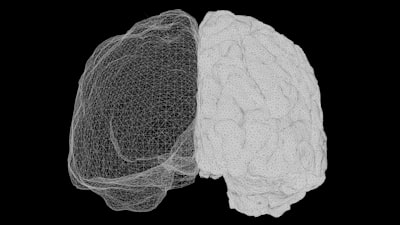
The integration of multimodal neuroimaging data, such as structural and functional magnetic resonance imaging, has opened new frontiers in the study of the human brain. However, the complexity and heterogeneity of these sources demand artificial intelligence (AI) architectures capable of efficiently encoding latent information. In this context, latent graph encoding emerges as a promising solution to represent functional connections and structural variations, enabling generative models like variational autoencoders (VAEs), transformers, generative adversarial networks (GANs), or diffusion models to extract meaningful patterns. This article explores how a graph-based multimodal generative framework (gMMVAE) outperforms traditional alternatives and how companies like Q2BSTUDIO apply these techniques to develop custom software in healthcare and neuroscience.
Multimodal neuroimaging combines data such as gray matter volume (GMV) and static functional network connectivity (sFNC). Traditionally, generative models treated these data as flat vectors, losing the inherent topology of brain connections. Latent graph encoding solves this by mapping functional connectivity into a low-dimensional latent space, preserving relationships between regions. Recent research demonstrates that architectures using modality-aware graph encoders surpass vectorized approaches in generation fidelity, reconstruction quality, and latent discriminability. For instance, the gMMVAE (Graph Multimodal Variational Autoencoder) not only generates realistic synthetic data but also accurately reconstructs original features, critical for biomarker studies.
From a business perspective, implementing these architectures in clinical or research settings requires robust and scalable software development. This is where Q2BSTUDIO brings its AI expertise, combining frameworks like TensorFlow or PyTorch with cloud infrastructure (AWS/Azure) to process large neuroimaging datasets. Cybersecurity is another key pillar: medical data is protected by regulations such as HIPAA or GDPR, so solutions must include encryption, access control, and audits. Furthermore, integrating Business Intelligence (BI) tools like Power BI allows researchers to visualize latent patterns and model performance metrics, facilitating clinical decision-making.
Process automation through AI agents adds another layer of value. For example, an agent can automatically preprocess scans, extract connectivity graphs, or run different generative models, comparing their performance without manual intervention. These agents, combined with custom applications developed by Q2BSTUDIO, reduce experimentation time and improve reproducibility. Hybrid cloud (AWS/Azure) provides elasticity for scaling from local prototypes to massive deployments, while cybersecurity solutions ensure data never leaves controlled environments.
In computational neuroscience, latent graph encoding also facilitates knowledge transfer across domains. For instance, a model trained on healthy subjects can adapt to pathologies like Alzheimer's or schizophrenia through few-shot learning or fine-tuning. Companies that develop custom software, like Q2BSTUDIO, can personalize these architectures for specific clients, integrating Power BI dashboards that monitor biomarker evolution over time. The flexibility of generative models even allows synthetic data generation to augment training sets when samples are scarce—a common problem in clinical trials.
Finally, the future of this technology points toward lighter, more efficient multimodal models capable of running on edge devices or in resource-constrained environments. Combining techniques like pruning, quantization, or knowledge distillation with cloud services such as AWS SageMaker or Azure Machine Learning enables companies to offer production-ready solutions. Q2BSTUDIO already implements these strategies for its clients, ensuring that the cutting edge in multimodal neuroimaging is accessible to hospitals, research centers, and digital health startups.