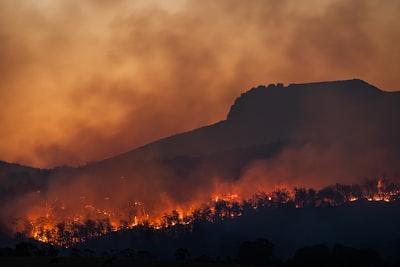
Accurate prediction of vegetation fuel density is one of the major challenges in wildfire management and prescribed burn planning. Knowing how biomass is distributed and evolves not only helps anticipate fire behavior, but also optimize resources, reduce risk and protect ecosystems. In this context, physics-guided models represent a significant evolution over purely statistical approaches, as they combine observational data with physical laws governing mass transport and the spread of a fire.
A physics-guided model does not simply learn patterns from historical data. It includes, within the algorithm loss function, differentiable terms that penalize physically impossible solutions. This ensures predictions respect principles such as mass conservation or fire spread rate. The result is a system with greater stability, less overfitting and more plausible predictions, even in extreme scenarios.
To model the spatiotemporal evolution of fuel density, advanced deep architectures are used. ConvLSTM networks combine convolutions and long short-term memory to capture spatial and temporal dependencies. Fourier neural operators, such as AFNONet, work in the frequency domain to handle variable resolutions and reduce computational cost. Temporal vision transformers, such as ViViT, process sequences of satellite images and attend to global patterns. All these architectures, integrated into a hybrid framework, offer a solid foundation for operational early warning services.
From a technical and business perspective, real deployment of these systems requires a robust software platform. It is not enough to train a model; it must be deployed, monitored and connected to real-time data sources. This is where custom software development comes in, enabling AI models to be integrated with each organization's workflow. A company like Q2BSTUDIO, specialized in software development and technology, can build these platforms adapted to the exact needs of the client: from satellite data ingestion to automatic report generation.
Cloud infrastructure is another fundamental pillar. Fuel density prediction models require considerable computing capacity. Using cloud services on AWS or Azure allows training to scale horizontally, store large volumes of data and expose models as secure APIs. In addition, the cloud facilitates collaboration between research teams, government agencies and private companies, which can share models and results under strict security protocols.
Cybersecurity cannot be left out. Prediction systems connected to critical infrastructure are potential attack targets. A physics-guided framework can fail if its input data is manipulated. Therefore, a comprehensive strategy must include security audits, endpoint protection and anomaly detection. Q2BSTUDIO offers cybersecurity and pentesting services to ensure that the information used in models is not compromised.
Another relevant aspect is monitoring and impact analysis. Once the model generates predictions, forest managers need to visualize results, compare scenarios and make data-driven decisions. Business Intelligence with Power BI solutions allow building interactive dashboards that combine model output with meteorological, topographical and operational variables. This turns a complex scientific model into an accessible management tool for middle managers and executives.
Furthermore, artificial intelligence is not limited to the predictive model. AI agents can act as autonomous assistants that recommend prescribed burn windows, adjust monitoring frequency or alert on extreme risk conditions. These AI agents integrate into the same platform and can execute actions under human supervision, improving traceability and trust. The combination of physics-guided AI models with automated processes creates a digital ecosystem that multiplies response capacity.
From an operational point of view, prescribed burns benefit enormously from this technology. A fuel density prediction system helps identify areas with excessive biomass accumulation, prioritize interventions and calculate the effect of each burn on risk reduction. Integration with drone data, satellite images and field sensors keeps the model constantly updated and improves its accuracy over time.
The value of these developments is not only environmental. For a consulting firm or a public administration, having such a platform represents a competitive advantage. Automation of analysis tasks, reduction of false positives and the ability to explain each prediction through physical principles generate savings in time and resources. Likewise, the possibility of running simulations in the cloud, without investing in on-premise hardware, democratizes access to cutting-edge technology.
An often underestimated aspect is data quality. Physics-guided models are only as reliable as the data they receive. Therefore, it is essential to design clean data pipelines with robust transformations and complete traceability. Integration tools and custom software development allow connecting heterogeneous sources: climate normals, moisture sensors, multispectral images, weather models, etc. Q2BSTUDIO brings experience in building these flows, applying data engineering and governance best practices.
Regarding model architecture, flexibility is key. Not all territories have the same vegetation, climate or topography conditions. A model pre-trained in one region may not work correctly in another. This is where local fine-tuning or transfer learning comes in. The platform must allow retraining models with local data and continuously evaluate their performance. This capability requires an experimentation and version registration infrastructure, which perfectly fits a DevOps/MLOps approach.
Ethics and responsibility are also part of the equation. Decision support systems in emergencies must be auditable. If a model recommends evacuation or a burn, those responsible need to justify that decision. Physical terms in the loss function act as an explicit constraint, but it is necessary to add an explainability layer: attention maps, sensitivity analysis and interpretability reports. Responsible AI solutions that a technology company can integrate are as important as the algorithm itself.
The future of fuel density prediction involves a deeper fusion of sensors, models and automation. High-resolution satellites provide near real-time imagery. IoT sensor networks transmit moisture and temperature data. Physics-guided models interpret those data and generate predictions. Finally, AI agents convert predictions into actions: notifications, adjustments of burn permits or crew assignments. This value chain materializes only when a technology company capable of integrating all the pieces exists.
In conclusion, fuel density prediction with physics-guided models represents a concrete opportunity to improve wildfire management and prescribed burns. The benefits in accuracy and stability have already been demonstrated in research environments, but their real impact will be achieved when implemented on robust software platforms, with cloud, cybersecurity, business intelligence and autonomous agents. Q2BSTUDIO positions itself as a technology partner able to transform these scientific advances into operational solutions, combining the rigor of physics with the agility of modern software.