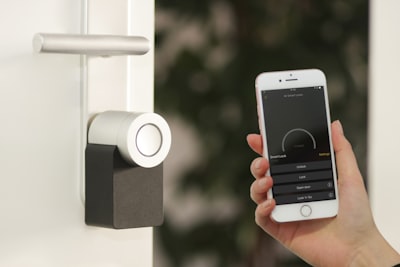
Smart home technology has moved beyond the enthusiast niche. More and more households and small businesses rely on platforms like Home Assistant to orchestrate lights, thermostats, sensors, and security systems. This centralization offers undeniable control, but it also introduces a point of fragility: configuration. What used to be a physical switch is now a YAML block that must be perfectly indented, with the correct types and proper quoting. A single mistake can leave a smoke sensor unresponsive or disable a smart lock routine. The need for tools that understand the home automation context, not just syntax, is becoming urgent.
YAML is praised for being human-readable, but that apparent simplicity hides a strict grammar. The most common problems include indentation errors, mixing spaces and tabs, unquoted scalar values, badly enumerated sequences, and duplicate keys. Classic validators catch some of these issues, but they cannot determine whether an entity called 'sensor.puerta' actually exists, whether its platform is compatible, or whether the initial state contradicts the intended logic. General-purpose language models, for their part, can suggest plausible fixes, but without any guarantee that the result is valid or safe. That is exactly where SmartHomeSecure enters the picture.
SmartHomeSecure is not a simple syntax corrector. It is a prototype that combines lightweight programmatic analysis with constraint-guided large language model generation. The core idea is to avoid handing an open-ended problem to an LLM and instead reduce the solution space. First, the YAML file is parsed, syntactic and semantic errors are identified, the error context is normalized, and automatic fixes are applied to routine defects. If interpretation is required, a prompt is built with clear constraints so that the model proposes a minimal and structurally valid repair. This combination of determinism and open-ended generation is precisely the key to its effectiveness.
The modular architecture is organized into four layers. The UI shell provides a visual environment where users upload their file and inspect the results. The feature orchestrator coordinates analysis and repair flows. The domain engine holds Home Assistant-specific rules: entities, automations, integrations, naming conventions, and folder structure. Finally, the integration layer connects to AI services and the file system. This design allows the underlying language model to be swapped without rewriting the central logic, a valuable feature in business environments where requirements change rapidly.
The repair pipeline begins with a lexical and structural analysis. The tool detects whether the file will not parse, whether blocks have inconsistent indentation, or whether data types do not match expectations. Next, it normalizes the error context: instead of showing only 'line 12', it provides the model with structured information about the block, the affected key, the incomplete value, and possible actions. Then it applies automatic rules, for example adjusting indentation, removing invisible characters, or completing single quotes. For more complex cases, such as a semantically inconsistent automation, a bounded request is generated with valid examples inside the prompt. In this way, the model works as a supervised assistant, not as a free oracle.
The evaluation was carried out on 100 real Home Assistant files with injected errors across five categories: syntax/parsing, indentation, mapping, sequence, and scalar quoting. Four models were tested: gpt-oss-20b, gpt-oss-120b, llama-3.1-8b, and llama-3.3-70b. Three of them achieved 100% error detection. The successful repair rate ranged from 87% to 93%. Even more relevant, manual verification found no hallucinated or incorrect repairs among successful outputs. This means that, when the system proposes a fix, it is safe to apply after minimal review. In a domain where a wrong configuration can have physical consequences, that trust is essential.
Naturally, SmartHomeSecure does not solve every problem. Errors that require physical context, such as a badly named room or an integration disabled on the device, are out of scope. The quality of the repair depends on the chosen language model and the richness of the normalized information. Privacy is also a critical issue: sending a complete YAML file to an external LLM can expose details about the home layout. Therefore, an enterprise implementation should consider local models or private networks, an area where cybersecurity plays a crucial role.
At Q2BSTUDIO we look at these innovations from a practical perspective. As a software development and technology company, we know that the value of a solution lies not only in the algorithm but in its integration with existing processes. SmartHomeSecure shows that language models can be tamed for high-precision tasks through prior analysis and constraints. This is the same philosophy we apply when building AI agents and custom software, where confidence in the result is as important as the generation capability.
For companies, this approach opens interesting possibilities: not only in smart homes, but also in maintaining cloud AWS/Azure configurations, supervising BI/Power BI dashboards, or automating processes with AI agents. A tool that can self-correct configuration files would reduce support hours and minimize downtime in production systems. In cybersecurity projects, the ability to validate configurations before deployment prevents accidental backdoors and poor hardening practices. The same logic applied to data management with Power BI would help analysts maintain coherent semantics in complex semantic models. In other words, AI-assisted repair is not a luxury; it is an operational necessity.
SmartHomeSecure illustrates a trend we will see repeated over the coming years: the convergence of static programming and generative artificial intelligence. Instead of replacing developers or advanced users, these tools augment their capabilities, reduce friction, and raise safety. For businesses, the lesson is clear: AI must be applied with boundaries, with verification, and with an auditable design. Only then will home automation, and automation in general, become truly reliable.