
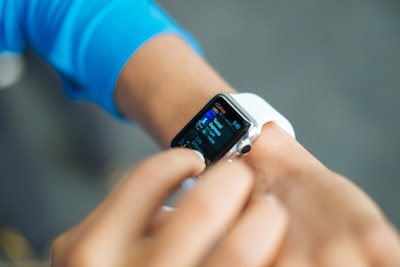
Human movement is one of the most informative signals our bodies produce. Every gesture, step, and pause contains a pattern that explains how we live, work, and age. Wearable motion sensors have turned this reality into a continuous stream of data, but for years the industry has treated this information as a simple complement to other metrics. Inertia-1 proposes a more ambitious vision: treating movement as a universal language that can be learned by a foundation model. This approach not only changes how the signal is analyzed but also opens the door to applications from preventive healthcare to athletic performance optimization.
Inertia-1 builds on an unprecedented critical mass of data: more than 18.2 million hours of accelerometer data from global sources. Scale matters because foundation models need variety to generalize. Training on a clean, homogeneous dataset is not enough; real usefulness emerges when the model learns to deal with real-world noise: different sensors, device placements, sampling rates, and temporal window lengths. If a model only works with a few specific wearables, its value in production collapses. That is why Inertia-1 examines how each data decision affects the final result.
The research also explores model architecture. Size, depth, parameter count, and pretraining objective interact in complex ways. Instead of assuming a single design works for everything, Inertia-1 systematically compares alternatives and offers practical guidelines for choosing the right configuration. This is crucial for companies building real solutions: a model that is too large may not run on edge devices, while one that is too small may fail to capture the richness of the signal. Finding that balance requires rigorous experimentation, not intuition.
Results are evaluated across fifteen datasets covering human activity recognition, freezing-of-gait detection, and disease prediction. This variety shows that a motion foundation model is not a niche tool but a reusable base. Detecting freezing episodes in Parkinson's patients requires understanding subtle micro-movements; disease prediction demands incorporating long-term patterns; and everyday activity recognition needs to distinguish highly variable human gestures. A model pretrained with Inertia-1 principles can adapt to all these cases with relatively light fine-tuning.
From a technical perspective, bringing these models into production introduces additional challenges. Data pipelines must be robust, training pipelines scalable, and inference efficient. Engineering teams also need to decide how to integrate the model with existing systems: where to store raw signals, how to version models, how to monitor drift, and how to guarantee acceptable latency. Cloud architectures AWS/Azure offer a solid foundation for these workloads, but the complexity lies not in infrastructure but in data orchestration and model quality.
One of the most valuable contributions of Inertia-1 is its open nature. The technology community needs clear references to compare results and reproduce experiments. By making data, configurations, and evaluation criteria public, this kind of initiative accelerates the innovation cycle. Companies also benefit: having a practical guide to choose window size, sampling frequency, or model architecture reduces the risk of investing in the wrong direction. In addition, engineering teams can save weeks of work by starting from a validated foundation. Transparency in applied research is a competitive factor, not an obstacle.
The business value of motion foundation models is enormous. In healthcare, they enable chronic patient monitoring and early fall detection. In the workplace, they help prevent muscle injuries and design safer environments. In professional sports, they provide a competitive edge by analyzing each athlete's mechanics. But turning this technology into a real product requires more than a model: it requires an application that connects the model with users, manages permissions, protects data, and presents information clearly. Custom software is the bridge between the algorithm and the decision.
Another critical aspect is privacy and cybersecurity. Motion data is highly personal: it reveals walking patterns, gestures, habits, and even possible medical conditions. If a health application fails to protect that data, legal and reputational consequences can be severe. Therefore, any wearable motion strategy must include encryption, access control, audits, and penetration testing. A good AI foundation must be paired with a solid security architecture, and that is where cloud architecture decisions and data governance policies come into play.
At Q2BSTUDIO, we understand that technology only creates value when integrated into real processes. Our experience in software development allows us to create custom applications that incorporate AI models, connect with platforms such as AWS or Azure, and deliver BI/Power BI dashboards so business leaders can make better decisions. We also work with AI agents that automate repetitive tasks and assist teams in real time. The ecosystem of wearables and motion foundation models is a perfect field for this kind of end-to-end solution, where innovation must coexist with reliability and security.
In short, Inertia-1 represents an important step toward a new generation of motion models trained at scale and designed to generalize. But the real impact will be measured when these advances are deployed in hospitals, companies, and homes. The combination of massive data, solid algorithms, cloud infrastructure, security, and intuitive applications will mark the difference between a scientific promise and transformative technology. With the support of an experienced development team, organizations can prepare to take advantage of this wave of innovation without compromising quality, privacy, or performance.

