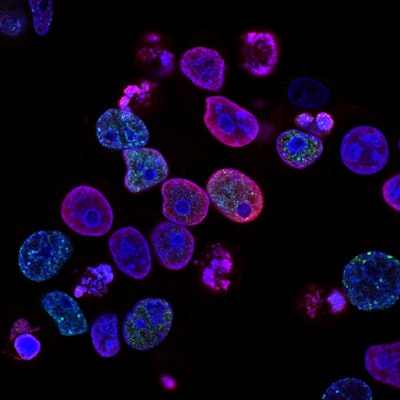
Computational biology has entered a new era thanks to single-cell sequencing and spatial transcriptomics. These technologies allow researchers to observe gene activity within tissues with unprecedented resolution, but they also generate enormous and highly heterogeneous volumes of data. To extract useful knowledge, it is necessary to reconstruct the dynamic processes that cells follow during development, immune response, or tumor progression. This field, known as trajectory inference, relies on complex mathematical methods and deep knowledge of both biology and computation.
Typical trajectory inference workflows require handling multiple libraries, comparing algorithms, tuning parameters, and validating results. Each sequencing platform introduces specific biases, each tissue has particularities, and each biological question demands a different approach. As a result, researchers spend too much time on integration and programming tasks that should be devoted to experimental design and biological interpretation. The need to automate these tasks without sacrificing quality is driving a new generation of AI-based tools.
SpaCellAgent is an innovative architecture that applies large language models to trajectory analysis. Instead of offering a fixed sequence of steps, it uses a team of agents that collaborate to solve the problem autonomously. The system interprets the user request, breaks it down into smaller tasks, selects appropriate techniques, executes analyses, and reviews results before delivering a conclusion. The whole process is documented, making it possible to reproduce the analysis and understand the decisions made.
This architecture represents a paradigm shift. Until now, automation in bioinformatics was limited to static pipelines chaining scripts with fixed parameters. With AI agents, the system can dynamically adapt to available data, test alternatives, and learn from its own mistakes. This opens the door for scientists without deep programming training to access advanced spatial and temporal analysis techniques. Democratizing these methodologies is a key step to accelerating biomedical research.
In the business world, the adoption of these technologies depends not only on algorithms. Organizations need stable, secure, maintainable software. At Q2BSTUDIO, a software and technology development company, we help build platforms that integrate artificial intelligence into production processes. We develop custom software for biotechnology, healthcare, and industry, combining the latest advances in generative models with solid software engineering practices.
Furthermore, a system like SpaCellAgent does not operate in a vacuum. It requires infrastructure capable of handling compute peaks, storing large volumes of genomic data, and ensuring service continuity. The combination of cloud AWS/Azure offers flexibility, elasticity, and managed services for deploying AI agents at scale. At Q2BSTUDIO, we design cloud architectures that adapt to the needs of each project, from research environments to high-performance clinical systems.
Cybersecurity also plays a central role. Genomic data is sensitive personal information and its processing is subject to strict regulations. Any trajectory analysis solution must incorporate encryption, access control, activity tracking, and protection against attacks. Building these capabilities from day one is more efficient than adding them later. Companies that want to harness the potential of AI in biomedicine need a holistic approach that treats security as an enabler, not as a brake.
In this sense, Q2BSTUDIO takes an integral perspective. On one hand, we build AI agents that automate complex data analysis tasks and generate interpretable narratives. On the other, we connect results with Business Intelligence platforms such as BI/Power BI, simplifying the visualization of cell trajectories and experiment monitoring. This integration allows scientific leaders and executives to make data-driven decisions without waiting for manual reports.
Process automation is one of the pillars of our solutions. Rather than simply producing a static report, an agent can periodically regenerate analyses, compare quality metrics, and alert when an experiment deviates from expectations. This level of operational intelligence anticipates problems and accelerates decision-making in high-throughput laboratories.
The utility of SpaCellAgent can be appreciated in specific cases. A researcher studying cardiac regeneration could describe in natural language the cell populations they want to compare. The system locates the data, applies appropriate quality controls, computes trajectories, and presents the results along with an explanation of the technical decisions. This way of working reduces the gap between the biological question and computational analysis.
The self-evaluation module is especially relevant for reliability. Every time the system runs an analysis, it compares its results against internal and external criteria, detects inconsistencies, and adjusts its behavior. If the topology of a trajectory contradicts known biology, the agent can propose an alternative algorithm or warn the user. This constant feedback loop is what differentiates a simple conversational assistant from a mature, autonomous analytical system.
From a biomedical standpoint, the applications are broad. Identifying transient cells involved in metastasis, reconstructing hematopoietic lineages, or studying drug response are just a few examples. The ability to integrate spatial and temporal layers in a single analysis offers a more complete view of tissue biology. Institutions that adopt this technology will be able to answer questions that were previously unapproachable.
Nevertheless, it would be unwise to ignore the limitations. Language models can make mistakes, and trajectory inference techniques are still evolving. Experimental validation remains necessary to confirm findings. Therefore, platforms must maintain a balance between autonomy and human supervision. The traceability of every step allows experts to review results with confidence and take ultimate responsibility for conclusions.
In conclusion, the arrival of multi-agent systems like SpaCellAgent marks a clear trend toward a more agile and accessible science. The combination of natural language processing, tool orchestration, and self-evaluation is redefining the role of software in research. To make these solutions reach their full potential, having technology partners who understand the scientific domain and turn it into robust applications is essential.
At Q2BSTUDIO, we are ready for that challenge. We offer software development, artificial intelligence, cloud AWS/Azure, cybersecurity, and BI/Power BI services, always with a pragmatic, results-driven approach. Our experience in complex projects lets us support laboratories and companies in building the next generation of analytical platforms. The future of computational biology is open; with the right architecture, any organization can participate.