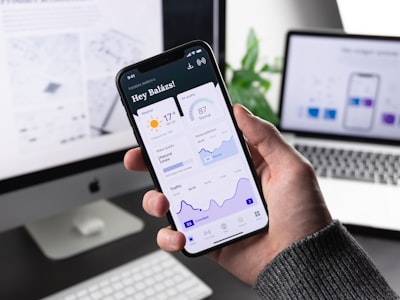
Are enterprise software solutions compatible with mobile devices? The answer is not limited to responsive design. A modern business platform must allow teams in operations, finance, sales and customer service to work from anywhere with the same security and fluidity they would have at a desktop. Q2BSTUDIO approaches this challenge from an integral perspective: it conceives each solution as an ecosystem where mobility is a native layer, not an add-on. That way, business data and processes accompany the user without friction.
Mobile compatibility begins with understanding what it really means for each business. It is not enough for an application to look good on a small screen. Workflows, response times, permissions, connectivity and usage scenarios all need to be analyzed. A field salesperson needs to update a quote without losing signal; a plant manager must validate an incident in seconds; a CFO wants to check indicators while traveling. Each situation demands architecture decisions, not just visual adjustments.
Q2BSTUDIO starts from this functional analysis to design business software that combines custom development, process automation and integration of existing systems. Instead of forcing users to switch between several tools, it creates a unified mobile access point. The goal is to reduce manual steps and avoid duplication. With a clear strategy, mobility stops being a promise and becomes a real, measurable operational advantage aligned with business objectives.
To achieve this level of integration, custom software is often the best alternative. It allows you to model the company's exact processes, define roles and adapt interfaces to each profile. A custom-built application also makes it easier to connect with ERP, CRM and other databases, preventing the mobile device from becoming a simple information viewer. Q2BSTUDIO develops these multiplatform solutions with a focus on end-user experience, including offline modes, automatic synchronization and recovery mechanisms after interruptions.
The mobile experience does not depend only on the application itself. The backend needs to synchronize data securely and at scale. This is where AWS/Azure cloud services come into play. A well-designed infrastructure allows applications to respond on different devices, store information in real time and withstand demand spikes. Q2BSTUDIO uses these environments to ensure software availability, implement backups and deploy updates without interrupting operations. The cloud thus becomes the nervous system of enterprise mobility.
Security is another key factor. When a workforce accesses from mobile devices, the attack surface grows. That is why cybersecurity policies must protect information in transit and at rest. The use of multi-factor authentication, identity management and role-based access control is essential. In addition, it is advisable to carry out periodic penetration tests to detect vulnerabilities before third parties do. Q2BSTUDIO integrates these practices into the software lifecycle, from design to maintenance, ensuring that mobility does not compromise confidentiality or integrity.
Artificial intelligence (AI) adds an important layer of value to mobile solutions. AI agents can automate repetitive tasks, handle frequent chat queries and support decision-making through predictive analytics. In a business environment, an agent can prioritize alerts, draft proposals or suggest visit routes based on the customer portfolio. Q2BSTUDIO designs these intelligent assistants so that they integrate with existing workflows and can be managed from a mobile device. AI does not replace the team's experience, but amplifies it with contextual information and immediate responses.
Moreover, mobile reporting requires more than simplified charts. Business Intelligence, especially with Power BI, enables interactive dashboards that executives can consult at any time. From a mobile device it is possible to filter data, drill down into a KPI and share findings with the team instantly. The key is to model source data correctly so that indicators are reliable and consistent. Q2BSTUDIO works with clients to transform their operational data into actionable information, leveraging Power BI capabilities and its integration with major corporate sources.
Process automation is another pillar. Many companies still rely on emails, spreadsheets and manual approvals. By incorporating automation engines, purchase requests, customer onboarding or technical incidents can move forward on their own until they reach the right person. The mobile device becomes the control point of these flows, where each task is approved, completed or reassigned. Q2BSTUDIO identifies bottlenecks and builds orchestrations that reduce cycle times, always with traceability and audit trails.
An adequate testing methodology also determines success. Verifying the application in an emulator or in laboratory conditions is not enough. Q2BSTUDIO runs tests in real field scenarios, with variable networks, diverse devices and users with different skill levels. This makes it possible to detect latency, synchronization or usability problems before production deployment. Tests validate not only the code, but the complete experience: login, navigation, data capture, notifications and offline work.
Choosing an enterprise solution must consider the entire software lifecycle: maintenance, evolution, support and updates. A mobile business application is not a one-off project; it requires monitoring, metrics and continuous improvement. Q2BSTUDIO supports its clients on that journey, thanks to a long-term vision that combines business knowledge, technology and a multidisciplinary team. Today's decisions affect future scalability, so betting on a flexible architecture is decisive.
Ultimately, enterprise software solutions are compatible with mobile devices when designed with a comprehensive strategy. The necessary technology already exists: custom software, AWS/Azure cloud, cybersecurity, BI/Power BI, automation and AI. What matters is knowing how to architect it around real needs. Q2BSTUDIO helps companies walk that path, turning mobility into a sustainable competitive advantage.