When a company decides to implement a software solution, it is not only choosing a technical tool: it is defining how decisions are made, who accesses information, when a task is automated and what behaviors are reinforced. Organizational culture is not a poster on the wall; it is the set of habits, conversations and agreements that are repeated every day. Software, when well designed, can transform those habits into something more coherent, measurable and human. That is why discussing business software without discussing culture is only half the conversation.
At Q2BSTUDIO, as a software development and technology company, we understand that cultural impact appears when the tool is designed from real processes, not from a generic catalog. A solution implemented by force generates rejection or indifference; a solution that acts as an ally of daily work is adopted naturally. Culture does not change by decree: it changes when people discover that software helps them do their job better.
The first step is often the development of custom software. Unlike closed packages, a custom application adapts to the language, workflow sequence and business rules of the organization. That has an immediate cultural reading: employees perceive that the tool has been designed for them and that their needs have been considered. When a company invests in custom software, it sends a message of respect and recognition to the team that will use it.
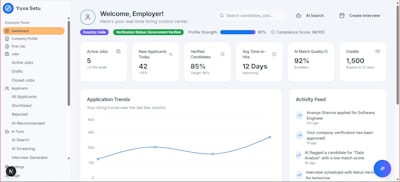
Transparency is another direct consequence of a good data architecture. If the organization has a dashboard with Business Intelligence, for example with Power BI, meetings change their nature. Instead of debating from impressions, teams test hypotheses with real indicators. That does not eliminate conversation; it elevates it. Questions become 'What is happening?', 'What can we improve?' and 'What do we learn from this result?'. Evidence fosters a healthier culture of accountability.
The cloud also produces deep cultural changes. Migrating to cloud services Azure and AWS is not just an infrastructure change: it is a statement of intent. The cloud allows teams to deploy test environments, scale services on demand and automate maintenance tasks. Technical teams stop feeling blocked by hardware bureaucracy and begin to experiment with a continuous learning mindset. That trial-and-error mentality spreads to other areas of the company.
Automation is not synonymous with downsizing, but with redefining tasks. When part of the operational workload is executed automatically, people can focus on activities that require judgment, customer relations or product improvement. Well-planned process automation has a cultural effect: it reduces the frustration generated by repetitive tasks and gives more meaning to work. It also frees time for teams to think about innovation, instead of spending hours on mechanical operations.
One aspect that is often forgotten is cybersecurity. Information security is not just a technical requirement; it is a manifestation of respect for people and customers. When an organization trains its employees in access management, threat detection and incident response, it is creating a culture of collective care. People understand that their daily behavior protects the shared project. That sense of shared responsibility reinforces internal trust and facilitates collaboration between areas.
Artificial intelligence takes this evolution one step further. Incorporating AI agents makes it possible to automate repetitive tasks, classify information, generate drafts and anticipate risks. At a cultural level, this change is significant: people move from executing procedures to supervising results and providing judgment. Work becomes more analytical and creative, which usually increases satisfaction and engagement. AI does not replace talent; it frees it to focus on what truly creates value.
For software to generate this culture, integration between systems is indispensable. A CRM that does not talk to the ERP, a sales database disconnected from the operations department, or a manual report prepared every week are signs of silos. When data flows horizontally, departments share the same language. And when they share language, they collaborate better. Integration is not only a technical issue: it is an organizational decision that breaks down barriers.
Another fundamental cultural factor is the pace of improvement. Modern software is not meant to be static: it is updated, improved and adapted. This expectation of gradual change has an effect on people. Culture moves from seeking initial perfection to understanding that each iteration brings the solution closer to the objective. Teams become used to measuring, learning and adjusting. Thus, continuous improvement stops being a slogan and becomes a visible habit.
Technology makes it possible to close the feedback loop with a speed that was previously unthinkable. Internal surveys, usage indicators, automatic incident detection or employee experience analytics offer signals almost in real time. When that data is shared openly, the organization becomes a learning system. There is no need to wait for the annual review to know what works: the software itself provides clues every day.
Not everything is automatic benefit. Software solutions can create friction if they are implemented without support. A common mistake is the platform syndrome: accumulating tools that no one looks at, that duplicate data, or that are used out of obligation. To avoid this, you need concrete use cases, clear owners and adoption metrics. Software should be a means to improve the work experience, not an end in itself.
At Q2BSTUDIO we approach technology projects with an integral view. We do not only design the solution; we help companies prepare the ground: we train teams, adjust success metrics and facilitate internal communication during the change. Our goal is that the organization does not have to change its culture to adapt to the tool, but that the tool reinforces the culture it wants to build.
In short, business software solutions affect company culture because they change the way people talk, decide and collaborate. Every screen, every automation and every report conveys a way of understanding work. If the technology is well designed, the culture becomes more transparent, bolder and more human. And if the company understands that link, it will be in a better position to compete, innovate and take care of its talent.