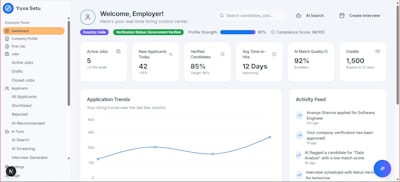
The intranet for distributed teams with chat has become a strategic lever for reducing operational costs without sacrificing collaboration. It is not just about having an internal messaging channel, but about creating a digital space where knowledge, workflows and communication converge. When teams work across different cities or countries, the cost of coordinating tasks, finding information and keeping processes coherent grows silently. A well-designed intranet attacks that problem directly.
Generic solutions often fall short. Standard portal templates do not reflect the real flows of an organization, and employees end up using parallel tools: email, external chat apps, shared folders. That fragmentation generates errors, duplication and a higher operational bill. Therefore, executives increasingly look for custom software development that captures the specific business logic, instead of adapting their culture to a rigid tool.
Q2BSTUDIO addresses this challenge with a combination of custom software, artificial intelligence and automation. Its team first analyzes bottlenecks: where time is lost, which tasks are repetitive, what information is duplicated, and which decisions depend on scattered data. Based on that diagnosis, a modular intranet is designed and can be deployed in phases, reducing financial risk and delivering results in weeks.
The chat component is no longer a simple message window. In a well-built architecture, chat is connected to internal processes: a conversation can generate a task, an alert can update a tracking dashboard, and a common question can be resolved by an AI assistant. In addition, the conversation log becomes a valuable knowledge source that feeds the company's document base.
Security is critical in distributed environments. Access to information must be protected through identity policies, role-based access control, and encryption in transit and at rest. In this sense, a solid cybersecurity strategy allows teams to collaborate from anywhere without exposing sensitive data. The infrastructure can be deployed on AWS/Azure cloud, with private networks, VPNs, and dedicated endpoints when AI needs to interact with local systems.
Artificial intelligence is not a decorative feature. In a modern intranet, AI is embedded in the search engine, document classification and approval flows. For example, an AI agent can summarize meeting minutes, extract agreements and pending items, or draft proposals from approved templates. These capabilities reduce the time people spend on low-value tasks and free capacity for activities that require judgment. Q2BSTUDIO develops this kind of AI with a practical, business-driven approach.
To measure impact, indicators must be defined before starting. Installing a tool and waiting for improvements is not enough. Q2BSTUDIO recommends setting a baseline of cycle times, error rates, hours spent on administrative processes, and compliance levels. With those metrics, you compare the before and after and justify the investment to finance leadership. Well-focused automation and AI projects usually show returns in 6 to 12 months.
Savings appear in several budget lines. On one hand, the time needed to onboard new employees is reduced, because all documentation and flows are available from day one. On the other hand, repetitive tasks such as copying data between systems, filling out forms, or chasing approvals are eliminated. Errors from manual data entry also drop, avoiding costs related to claims, reprocessing and rework.
By centralizing integrations with ERP, CRM or productivity tools, the intranet becomes the single point of operation. Q2BSTUDIO builds custom connectors on automation platforms, preventing each department from creating its own parallel solutions. That unification not only improves the employee experience, but also helps IT teams and reduces the maintenance cost of scattered tools.
Visibility is another benefit with direct economic impact. When area managers consult a BI/Power BI dashboard, they can quickly detect bottlenecks, unbalanced workloads, or processes that are not moving forward. That information makes it possible to redistribute resources before the problem becomes a bigger loss. The intranet not only stores information; it produces actionable data for management.
Cybersecurity also affects the bottom line. Implementing access controls, retention policies and audit logs reduces the risk of breaches and the impact of possible incidents. For companies that handle personal data or financial information, complying with regulations becomes easier and, when automated, a competitive advantage. Customer and supplier trust increases when there is a controlled digital environment.
An intranet for distributed teams with chat does not have to replace all previous systems. The usual approach is to connect with existing systems in order to centralize without breaking the current ecosystem. Q2BSTUDIO uses modern integration patterns that allow companies to leverage past investments and extend the life of corporate systems. The goal is to create a unified environment, not to start from scratch.
During implementation, it is advisable to start with a limited pilot. Select an area with a critical process, define an AI assistant or an automated workflow, and measure the impact. In a few weeks, real data will help adjust the solution and scale safely. This gradual approach reduces resistance to change and demonstrates value before large investments are made.
In short, reducing operational costs with an intranet is not about installing more technology, but about designing a better way of working. Combining chat, documents, processes and automation in a single custom platform creates a multiplier effect. Companies that act early and choose a technology partner with experience in custom software, artificial intelligence and cloud will be better positioned to compete in a demanding distributed environment.