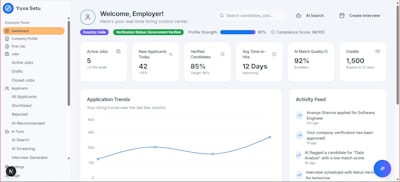
Companies with distributed teams face a paradox: there have never been so many communication tools, but employees have never had to navigate so many applications to complete a task. An intranet for distributed teams with chat solves this problem by becoming the single place where communication, knowledge and automation come together. It is not only about replacing a corporate notice board; it is about creating a digital workplace where every person finds the right information, at the right time, without relying on email chains or duplicated files.
To evaluate such a project properly, you need to understand three dimensions: technological, organizational, and business. The technological dimension includes data architecture, security and integrations. The organizational dimension covers team adoption and cultural change. The business dimension includes cost reduction, execution speed and information quality. A serious provider must be fluent in all three. Q2BSTUDIO, for example, approaches the corporate intranet as a living system, not a closed deliverable, and does so by combining custom software, artificial intelligence, automation and a clear vision of return on investment.
The first realistic expectation is that the project begins with a discovery phase. During this phase, the consulting team does not start writing code; it first maps current processes, identifies bottlenecks, defines baseline indicators and detects dependencies between systems. Without this previous work, any development risks solving the wrong problems. This phase usually lasts one to two weeks, but its impact on the final result is enormous.
Next, phased delivery is to be expected. A common mistake is thinking that an intranet with chat for distributed teams needs nine months of development before anyone can see it. Current methodologies prioritize a minimum viable product in weeks. This way, users start using the system early, executives observe tangible results, and adjustments are made with real usage data. In projects like those developed by Q2BSTUDIO, it is reasonable to expect an MVP in four to eight weeks, followed by short iterations until full deployment is reached.
Integration is another key expectation. An intranet does not work on an island. It needs to talk to the ERP, CRM, HR system and collaboration tools the company already uses. The most robust projects include connections with SAP, Odoo, Microsoft Dynamics, Salesforce, HubSpot, NetSuite, SharePoint and Microsoft Teams, among others. In addition, Active Directory is often a mandatory starting point for managing identities and permissions. If a provider promises an intranet without discussing integrations, that promise is, at the very least, incomplete.
One of the most valuable elements of a modern intranet is artificial intelligence. Not as a marketing extra, but as a layer that makes knowledge truly accessible. An AI model connected to internal documents can answer questions about policies, procedures or projects in natural language. This capability, known as retrieval augmented generation, works particularly well when combined with AI agents that undertake tasks: approving a request, updating a record, generating a report or escalating an incident.
Cybersecurity must be present from the design stage. An intranet with distributed chats handles sensitive information and therefore must include encryption in transit and at rest, role-based access control, activity auditing and alignment with regulations such as GDPR. When artificial intelligence interacts with internal systems, security becomes a network problem, not only a software problem. Using VPNs and Azure private endpoints is a common practice to prevent AI models from accessing data over public networks.
Infrastructure is a strategic decision. An intranet can be deployed on AWS or Azure, and the choice depends on factors such as data location, operating costs and the existing technology ecosystem. Q2BSTUDIO offers AWS/Azure cloud services and recommends the cloud when the client seeks elasticity and reduced maintenance; it also combines this recommendation with hybrid architectures if the company has on-premises systems. This flexibility is essential to avoid vendor lock-in.
Measurement is the only way to know whether the project works. A corporate intranet must generate usage data, process times, satisfaction levels and concrete savings. This is where Business Intelligence comes in. With a Power BI dashboard, for example, executives can see in real time which areas use the intranet most, which processes have been accelerated and where bottlenecks appear. Visibility is not a luxury; it is the mechanism that allows you to justify the investment and improve the platform continuously.
Regarding results, data observed in this type of project usually shows significant improvements. Teams reduce the time spent searching for information, processes move from days to hours, fewer errors occur from manual data capture, and IT teams stop solving repetitive tasks. It is common to see reductions of 30% or more in manual work in administrative areas, and a speed-up in process cycles ranging from 20% to 45%. This is not magic, but rather the result of removing friction that the intranet and automation make visible.
A certain adoption curve is also to be expected. Teams need time to change their habits. A good project includes training, documentation, and support during the first weeks. The platform is perfected as users contribute real data. Initial resistance is normal and is overcome when people realize that the tool saves them time instead of adding unnecessary learning curves.
Finally, it is useful to know what a coherent technology provider should offer. A demo is not enough. A good partner must deliver a plan with measurable objectives, a milestone schedule, a clear description of the architecture and a data governance model. Q2BSTUDIO, for example, develops turnkey projects that include custom application development, AWS/Azure cloud, cybersecurity, system integration and control dashboards. Its results-oriented approach, with mixed teams of consultants and engineers, allows companies to turn their intranet into a real productivity platform.