Choosing an intranet with chat for distributed teams has become a strategic decision, not just a technical one. Organizations need to connect people, information, and processes in an environment where no central office exists. A good intranet should operate as a single digital layer: conversations, documents, metrics, and approval flows. However, many initiatives fail because the right questions are not asked before signing a contract. This article proposes an evaluation framework for executives, IT managers, and product managers.
The first question is: what business problem will be solved and how will it be measured? You need to define concrete KPIs before choosing technology. For example, onboarding time for a new employee, speed of access to information, reduction of unnecessary meetings, or process compliance levels. A reliable provider should ask for data from your current operation and propose a baseline. Without that measurement, any innovation talk is just a promise.
Second, you need to review the technical architecture. A modern intranet is not an isolated portal; it must integrate with ERP, CRM, BI tools, and identity systems. If you already use SAP, Salesforce, Power BI, or proprietary software, the platform must be able to consume and publish data in those systems. In that scenario, custom software development has an advantage over a closed solution. A standard platform may seem cheaper at first, but adaptation costs often exceed the initial savings.
Another key question is security. Distributed teams access intranets from untrusted networks, personal devices, and multiple countries. You must ask how access is managed, whether multi-factor authentication, audit logs, encryption at rest and in transit exist, and how permissions can be revoked granularly. Data residency and compliance with regulations such as GDPR or industry-specific rules also matter. Cybersecurity is not an add-on module; it is part of the design. A partner with cybersecurity experience should explain how to protect the intranet without blocking productivity.
Integration with the cloud and with on-premise systems is often overlooked. If you have your own data centers or use AWS, Azure, or another provider, you need an intranet that coexists with that infrastructure. It is important to evaluate whether the solution can be deployed in public, private, or hybrid cloud, and whether it supports secure connectivity through VPN or private endpoints. The goal is not to migrate everything to a specific cloud, but to choose a model that respects your sovereignty, latency, and availability requirements. A provider with experience in AWS/Azure cloud services can help you define the best strategy.
Another factor is AI agents. Traditional intranets offer keyword search, but a truly useful intranet can interpret user intent and act accordingly. Ask whether the platform can include virtual assistants that summarize documents, generate answers from internal knowledge bases, or automate repetitive tasks. AI must be governed by business rules and human oversight. A responsible approach limits model access to necessary information, logs actions, and makes decision-making auditable.
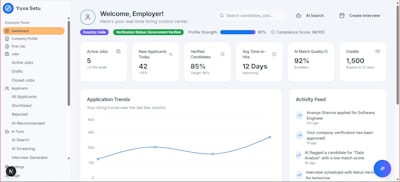
Beyond AI, automation and observability are essential. An intranet with chat should not be limited to communication; it should integrate with workflows to accelerate approvals and notifications. Ask whether it is possible to design process diagrams, connect them to external systems, and measure each step. Observability allows teams to identify bottlenecks and gives leadership real-time progress visibility. A BI dashboard in Power BI can become the intranet control layer, as long as data is synchronized correctly.
End-user adoption is as important as technology. You can have the most robust architecture, but if people do not find value, the tool will remain empty. Ask what methodology the provider uses to train teams, manage change, and collect feedback. It is also worth evaluating whether the interface can be customized by role: a worker, a salesperson, and an executive do not need the same information. The intranet should offer differentiated experiences without multiplying internal complexity.
The cost model deserves a separate analysis. A monthly license can hide integration, customization, training, and maintenance costs. That is why it is advisable to request a complete estimate with a defined scope. As a reference, in mid-scope projects, developing a custom intranet with chat can range from 25,000 to 80,000 euros, depending on the number of integrations and the governance level required. There are no universal prices; there are poorly defined scopes and providers that do not know how to say no.
Code ownership and portability are other criteria that prevent vendor lock-in. If the provider disappears or changes its strategy, what happens to your platform? Companies that build their intranet on custom software own the source code, documentation, and infrastructure credentials. This allows them to maintain the system with an internal team or switch partners without starting from scratch. Q2BSTUDIO, for example, delivers applications with complete code ownership and an admin portal so clients do not depend on an engineering department for every change.
Next, you need to ask about the experience of the responsible team. It is not enough for a company to say it builds software. You need to see real cases, technology stack, and working methodology. A good partner should show a portfolio with projects of similar complexity: Active Directory integration, Azure deployment, AI on internal documents, migration from SharePoint. It should also be willing to start with a pilot before building the whole system.
The implementation process is also decisive. Ask how sprints are organized, who validates priorities, how scope changes are managed, and when a deliverable is considered done. An intranet for distributed teams usually requires several phases: an initial useful version for a pilot group, progressive deployment by departments, and an optimization phase based on usage data. The provider must define quality mechanisms, not just deliver code.
Finally, think about long-term evolution. Technology changes, staff changes, and processes change. Your intranet must be able to grow without a complete rewrite. Evaluate whether the architecture supports new modules, whether it can be updated to new AI versions, or whether new data sources can be incorporated. Ask about update frequency, service level agreements, and post-launch support. A long-term relationship with a competent technical partner is usually more valuable than a license contract that does not evolve.
In summary, before choosing an intranet with chat for distributed teams, define the problem, audit security, demand architecture transparency, and make sure the provider understands your business. Q2BSTUDIO is a software development and technology company that combines custom applications, AI, cybersecurity, and AWS/Azure cloud environments to build result-oriented corporate platforms. A good intranet is not the one with the most features; it is the one that reduces friction and helps people make better decisions. Start by asking uncomfortable questions to your team and your candidates; that conversation will save you money and headaches.