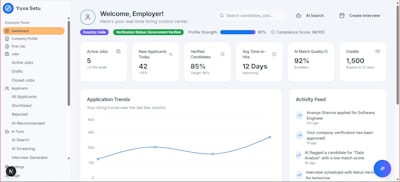
In 2026, companies with distributed teams need more than just a simple messaging tool. They need a digital space that centralizes information, connects people, and automates critical processes. An intranet for distributed teams with chat is that central piece: a single point where communication, knowledge, and daily operations come together. Far from being a static document repository, the modern intranet becomes a living system that supports the real work of every team.
What makes a modern intranet different? Integration. It is not a simple bulletin board or a corporate chat tool. It is a platform that combines communication, knowledge, processes, and data. Chat is the guiding thread: it allows questions to be resolved in real time, but it is also recorded to feed the company's memory. Teams can work synchronously and asynchronously without losing context. The intranet becomes the organization's collective brain.
The main challenge of distributed teams is not the lack of tools, but fragmentation. Information is scattered across emails, local documents, third-party applications, and dispersed conversations. Without a solid intranet, each team builds its own way of working. This creates duplication, errors, and loss of knowledge when someone leaves. A well-designed intranet organizes that chaos and establishes a single source of truth.
In 2026, expectations have changed. People want quick answers, simple interfaces, and experiences similar to those they use in their personal lives. A corporate intranet must offer an impeccable user experience, be available from any device, and adapt to each team's workflows. It must also be able to integrate with the tools the company already uses: ERP, CRM, office suites, and communication platforms.
To meet these requirements, many organizations choose to develop custom software. The reason is simple: no generic solution covers all the specific processes of a company. Custom software offers exactly the functionalities needed, without superfluous features that complicate daily use. It also facilitates integration with internal systems and allows the product to evolve as the business changes. Moreover, a custom application can incorporate security and accessibility criteria from the start, something vital in corporate environments.
AI is the big difference between a traditional intranet and an intelligent intranet. Thanks to language models, the intranet can understand employees' questions and find answers in internal documents. For example, a new project manager can ask «how is a budget approved?» and receive a summary based on current policies. This capability not only saves time, but also reduces the burden on support teams and allows people to access knowledge autonomously. AI agents take this idea one step further: they perform tasks, notify the right people, and keep records updated.
To support the intranet and its associated workload, infrastructure plays a key role. The AWS/Azure cloud offers managed services, high availability, and advanced security. Deploying the intranet in the cloud makes it possible to connect teams in different countries with low latency and without maintaining physical servers. In turn, infrastructure as code and DevOps practices make updates frequent and predictable. A good cloud architecture also enables horizontal scalability as the number of users or data volume grows.
Cybersecurity must be present from day one. An intranet for distributed teams with chat handles sensitive internal information, conversations, and personal data. Therefore, access must be protected with robust authentication, roles, and granular permissions. End-to-end encryption, event monitoring, and periodic audits are recommended practices. In addition, if the intranet includes AI, it must ensure that models do not leak confidential information and that data access is restricted by clear policies. Digital trust is a strategic asset, and security is its main guarantee.
Measurement and continuous improvement are essential. An intranet is not a project that ends; it is a service that is optimized. With Business Intelligence and Power BI tools, you can observe which areas use the platform most, which content is useful, and where bottlenecks appear. This data helps make informed decisions about internal communication, training, and automation. Impact analysis also makes it easier to justify the investment to management, since it turns the intranet into a cost center with measurable return.
Q2BSTUDIO is a software development and technology company specialized in building this type of solution. Its team combines software engineering, user experience design, and enterprise AI knowledge. The process begins with a discovery phase in which internal processes, necessary integrations, and success indicators are analyzed. This phase makes it possible to define the real scope and prioritize functionalities. Then a minimum viable product is developed so users can test it from the first weeks. From there, automation modules, AI agents, ERP connections, and dashboards are incorporated.
Organizations that have worked with Q2BSTUDIO highlight the clarity of the process and the practical approach. Instead of delivering endless documentation, the team builds software that solves concrete problems. The intranet is deployed in phases, so each iteration delivers visible value. This method reduces risk and allows the direction to be adjusted before investing in unnecessary development. The result is a platform aligned with the business, adopted by employees, and ready to scale.
In addition, the intranet integrates with the existing technology ecosystem. There is no need to replace the ERP, CRM, or office tools. The intranet acts as a connection layer and presents unified information. This integration is especially valuable for sales, operations, or human resources teams, who need up-to-date data without jumping from one system to another. Adoption also improves because employees find in the intranet a single gateway to their daily work.
In short, the best intranet for distributed teams with chat in 2026 is not the one with the most features, but the one that best adapts to how each organization works. The combination of custom software, AI, cybersecurity, cloud, and analytics turns the intranet into a competitive advantage. Q2BSTUDIO offers the technical experience and support needed to make this transformation a success. Companies that take this step will enjoy more connected teams, data-driven decisions, and a more transparent culture.