We live in a time when technology determines the difference between leading and reacting. Organizations no longer compete only on product or price; they compete on their capacity to adapt. Business software solutions represent that capacity when they are designed from strategy, not as a collection of isolated tools. A well-built digital ecosystem allows operations, customer experience, and decision-making to work as a single organism.
The starting point is not technology itself, but the process. Understanding how a team really works, where bottlenecks occur, and what information is needed at each moment is what turns a technical development into a business solution. That is why it makes sense to choose custom software development. A standard platform can cover generic cases, but it does not understand a company's culture or business rules. A custom-designed application incorporates those nuances and allows teams to work with less friction, with interfaces adapted to their tasks and with consistent data end to end.
Moreover, a custom solution does not mean starting from scratch in everything. The usual approach is to build on existing platforms, connecting ERP, CRM, billing systems, and internal tools. That is where a solid integration layer becomes necessary. When systems talk to each other, manual handoffs disappear and information flows. That integration must also consider scalability, because a project that today serves one department can become tomorrow the backbone of the entire operation.
The cloud is the natural environment for achieving that scalability. Cloud services on AWS and Azure make it possible to deploy elastic infrastructure, with computing and storage capacity that adjusts to demand. This is one of the keys to leading the future: not having to guess how many resources will be needed in six months. The platform grows with you. At Q2BSTUDIO we work with cloud-native architectures, migrations, and cost optimization, so that technology does not limit strategy.
In this ecosystem, cybersecurity cannot be a final add-on. Every application, integration, and data access must include security controls from the design phase. Multi-factor authentication, encryption of data in transit and at rest, identity management, and penetration testing are essential elements. Digital trust is a strategic asset: a serious incident not only causes economic losses; it also erodes relationships with customers and partners. That is why business software solutions must be born with a comprehensive security vision.
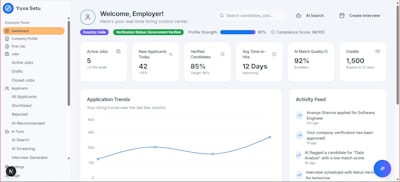
Another fundamental dimension is business intelligence. Having data is not the same as having information. With Business Intelligence and tools like Power BI, companies can turn scattered records into dashboards, indicators, and actionable alerts. A leadership team needs to see in real time what is happening in sales, production, or customer service. Power BI facilitates that analysis with interactive visualizations and data models that update automatically. A data-driven culture is not a fad: it is the foundation for anticipating problems and seizing opportunities before competitors.
Artificial intelligence goes a step further. AI agents are no longer limited to executing simple rules; they can interpret contexts, learn from patterns, and propose responses. In the business environment, an AI agent can classify incidents, generate reports, help a sales team prioritize accounts, or detect anomalies in operations. It can also act as a process assistant, reducing repetitive work and freeing time for higher-value tasks. The key is to combine AI with business knowledge and quality data.
Q2BSTUDIO understands technology as a transformation lever. As a software development and technology company, we support organizations throughout the entire cycle: from diagnosis and solution design to development, integration, deployment, and ongoing support. Our approach combines custom applications, process automation, artificial intelligence, cybersecurity, and cloud platforms. It is not about imposing a technology because it is fashionable, but about selecting the architecture and tools that best respond to business objectives.
To lead the future, companies must work on two horizons: the short term and the long term. In the short term, the priority is to eliminate friction and generate visible results. In the long term, it is necessary to build capabilities that allow adaptation when the market changes. This implies having a clear process map, a flexible technology architecture, and trained teams able to get the most out of the tools. Technology is an enabler, but people make the transformation happen.
Beyond a good architecture, companies need metrics that connect technology with results. A well-defined scorecard makes it possible to know whether a solution is fulfilling its mission or should be adjusted. That continuous improvement practice is what turns a one-off project into a permanent capability. Periodic process reviews, user feedback loops, and analysis of usage data help evolve the solution without having to start over.
Responsible leadership also has an ethical and governance dimension. Automation and AI must be aligned with clear principles of data use, transparency, and human control. Business software solutions can include auditing mechanisms, access management, and decision traceability to ensure that innovation does not compromise trust. In this way, technology becomes a driver of sustainable growth.
Ultimately, leading the future is not about predicting it, but about preparing to build it. Organizations that intelligently integrate their processes, data, and systems will have a structural advantage. Business software solutions are the vehicle to reach that scenario. The moment to start is not in a year; it is now, with thoughtful technology decisions, with partners who understand the business, and with a vision that puts people at the center.