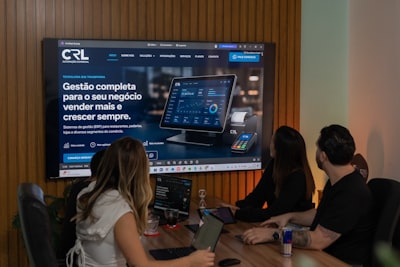
Digital transformation has changed the way companies organize work. Distributed teams are no longer an exception, but a structural reality. In this context, the corporate intranet evolves from a static document repository to an enterprise operating system that integrates communication, automation, data, and knowledge. The long-term vision of an intranet with chat for distributed teams is to turn it into the organizational nerve center, connecting every person, data point, and process in a secure and efficient way.
For years, companies have relied on improvised combinations of messaging tools, cloud storage, and email. This solves immediate needs, but creates fragmentation: information is scattered, context is lost, and teams spend excessive time searching for answers. A modern intranet is not just an internal site; it is a unified platform that makes sense of digital conversation and operational data. Achieving this evolution requires more than buying a chat tool; it requires a custom software strategy that adapts to the real workflows of each department and country.
The first step toward this vision is to understand that chat inside the intranet must be much more than a message channel. It should act as an intelligence layer connecting people with information, processes, and systems. When an employee asks something, the system does not simply retrieve a document: it interprets intent, consults authoritative sources, and delivers an actionable answer. This is the difference between a traditional intranet and a cognitive intranet, where generative AI and AI agents become digital coworkers.
Integrating AI into the intranet changes the rules of the game. A conversational assistant trained on internal documentation can dramatically reduce onboarding time, help resolve incidents, and automate repetitive tasks. But for this to be secure and sustainable, AI must operate on controlled data, with permissions and auditing. This is where cybersecurity and data governance come in. The goal is not to expose all corporate knowledge to a public model; it is to build a private AI architecture, connected to internal systems through AWS or Azure cloud and protected by secure tunnels.
The long-term vision also demands a cultural shift. Distributed teams need to trust that the central tool reflects the real state of the organization: who does what, which projects are in progress, what decisions have been made. Therefore, the intranet must be powered by real-time data from CRM, ERP, and other sources. A single portal where chat, tasks, metrics, and automation coexist provides visibility that was previously impossible.
Q2BSTUDIO understands this vision as a co-creation process. For a company that wants to move from a basic intranet to an intelligent platform, the starting point is an analysis of current workflows and the inefficiencies that chat and automation can solve. From there, a phased roadmap is defined: first an MVP that demonstrates value in weeks, then integration with critical systems, and finally evolution toward autonomous AI agents with human oversight.
One of the most relevant aspects is integration with the existing ecosystem. Most companies do not want to replace their CRM, ERP, or productivity suite; they want the intranet to connect with them. Q2BSTUDIO designs middleware and APIs that allow the intranet to speak with SAP, Odoo, Microsoft Dynamics, Salesforce, HubSpot, NetSuite, SharePoint, Microsoft Teams, and Active Directory. This integration layer is what turns the intranet into the central nervous system of the organization.
Security is a non-negotiable pillar. An intranet with chat for distributed teams handles sensitive information: commercial strategy, customer data, intellectual property. Therefore, the architecture must include role-based access control, audit logging, regulatory compliance, and encryption in transit and at rest. Q2BSTUDIO applies security-by-design principles and uses site-to-site VPN, private endpoints, and isolated AI environments to ensure interactions with generative models do not expose corporate data.
Another pillar of the vision is observability and business intelligence. When an organization operates with distributed teams, measuring process performance is complicated. The modern intranet incorporates business intelligence dashboards that show in real time the status of tasks, bottlenecks, response speed, and the impact of automation. Integrating Power BI or data visualization tools into the intranet allows leaders to make evidence-based decisions, not intuition-based ones. Q2BSTUDIO builds these dashboards to measure and connects them with existing data sources.
Process automation is another central dimension. Many questions that arrive in the corporate chat are actually requests for action: 'I need access to a system', 'I want to approve a purchase', 'What is the status of my request?'. These tasks can be automated with flows that connect the intranet to back-office systems. Thus, chat stops being a simple bulletin board and becomes an execution interface. AI agents can, with supervision, draft responses, update records, generate reports, and escalate exceptions.
The human factor remains the center. Technology should free up time for people to focus on creative, strategic, and relationship work. A well-designed intranet reduces friction and allows new employees to integrate faster, teams to collaborate regardless of time zone, and knowledge not to be lost when someone leaves the company. The long-term vision is not to replace people, but to create a more resilient organization with greater learning capacity.
Q2BSTUDIO brings a combination of software engineering, AI expertise, and business vision. Its approach to intranet with chat projects includes a discovery phase where KPIs, dependencies, and operational constraints are defined. Then functional increments are delivered in short cycles, with clear prioritization of use cases that generate immediate value. The client receives a custom web application with an administration portal to configure prompts, monitor costs, and manage users without depending on a technical team for every change.
The results observed in this type of initiative are tangible. In key processes, it is common to reduce cycle times by 20% to 45%, lower operational costs by 15-35%, and eliminate a significant portion of repetitive manual work. In addition, data quality improves, errors decrease, and management obtains a clear view of performance through unified dashboards. These numbers are not generic promises; they are the consequence of applying an integration and automation methodology centered on value.
The adoption phase is as important as development. An intranet with chat only works if people use it naturally. Therefore, Q2BSTUDIO designs simple user experiences, with a conversational search engine that understands everyday language, contextual notifications, and shortcuts to frequent actions. Training and change management are part of the service, because digital transformation is not achieved by installing software, but by getting people to change their habits.
Looking ahead, the intranet will evolve into an intelligent operating system with reasoning capabilities. AI agents will not only answer questions; they will participate in planning, detect risks, and propose improvements. The combination of generative AI, advanced automation, and cloud platforms creates a scenario where companies can operate with less friction and more agility. Of course, this requires human oversight, continuous auditing, and ethical algorithm design.
Organizations already building this vision start from a strategic reflection: the intranet is not an IT expense, but an investment in execution capability. A distributed team with access to a unified platform, intelligent chat, real-time data, and automated processes can compete on equal terms with much larger companies. The difference lies in the quality of the architecture, integration, and the ability to evolve incrementally.
In conclusion, the long-term vision of an intranet with chat for distributed teams is ambitious but achievable. It involves moving from disconnected tools to a connected platform, from scattered information to structured knowledge, and from isolated automation to integrated intelligence. Q2BSTUDIO helps companies travel this path with a practical, secure, and results-oriented approach. The starting point is not technology; it is the purpose of creating a more efficient, transparent, and sustainable organization over time.