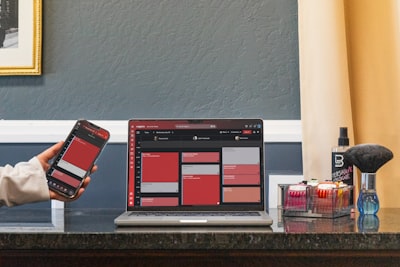
Digital transformation has changed how companies organize work. Teams no longer share an office or schedule, but they still need to feel part of the same information flow. An intranet with AI and chat for distributed teams is no longer a simple bulletin board; it becomes the operating system of the organization: a space where people access knowledge, collaborate in real time and automate repetitive tasks. Building that platform takes more than installing a generic tool; it requires custom software that adapts to the real processes of each business.
Why is a traditional intranet not enough? Standard solutions offer communication modules and document repositories, but they rarely understand the context of a company. A distributed team needs quick answers: where a document is, who owns a process, which decision was made last week. AI makes it possible to search with natural language, summarize conversations and recommend actions. Corporate chat, in turn, reduces dependency on email and creates an auditable record of decisions. Custom development brings these pieces together in a single experience.
The architecture of an intelligent intranet must separate layers: web interface, knowledge engine, AI models, integrations and data layer. Q2BSTUDIO usually builds on cloud AWS/Azure because these environments provide managed services for identity, storage and machine learning. The choice is not a whim: it allows the number of users to scale without redesigning the system and simplifies integration with Active Directory or Microsoft Entra ID. In addition, cloud infrastructure makes it easier to deploy in different countries and reduces latency for remote teams.
Cybersecurity must be present from day one. It is not enough to put the intranet behind a username and password; organizations need encryption in transit and at rest, role-based access control, event auditing and VPN connections for hybrid environments. Q2BSTUDIO integrates cybersecurity practices into the development cycle, so AI does not become a gateway for data leaks. Models must operate with least privilege and usage logs. Companies that handle personal data also need to align with GDPR, and that means designing the platform from a privacy-by-design perspective.
A modern intranet must also measure its own impact. By connecting usage data with BI/Power BI tools, managers can see which areas have adopted the platform, which searches remain unanswered and which processes consume more time. Q2BSTUDIO integrates dashboards that translate activity logs into decisions. That visibility makes it possible to adjust training, detect bottlenecks and justify the investment.
Chat for distributed teams is not just messaging. To be useful, it must integrate with calendars, tasks and the knowledge repository. An employee can ask the chat which tasks are due this week and get an answer generated from real data, not from a static document. Conversational AI must understand the project context and the user role. That requires training models on internal documentation and connecting them to project management APIs. Q2BSTUDIO usually starts with a pilot in one department and then extends the system to the rest of the company.
The next level is AI agents. They do not only answer questions; they execute tasks. An agent can receive a vacation request, validate the balance, check the manager approval and update the HR system; another can classify invoices, extract amounts and launch an approval in the accounting flow. In an intranet with chat, agents appear as participants that ask for confirmation when there is ambiguity. Q2BSTUDIO designs these agents with human oversight and with the ability to audit every decision.
Integration with business systems is another key piece. Many companies already use ERP, CRM or support tools and do not want to replace them. An intranet with AI can connect to these platforms through APIs to offer a unified view. For example, a salesperson can ask about the status of an order and get an answer combining data from the CRM and the ERP. The key is to model permissions correctly and stop AI from accessing information that does not correspond to the user role. Q2BSTUDIO applies software integration patterns so the intranet coexists with the existing technology ecosystem.
Employee adoption is usually the hardest challenge. If the intranet forces people to change tools without a clear benefit, teams go back to informal channels. That is why it makes sense to design workflows that save time from day one: automatic answers to frequent questions, meeting summaries, expiration alerts and assistance with document writing. Q2BSTUDIO works with functional teams to identify high-impact use cases and measures activity trends in each department. The goal is for the platform to be perceived as an assistant, not an obligation.
User experience also matters. An intranet with AI and chat only generates value if people actually use it. Therefore design must prioritize clarity, speed and relevant search results. Employees should not need a manual to find knowledge; AI interprets intent and returns the right answer. Q2BSTUDIO combines user experience principles with technical integrations so the tool feels natural from the first log-in. In addition, chat should offer shortcuts, useful notifications and a search bar that understands synonyms and typos. That level of polish is what separates an intranet that is used from one that is abandoned.
For a project of this kind, Q2BSTUDIO recommends an incremental strategy. First, define the workflows that will be piloted, the success indicators and the security requirements. Then build a minimum viable product that includes AI search, chat and two or three critical integrations. In a few weeks, users start working with the platform and their feedback guides the next iterations. This approach reduces risk and makes it possible to show results before expanding scope.
BI systems also help close the loop. It is not enough to implement technology; you need to know whether it is generating value. Q2BSTUDIO sets up dashboards that compare data before and after implementation: onboarding time, incident resolution speed, number of requests solved by AI agents, employee satisfaction. That information drives continuous improvement and communicates return on investment objectively. These dashboards can be combined with automatic alerts to detect declines in usage or processes that are getting stuck.
Companies that lead in distributed work understand that technology is not an end, but a means for people to do their jobs better. A well-designed intranet with AI and chat can become the meeting point of the organization: it preserves culture, reduces friction and accelerates collective knowledge. But that transformation is not achieved with a standard solution. It requires strategic vision and a technology team capable of executing it. Q2BSTUDIO brings that combination of specialization in AI, cybersecurity and custom software development so each company can build its own intelligent work system.