Intranet with chat for distributed teams: more than a messaging tool. Organizations with remote teams need a digital space where conversation, documentation and processes coexist. A well-designed corporate intranet reduces reliance on email, avoids file duplication and gives context to every decision. In this scenario, integrated chat is not an add-on: it is the thread that connects people, data and workflows.
Security also conditions usefulness. No one will adopt a system that does not provide guarantees about who can see what, who modifies a document or whether a conversation can be audited. Therefore, intranet design must start with the access model, information classification and activity logs.
A common first step is to map processes. You need to know what tools each department uses, how information flows, which data is critical and what regulations apply. This discovery phase helps avoid two major mistakes: buying a tool nobody understands or building an oversized system that does not solve real problems.
The right technology depends on each organization. In some cases, a modular solution based on open source works best; in others, a platform integrated with Microsoft Teams and SharePoint. Companies with specific needs usually choose custom software because they require deep integrations, personalized workflows and total control over data.
The technical architecture must include several layers. The first is presentation: a responsive interface that works on mobile and desktop. The second is the service API, which connects chat, documents and workflows. The third is the data layer, with encryption, partitioning and backups. Each layer can scale independently and must be monitored.
Information security is not limited to authentication. Documents must be classified by sensitivity level and automatic retention policies must be applied. For example, a contract requires more restrictions than an onboarding guide. The system should prevent downloading certain files, add watermarks and log every access. In cybersecurity, prevention matters, but detection and response matter even more.
Cloud platforms provide capabilities that are hard to replicate on premises. With AWS or Azure, companies can use managed directories, key services, load balancers and managed databases. But the cloud does not remove responsibility: policies must be configured correctly and permissions reviewed regularly. Q2BSTUDIO helps choose between cloud AWS/Azure based on data residency, latency and cost requirements.
In environments with highly sensitive data, the safest approach is usually a hybrid architecture. The intranet runs in the cloud, but connections to the ERP or HR system are made through VPN tunnels and private endpoints. This avoids exposing internal systems to the Internet and maintains traceability of every connection. Q2BSTUDIO has implemented this type of infrastructure in projects requiring certifications and external audits.
Artificial intelligence is incorporated gradually. A first level is intelligent chat: answering questions about internal policies, holidays or procedures. A second level is AI agents, which automate tasks: drafting reports, extracting data from an invoice, creating tickets or summarizing a meeting. Every action must be verifiable. Humans keep oversight over critical decisions.
From a technical standpoint, AI relies on private language models and corporate document ingestion. Using RAG, the model searches relevant fragments and produces an answer with citations. This provides accurate answers without training the model on proprietary data. If the model is hosted on client infrastructure, confidentiality remains under their control.
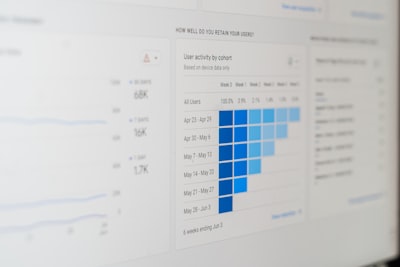
Continuous measurement reveals whether the platform is delivering results. A BI / Power BI dashboard can show the number of resolved searches, onboarding time, most active channels and usage frequency. Integrating these indicators with the intranet turns the platform into a source of management information.
The adoption plan is as important as development. A technically perfect platform is useless if people keep using email for everything. You need to appoint champions in each team, provide short training, highlight success stories and collect feedback during the first weeks. Leadership must lead by example and use the intranet for regular communication.
The budget should be assessed based on return, not just initial cost. If an intranet prevents costly errors, reduces search time and accelerates decisions, it pays back quickly. Q2BSTUDIO works with a clear scope and delivers a proposal with phases, milestones and metrics. Companies can later extend it with automation modules, advanced analytics or AI agents.
Frequently asked questions: How long until we see a first result? It depends on scope, but a first usable deliverable is usually ready within a few weeks. Is it compatible with Microsoft Teams? Yes, it can be integrated as a complement or as a central repository. Does AI replace employees? No, it frees them from repetitive tasks and allows them to focus on higher-value work.
Conclusion: An intranet with chat for distributed teams is an investment that combines culture, processes and technology. Data security is not a constraint, but a design condition. Q2BSTUDIO brings experience in custom software, cloud, cybersecurity, BI and AI agents to build solutions that clients can operate autonomously. The best intranet is the one that is used, measured and continually improved.