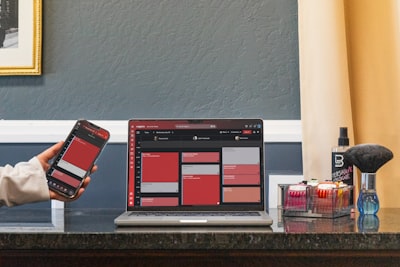
Companies with distributed teams face a complex challenge: information lives in too many places. The chat from one meeting, the document from a project, a client email and the production database are not always connected. The usual consequence is that people lose time looking for context, duplicate work and make decisions with outdated data. An intranet for distributed teams with chat solves this problem by turning communication into part of the workflow, not an isolated tool.
A modern intranet is not a static repository of manuals and policies. It is a work platform where conversations, documents, indicators and automations coexist in the same space. When chat is integrated, each message can be linked to a process, a client or a project. That link allows anyone, anywhere, to understand why a decision was made and what the next step is.
The value of chat inside the intranet appears especially in asynchronous environments. When a team works across multiple time zones, you cannot wait for the right person to answer in real time. With a well-designed intranet with chat, questions are recorded, answers are associated with context, and the knowledge generated remains available to the whole organization. Moving away from individual memory is one of the greatest productivity accelerators in distributed companies.
The impact can be seen in everyday tasks: preparing a proposal, resolving a customer issue or coordinating a delivery. Instead of checking email, searching through the general chat, opening the management system and asking a colleague, the employee finds the information in one place. This reduces cognitive load and frees time for higher-value work.
Onboarding also improves. A newly hired professional needs context about processes, tools and people. An intranet that combines structured chat, living documentation and semantic search allows the new employee to resolve their first doubts without slowing down the whole team. The learning curve is shortened and, with it, the time it takes for the hire to start generating results.
The problem of disconnected tools goes beyond wasted time. When communication and data are separated, inconsistencies appear. Two departments can work with different figures, a client can receive contradictory information, or a manager can approve a task based on an outdated version of the project. These failures are often attributed to human error, but they are actually information design failures. A centralized intranet reduces the margin of error by offering a single reliable reference.
In this context, Q2BSTUDIO approaches the intranet as an engineering project, not as the installation of a closed product. The software development company applies a methodology based on understanding the real processes of each organization and building a tailored solution that fits them. Its experience in custom software makes it possible to adapt every module to specific needs, instead of forcing employees to change their routines for a generic system.
Customization does not mean giving up speed. An intranet for distributed teams with chat can begin with a basic core: chat organized by project, document search, user profiles and notifications. From there, integration modules are added with the tools the company already uses: CRM, ERP, support platforms, cloud storage or business intelligence. In this way, the investment is protected and the system can evolve without needing a complete redesign.
Artificial intelligence expands the possibilities of an intranet far beyond classic keyword search. Q2BSTUDIO applies generative AI models and techniques such as retrieval augmented generation, better known as RAG, to answer questions using the company's internal documentation. The system can explain a policy, summarize a long conversation, locate a specific document or suggest the next step in a process, always citing the source from which it obtains the answer.
Over time, the intranet can incorporate AI agents that act autonomously within rules defined by the organization. An agent can classify emails, update records, create tasks from chat messages or alert a manager when a metric deviates. These agents do not replace human judgment, but they drastically reduce repetitive work and allow people to focus on decisions that require judgment.
Technology architecture matters as much as functionality. For distributed teams, cloud infrastructures such as AWS or Azure offer the flexibility to scale on demand and to access the most advanced AI services without investing in own hardware. Q2BSTUDIO designs cloud deployments with security and observability criteria, so that technical teams can monitor performance and act proactively when an incident occurs.
Cybersecurity is a starting requirement, not an add-on. An intranet concentrates sensitive information about clients, employees and internal processes. Therefore, access must be controlled through roles, multifactor authentication, encryption in transit and at rest, and audit logs. Q2BSTUDIO embeds cybersecurity practices in every layer of the system and recommends periodic penetration testing to detect vulnerabilities before they can be exploited.
Operational visibility is another key benefit. When the intranet is connected to corporate data sources, managers can consult real-time dashboards. With business intelligence tools such as Power BI, they can visualize productivity indicators, response times, intranet adoption levels and process bottlenecks. That information supports data-driven decisions and justifies new investments with objective figures.
One of the most common mistakes in intranet projects is underestimating integrations. A platform that does not talk to the customer management system, the ERP or the HR tool ends up abandoned. Q2BSTUDIO works with custom integrations so that the intranet acts as a coordination layer between systems, using APIs and secure interoperability models. The goal is for information to flow automatically and for people not to have to enter the same data twice.
The implementation methodology also makes a difference. An intranet project should not start with an endless list of technical requirements, but with an analysis of the results the company expects to achieve. Q2BSTUDIO proposes a phased process: an initial discovery stage, a minimum viable product in a few weeks, and continuous improvement cycles. In this way, the team perceives benefits from early stages and management can evaluate return on investment on a real solution.
Employee adoption is the critical factor that defines success. A technically perfect intranet is useless if people do not use it. Design must prioritize ease of use, relevant notifications and a smooth mobile experience. In addition, the chat channel must be perceived as a safe place to ask and share, not as a surveillance system. Companies that clearly communicate the benefits and provide practical training achieve much higher adoption rates.
Metrics help measure that success. Organizations that incorporate an intranet with distributed chat usually observe a reduction in time spent looking for information, an improvement in deadline compliance and fewer repeated errors. They also see fewer coordination meetings, because context is captured in writing in the tool. These effects accumulate week after week and justify investment with data, not just perceptions.
Choosing a technology partner is a strategic decision. An intranet for distributed teams with chat can become the central infrastructure of the organization for years. Therefore, it is worth working with a company that delivers the source code, documents the architecture and offers training so that the internal team is autonomous. Q2BSTUDIO positions itself as a technology ally with experience in custom software, AI, cloud and cybersecurity, able to support both growing SMEs and large organizations.
The key is not to buy another tool. It is to build a system that makes the whole company more productive. For that, three elements are needed: a solid technology platform, a data and artificial intelligence strategy, and a people-centered approach to those who will use it. The intranet stops being an IT project and becomes a business transformation project.
Companies that take that step will notice a tangible difference in the way they work. Information will be available to everyone, conversations will generate reusable knowledge, and teams will be able to coordinate regardless of physical distance. In short, an intranet for distributed teams with chat is much more than a place to store files: it is the operating system of teamwork.