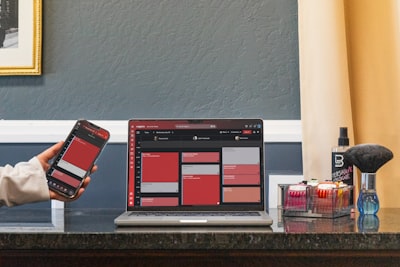
The ultimate guide to replacing SharePoint with an intranet in Zaragoza in 2026 starts with a conviction: the intranet is no longer a bulletin board or a document repository; it has become the organization's nervous system. Many companies in Zaragoza and Aragon have used SharePoint as document support for years, but the way we work, the rise of artificial intelligence and the demand for real-time data make it necessary to revisit that decision.
SharePoint fulfills a function, but it imposes limits. Updates, permission configuration, search experience and rigid workflows end up consuming time and resources. When a company needs to adapt the software to its processes rather than the other way around, a generic platform becomes a brake. Replacing SharePoint with a custom intranet does not mean making life more complicated; it means gaining freedom to shape the tool according to business logic.
The decision is more strategic than technological. The ultimate goal is to help every employee find the right information at the right time, without relying on emails, shared folders or duplicate files. In 2026, companies that solve this problem improve productivity and reduce friction. That is why an intranet is no longer measured by the number of hosted documents, but by the time it saves people.
When starting a migration process, the best approach is to analyze real use cases: how vacation requests are approved, how invoices are managed, how an incident is communicated, how knowledge is shared with a hybrid workforce. Each of these processes requires a small integration and automation architecture. This is where SharePoint shows its age and where a modern platform can prove its value.
The cloud is one of the pillars of this transformation. A well-designed infrastructure based on cloud AWS/Azure makes it possible to deploy the intranet with high availability, continuous backup and billing tied to real consumption. For the business landscape in Zaragoza, with industrial, logistics and services sectors, this is an undeniable advantage. There is no need to maintain an in-house data center to ensure the intranet is available when the business demands it.
The cloud also acts as the foundation for integrating external services: CRM systems, ERP, HR applications, factory terminals or email solutions. A modern intranet orchestrates all these systems instead of being a warehouse that duplicates data. With an API and event layer, information flows and remains consistent. This is especially useful for companies with multiple sites or commercial teams that need secure access from anywhere.
The second pillar is artificial intelligence. A semantic search engine can understand a user's question and provide a concrete answer by quoting the original document. An embedded virtual assistant can draft summaries, fill in forms or prepare recurring reports. These capabilities are not futuristic; in 2026 they are already considered standard in the most advanced intranets. What matters is not the technology itself, but the time it gives back to people.
AI agents go even further. They do not just respond: they act. An agent can read an incoming request, check room availability, update a system or open an incident in the correct department. For these agents to be useful, they need an orderly knowledge base, well-defined permissions and human oversight. A custom intranet is the ideal environment to implement them safely.
Security is the essential counterweight. In the process of replacing SharePoint, companies must review who has access to what, how long data is kept and what audit trails are generated. Encryption in transit and at rest, multi-factor authentication, risk-aware sessions and an incident response plan are basic elements. Cybersecurity is not an add-on: it shapes the architecture.
The analytical side turns the intranet into a management tool. With BI/Power BI integration, a dashboard can display, alongside daily work, the metrics that matter: project progress, team hours, costs per department or compliance levels. Information stops being buried in Excel and becomes decisions.
Behind an efficient intranet there is solid development work. User experience, page speed, accessibility and ease of administration are architecture decisions. From the first days, employees must feel that the new tool is more comfortable than the previous one. If adoption fails, the project fails, even if the technology is excellent. That is why design must be people-centered.
Q2BSTUDIO embodies this vision in Zaragoza. As a software development and technology company, it combines product engineering, artificial intelligence and automation to create intranets that work from day one. It does not impose a license or a mold; it designs a solution around each client's operations. To do this, it has software architects, AI consultants and integration specialists capable of tackling projects of different scales.
Q2BSTUDIO's approach is to understand the process first, then the technology. Each project starts with a diagnosis, includes prototypes and is developed in agile cycles. In this way, the company validates real functionalities and adjusts priorities as it goes. The result is an intranet with a high adoption rate because users take part in the design. The difference lies in the details, in knowing which part can be automated and which must remain human.
Change management is as important as code. An intranet does not deliver value if people do not use it. So the launch communication must be planned, short training sessions delivered, internal ambassadors appointed and adoption measured over time. This task is not secondary; it is part of the migration. A truly supportive partner is also involved in this phase.
When looking for a provider, companies should ask about integration experience with custom software, the maintenance model, the ability to evolve the platform and how results are measured. A commercial presentation is not enough: references, visits to real projects and proof of concept should be required. There are options in Zaragoza, but not all offer the same level of commitment.
The timeframe of a migration depends on how mature the processes are. Some projects are completed in weeks, with a phased approach, and others take several months because they involve complex integrations. What matters is not to stop the business. Experienced teams know how to parallelize activities, migrate data incrementally and provide direct support to users during the first days.
The future must also be considered. The 2026 intranet must be able to incorporate new AI agents, connect to more data sources and grow without an expensive rewrite. This is achieved with a modular architecture, stable APIs and clear documentation. Again, the provider must demonstrate that it thinks long term, not just about the first delivery.
All in all, the definitive guide to replacing SharePoint with an intranet in Zaragoza in 2026 recommends combining strategy, technology and experience. Companies that work with custom software, AI, cloud AWS/Azure, cybersecurity and BI obtain an intranet that is closer to the business. Q2BSTUDIO brings this combination to Zaragoza, with a senior team and a clear commitment to measurable results. The perfect time to start is now, with a diagnosis, a pilot and a clear vision.