Replacing SharePoint with an intranet: real case in Valencia 2026
During digital transformation, many organizations realize that SharePoint no longer covers the real needs of operations. What was once a useful repository becomes a maze of documents, complex permissions, and searches that do not provide answers. That is why a company in Valencia decided to test an intranet designed from scratch, with current technology, integrated AI, and a business-results approach.
The starting point was common: the team used SharePoint as a document base, but knowledge was lost between folders and versions. Access to information depended on knowing where to look, and internal processes required too many manual steps. Management needed visibility, but reports were built with spreadsheets and a lot of time. The goal was not just to change tools, but to regain operational control.
Q2BSTUDIO began with a discovery phase in which workflows were mapped, bottlenecks identified, and success indicators defined. Instead of imposing a closed solution, the team designed an architecture based on a custom software platform, capable of integrating with existing systems such as ERP, CRM, Microsoft Teams, and Active Directory.
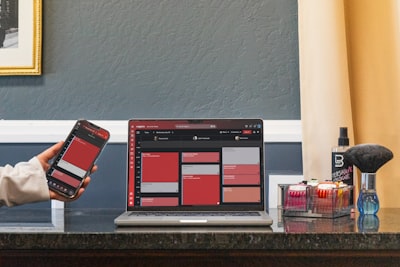
The new intranet was built as a modular application. Users found a single entry point for documents, news, processes, and data. Integrations with common tools were implemented through APIs and connectors, allowing information to flow securely between systems. User experience stopped being an afterthought and became the center of design.
The most distinctive part came with the addition of artificial intelligence capabilities. Stored documents began to be processed by language models that understand context. An employee can ask a natural question and get an answer with the exact source. Search no longer returns a hundred results; it returns the solution. This applied AI approach reduced the time spent locating information and improved decision quality.
AI agents were also integrated for repetitive tasks: classifying documents, validating data, answering internal queries, or updating records. Each agent operates within a permission framework and with checkpoints where a person validates critical actions. In this way, automation is used without losing human supervision.
The infrastructure was deployed on AWS/Azure cloud, taking advantage of managed services from each provider. This made it possible to scale resources on demand, ensure availability, and simplify maintenance. Security was essential: role-based access policies, encryption of data in transit and at rest, and a cybersecurity plan that includes audits and penetration tests. For a company handling sensitive data, trust is not negotiable.
Another important piece was visibility. The intranet incorporated BI dashboards, specifically Power BI panels, that show key operational indicators in real time: cycle times, workload, errors, and adoption levels. Management can make decisions based on updated data, not last month's reports.
The implementation methodology was divided into phases. First: define scope and metrics. Second: build a minimum viable product in a few weeks. Third: deploy to production in a controlled way with a pilot group. Fourth: adjust and train the team before final launch. This approach reduces risk and allows users to validate each advance.
The results observed in this real case in Valencia exceeded initial expectations. Manual repetitive work was noticeably reduced, response times of internal processes shortened, and task accuracy improved. For management, the biggest difference was the ability to see what is happening at any moment and react before a problem grows.
Adoption was also key. The intranet did not arrive as an imposition but as a tool that solved real problems. Training sessions focused on day-to-day use cases. The teams in Valencia saw that their work was easier and began to propose improvements. When technology is understood as help, transformation accelerates.
Q2BSTUDIO, a software development and technology company, was the partner in charge of carrying out this transformation. Its experience in custom applications, AI, automation, cloud, and cybersecurity made it possible to build a solution that not only replaces SharePoint but proposes a more productive way to work. For any organization that values its time and data, this type of intranet is a natural step.
In conclusion, the real case in Valencia shows that replacing SharePoint is not an end in itself. It is the means to achieve a more agile operation, with less friction and better data. The technology exists, and when applied with method, results come quickly. The question is not whether to modernize the intranet, but when to take the step.