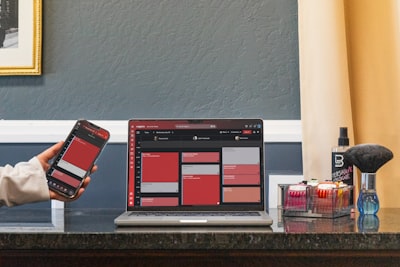
The challenge of taking an intranet that replaces SharePoint to production in Seville in 2026 demands more than installing a tool. It requires rethinking how people access knowledge, how teams collaborate, and how internal processes are automated. Many companies in Andalusia live with SharePoint structures that have grown without order, with inconsistent permissions, duplicate sites, and unreliable search. The opportunity lies in building a modern digital platform, connected to the organization's technology ecosystem and ready to incorporate artificial intelligence securely. Q2BSTUDIO, as a software and technology development company, approaches this process combining sound engineering practices, cloud experience, and a focus on measurable business outcomes.
The decision to replace SharePoint can be motivated by the need to improve user experience, reduce search time, or eliminate manual work that depends on emails and spreadsheets. However, the real value is not only in the technical migration, but in the transformation of workflows. Before starting the implementation, it is advisable to carry out a context analysis: inventory existing sites and documents, identify critical integrations, measure current usage, and define indicators that make it possible to evaluate improvement. This discovery work avoids moving chaos to the new platform and lays the foundations for an intranet that truly adds value.
The process map should include approval flows, document management, internal communications, resource booking, and employee services. Each flow has an owner, a level of criticality, and an impact on operations. This information makes it possible to prioritize which modules should be built first and to design a realistic roadmap. It also helps estimate the effort needed to integrate the intranet with HR, project, procurement, or maintenance systems. At this point, participation by the people responsible for each area is key to aligning the solution with business objectives and preventing the platform from becoming an empty showcase.
The architecture of a modern intranet must respond to the needs of a company in Seville and its subsidiaries in other countries. Building custom software applications allows each module to be adapted to the business logic: document management, files, employee directory, internal training, or department portals. At the same time, integration with existing systems is essential. SharePoint, Microsoft Teams, Active Directory, SAP, Odoo, or Salesforce should not be islands; the intranet should act as an experience layer that unifies data and processes. Q2BSTUDIO designs integrations through APIs, events, and data services so that information flows reliably and without duplication.
The choice of cloud provider influences performance, cost, and security. In corporate intranet projects, the most common approach is to deploy on AWS/Azure cloud architectures that offer automatic scaling, managed backups, and identity services. The infrastructure must be configured with private networks, load balancers, managed databases, and separate environments for development, testing, and production. A good cloud design not only guarantees availability, but also allows resources to be adjusted to demand and keeps spending predictable. This avoids paying for idle capacity and makes it easier to grow when headcount or processes require expanding the platform.
Cybersecurity is a non-negotiable pillar in an intranet that replaces SharePoint, especially if the platform will handle personal data, financial information, or intellectual property. It is necessary to apply a zero-trust model: multi-factor authentication, role-based access control, session expiration, encryption in transit and at rest, and audit logging of all relevant actions. Connections between cloud services and on-premises systems must be protected through VPN and private endpoints, avoiding exposure of services to the internet. Q2BSTUDIO brings cybersecurity expertise to review network configuration, monitor vulnerabilities, and establish incident response policies.
A corporate intranet should facilitate decision-making. Implementing Business Intelligence dashboards makes it possible to visualize activity indicators, tool adoption, response times, or workload by department. Power BI, for example, can connect to intranet data and transactional systems to provide up-to-date reports. These dashboards help area leaders understand what works and what needs adjustment, with a global view that was previously scattered across multiple information sources. In addition, information can be exported with the level of detail and permissions appropriate to each role.
Artificial intelligence is the big differentiator for intranets in 2026. Instead of limiting itself to keyword search, the platform can understand user intent, summarize long documents, recommend internal experts, or generate answers based on the company's knowledge base. To achieve this, AI agents can be deployed with retrieval-augmented generation (RAG) architectures, which connect language models with internal data sources and return cited, verifiable answers. In this scenario, Q2BSTUDIO helps design enterprise AI solutions with privacy, cost control, and human supervision in the most impactful processes.
Integrating cognitive services and language models into the intranet must be done with clear governance. It is advisable to deploy private models or use certified cloud environments, configure restrictions by user, and establish consumption limits. This way, teams can experiment with virtual assistants, meeting summaries, or automatic document classification without compromising security. Human supervision is still necessary to validate relevant answers and correct deviations. In addition, AI management tools should be designed so that the business can adjust prompts, budgets, and permissions without permanently depending on the technical department.
Taking the intranet to production does not end with development. The deployment phase includes preparing a CI/CD strategy to automate testing and releases, defining rollback and backup protocols, reviewing the database to optimize indexes and queries, and configuring observability to detect errors before they affect users. Documentation and knowledge transfer to the operations team are equally important to ensure the system can evolve. Q2BSTUDIO works with production readiness checklists so that the launch is orderly and risks are controlled.
Once the intranet is in production, continuous improvement becomes the priority. Usage metrics, user response times, reported incidents, and internal satisfaction levels are the basis for evolving the product. Companies that want to maintain their competitive advantage should plan improvement cycles every few months, incorporating new AI functions, integrations, and workflow changes without jeopardizing system stability. This incremental approach makes it possible to learn from data and adjust investment to the areas that generate the most impact.
In the context of Seville, corporate digitalization has accelerated, and demand for internal platforms that improve productivity is growing. Having a nearby team that understands local realities and European regulatory implications facilitates communication and project adaptation. Moreover, the combination of custom software, cloud, and process automation turns the intranet into a strategic investment, not a simple technology expense. Replacing SharePoint with a modern intranet in 2026 is an opportunity to gain agility and turn corporate knowledge into a competitive advantage; success depends on rigorous planning, flexible architecture, integrated security, and the intelligent use of artificial intelligence.