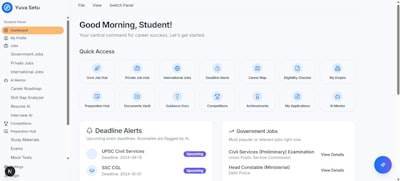
The decision to replace SharePoint with a custom intranet usually arrives after teams have lost too many hours searching for documents, approving tasks in scattered channels, or asking a colleague where the latest version was saved. In Madrid, many mid-size companies face the same limit: the tool that once organized knowledge has become a repository full of exceptions, duplicates, and permissions that no longer reflect the real structure. The answer is not to buy another closed platform, but to build an intranet that understands the processes, people, and data of the organization. That is exactly the kind of project where Q2BSTUDIO brings a product mindset rather than an installation mindset.
Q2BSTUDIO, a software and technology development company, approaches these projects with a product logic. First, it identifies the workflows that sustain the business: information queries, internal requests, management reports, ERP or CRM integrations. From there, a modular system is built with a clean data layer and an interface that employees adopt without needing a manual. This approach requires experience in custom software, because every company has different business rules, terminology, and permissions. An intranet that replaces SharePoint should not replicate the previous structure; it must redesign the way people access knowledge and perform their work.
The first common mistake is treating the problem as a content migration. SharePoint is not replaced by moving folders; it is replaced with an information governance model. This means defining who can create content, what lifecycle each document has, how sensitive information is archived, and what records are kept of each access. At this point, cybersecurity is not a final addition but a design requirement. Q2BSTUDIO protects the intranet with centralized authentication, role-based access policies, encryption in transit and at rest, and audit capabilities to comply with GDPR and with each company's internal policies.
Technology matters, but what creates the most value is integration. A modern intranet does not live in isolation: it needs to talk to the ERP, the CRM, Microsoft Teams, and invoicing or HR tools. The most efficient way to achieve that cohesion is to build an automation layer that connects systems without friction. In Q2BSTUDIO projects, this layer usually relies on process orchestrators and custom APIs that let data flow between applications. As a result, the intranet is no longer a destination where people go to look for information; it becomes the place where requests are started, decisions are approved, and indicators are checked in real time.
Artificial intelligence creates the qualitative leap. Once the intranet has a well-structured knowledge base, assistants can be integrated to answer questions about internal policies, generate summaries of files, or prepare draft responses. Q2BSTUDIO integrates AI agents directly into business processes, with human supervision at critical points. The difference between an isolated experiment and an enterprise solution is precisely that governance: agents know which data they can access, which actions they can execute, and when they must escalate a decision to a person. This reduces risk and accelerates adoption.
For those agents to work, the infrastructure must be solid and flexible. A corporate intranet can be deployed on cloud AWS/Azure, with private networks, VPNs, and secure endpoints when connecting to on-premise systems. Infrastructure choice is not a technical detail: it affects scalability, operating cost, and the ability to innovate. Q2BSTUDIO works with hybrid architectures that let the company keep control of its data while taking advantage of cloud elasticity. This balance is especially important for companies with offices in several countries or specific sector regulations.
Another layer that turns the intranet into a management tool is analytics. When every department sees a dashboard with open requests, resolution times, and bottlenecks, the conversation with leadership changes completely. Integration with BI/Power BI makes it possible to build dashboards that combine intranet data with data from transactional systems. This way, managers do not need to wait for a monthly report: they can see in real time the team workload, project status, or compliance with service-level agreements.
The implementation method is as important as the technology. Q2BSTUDIO uses a phased process that starts with a short analysis of processes and the definition of KPIs. Then a first functional deliverable is built in a few weeks, deployed in a pilot area, and adjusted before extending it to the whole organization. This approach reduces risk, enables early measurement, and builds internal support because users see real progress instead of an abstract transformation. In addition, the pilot helps calibrate training, communication, and support before the final rollout.
Measuring results should not be limited to page load speed or number of visits. The relevant indicators are operational: average time to complete a request, hours spent on administrative tasks, percentage of documents with traceability, accuracy of recorded data. By comparing the initial situation with the later one, organizations usually find that the intranet directly impacts the productivity of operations, finance, HR, and customer service teams. In a recent case in Madrid, the operations department eliminated manual copying tasks, reduced duplicates, and gave management visibility that previously required days of analysis.
What sets Q2BSTUDIO apart is the combination of technical capabilities that usually appear separately: custom software, automation, AI, cybersecurity, and data. That combination allows the client to avoid depending on a closed product or on a huge team to maintain the system. The intranet is delivered with documentation, dashboards, and a portal from which users themselves can manage certain aspects of AI and automated workflows. The IT department keeps autonomy and management has real visibility of the platform's cost and performance.
Ultimately, replacing SharePoint with an intranet that works as a corporate operating system is a strategic decision that affects work culture, data quality, and the ability to scale. Madrid companies that want to leave static repositories behind and move toward AI-based and automated management need a partner that understands both software and business. Q2BSTUDIO offers that complete view: a team capable of designing, building, and deploying a custom intranet with security, metrics, and a clear roadmap.