
Migrating a corporate intranet from SharePoint to a custom platform is not simply a software change. It means redefining the technical architecture, access permissions, integration with other systems and the data governance model. A security and architecture audit, carried out before the replacement starts, avoids costly mistakes and lays the foundation for an intranet that delivers real business value. This article explores the critical areas that need review, the role of AI in the process and how Q2BSTUDIO approaches these projects from both a technical and business perspective.
The first task any company must face is understanding what actually lives in its SharePoint environment. Over the years, these platforms become chaotic repositories: orphaned sites, duplicated libraries, credentials with excessive permissions and partially abandoned web applications. Without a prior audit, the IT team risks migrating those problems along with the content. It is therefore wise to carry out a technical and functional inventory that classifies content according to its legal, operational or historical value. That inventory is the starting point for defining the scope of the new intranet and designing a clean architecture from day one.
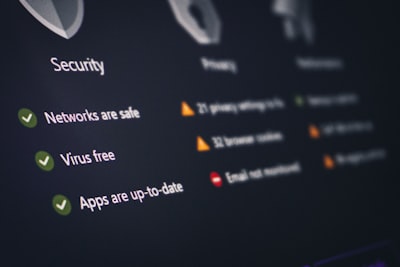
From a cybersecurity standpoint, the audit must review authentication, authorization and role-based access control. It is not enough to know who enters the intranet; you need to understand what they read, write and share. Many migrations expose inherited vulnerabilities, such as service accounts with elevated privileges, internal pages indexed by search engines or connectors with embedded credentials. A rigorous audit identifies these risks and proposes concrete actions: least-privilege policies, inactive user access reviews and network segmentation. The new intranet should be born with a zero-trust model, and to achieve that it is advisable to work with cybersecurity specialists who understand both code and operating environment. Here, Q2BSTUDIO combines custom software experience with offensive and defensive audit services, helping close gaps before data moves to the new platform.
The architecture of the new intranet should be treated as a service ecosystem, not as a monolith. SharePoint tends to mix interface, data and business logic in the same environment, which limits evolution. When replacing it, it is better to separate layers: a front-end for the user experience, a backend with integration APIs and a data layer aligned with real business needs. In this context, custom software makes it possible to adjust each module to the company's workflows without the restrictions of a generic product. The architecture must also consider a cloud deployment on AWS/Azure with load balancers, separate environments for development, testing and production, and a clear horizontal scaling strategy.
One of the most strategic aspects of replacing an intranet is the incorporation of AI. This is not simply about adding a chatbot; it means embedding artificial intelligence into everyday workflows: semantic search, document summarization, knowledge generation, administrative task automation and AI agents that act on authorized data. A specific audit must review the complete life cycle of these systems: which data feeds the models, how SharePoint permissions are respected in a retrieval augmented generation (RAG) process, how prompt leakage is avoided and how every interaction is logged so an AI-based decision can be traced. It is also necessary to measure the operational cost of each model call and define limits to prevent uncontrolled spending. Q2BSTUDIO integrates AI solutions with practical governance, focused on real productivity impact and security by design.
The architecture audit must also pay attention to observability and reporting. A modern intranet continuously generates data: searches, approved workflows, consulted documents and agent interactions. To turn that data into decisions, you need a model of metrics and indicators that measures adoption, performance and deviations. BI/Power BI solutions fit naturally here, because they make it easier to build dashboards where leadership can see the state of the intranet without depending on the technical team. Including monitoring tools and management dashboards from the outset is just as important as defining the platform's data model.
Personal data protection is another pillar of the audit. The space where employees collaborate contains confidential information: files, payroll, contracts, evaluations and health data. A poorly planned platform replacement can lead to unauthorized access, loss of traceability or GDPR non-compliance. The audit must review data flows, retention policies, encryption in transit and at rest, and backup and recovery procedures. Especially when the intranet connects to ERP, CRM or payroll systems, proper permission management is the border between a productive environment and a security incident.
From an operations perspective, the audit must also cover deployment and the software life cycle. Too many companies migrate their intranets and forget aspects such as secrets management, password rotation, supply chain security and integration regression. A good architecture audit must include a review of the CI/CD pipeline, environment configuration and the incident response plan. It should also define who can deploy to production, how changes are recorded and what level of test coverage is required before every release.
From a business standpoint, replacing SharePoint only makes sense if it delivers measurable value: faster processes, fewer manual tasks and better decision-making information. That is why the audit should start with business objectives and finish with a prioritized action plan. Q2BSTUDIO proposes a methodology that first detects critical issues, then classifies them by severity and impact, and finally delivers a roadmap with quick wins and implementation estimates. In this way, decision makers have objective data on which to invest, not just a list of vulnerabilities.
In short, a security and architecture audit for an intranet replacing SharePoint must cover five dimensions: identity and access, architecture and custom software, AI governance, observability and reporting, and secure deployment. It is not a mere step before development; it is an investment that reduces technical risk and accelerates employee adoption. Having a team that understands both engineering and business, like Q2BSTUDIO's, makes it possible to turn the intranet into a strategic asset and avoid turning migration into yet another problem.

