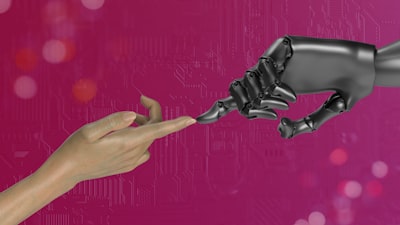
The question of whether digitizing a company can replace manual processes does not admit a binary answer. It depends on how it is executed, which processes are tackled first, and whether the organization is ready to change its routines. What is clear is that manual work based on paper, disconnected spreadsheets, or endless email threads ends up creating friction: data entry errors, approval delays, loss of traceability, and dependence on specific people.
Digitization is not an end in itself but a method for transforming operations. In many companies, modern systems coexist with tasks still done by hand because that is how they have always been done or because they seem too complex to explain. That is where the real opportunity lies: it is not about scanning documents, but about creating information flows that update themselves and leave a trail.
The first step to knowing whether digitization can replace manual processes is to uncover invisible work. Every template, every informal approval, every correction in a spreadsheet is a symptom of an unwritten business rule. An initial diagnosis must map those activities, identify who performs them, how often, and what happens when they fail. That analysis often reveals surprises: processes that seemed simple hide dozens of manual steps.
Once identified, they should be prioritized. Not all processes deserve the same effort. Those with the most value, the highest frequency, or a critical impact on customer experience should come first. For example, incident management or invoicing often offer quick returns. By contrast, occasional processes with many exceptions can wait or need a different design.
The next issue is design. A manual process cannot be automated unless it is standardized first. Process automation means turning a sequence of human actions into logic governed by rules, with states, validations, and owners. That does not eliminate human judgment; it places it where it truly matters: in exceptions and strategic decisions.
For automation to work, data must be captured once and flow coherently between systems. This requires defining standards: common naming conventions, mandatory fields, validation rules. If each area uses a spreadsheet with its own criteria, the digital process will inherit those problems and mistrust will move to the new system.
Another common trap is believing that a generic tool solves everything. Standard platforms are useful, but they often force the company to adapt to predefined logics. In those cases, a custom software solution lets you accurately represent how the organization actually works, without losing integration with the rest of the systems. What matters is not having more technology, but having the right technology for each workflow.
Another common mistake is thinking that digitization means eliminating jobs. In practice, the goal should not be to replace people, but to free them from repetitive tasks. When an employee stops copying data from an email to an ERP, they can spend that time reviewing incidents, improving processes, or serving customers better. Productivity increases because talent is used where it creates value, not because the workforce shrinks.
Infrastructure also matters. A solid digitization strategy often relies on cloud services such as AWS or Azure, which provide scalability, availability, and security without the need to maintain your own servers. The cloud facilitates remote work, integrations, and the deployment of new features. But it is worth defining a clear architecture from the start, because migrating processes to the cloud without planning can transfer chaos to another environment.
Artificial intelligence has changed the rules of the game. Today it is possible to extract data from documents, classify requests, detect anomalies, or even suggest responses to a customer. AI agents, when they work on defined processes, act as assistants that reduce mechanical workload and speed up decisions. Science-fiction blueprints are not needed: in concrete tasks, AI can automatically resolve part of the work and route the rest to a person.
It is important to understand that AI agents are not magic. They learn from historical data and operate within defined boundaries. Therefore, before adopting them, you need to ensure that the process has enough data, clear use cases, and supervision mechanisms. Done well, AI reduces repetitive work and helps people focus on situations that require judgment.
This entire transformation creates a new risk surface. If data no longer lives in a physical folder, cybersecurity becomes a process requirement, not a patch. It is necessary to protect access with authentication, encrypt sensitive information, and review permissions periodically. Poorly protected digitization is more dangerous than paper, because it multiplies the impact of a possible incident.
You cannot manage what you do not measure. A business intelligence dashboard, for example based on Power BI, makes it possible to visualize cycle times, bottlenecks, and workload by team. This information justifies investment and guides continuous improvement. Once the process is digitized, indicators stop being an estimate and become a real picture of operations.
Digital maturity is not uniform in an organization. One department may have an impeccable CRM and still base its reports on tables sent back and forth by email. Therefore, any digitization project must consider system integration and data quality. Technology only delivers consistent results when data is coherent and available at the right time.
This is where the work of a software development and technology company like Q2BSTUDIO comes in. Its role is not only to build an application, but to understand the business, redesign flows, choose the right tools, and support the change. That includes everything from building custom applications and integrating with legacy systems to deploying solutions on AWS or Azure and developing AI models aimed at concrete results.
A good implementation, like the one Q2BSTUDIO applies to its projects, combines methodology, technical knowledge, and listening skills. Instead of imposing a closed software package, it builds a solution that fits the company culture and objectives. In addition, metrics are defined before starting, so time savings and error reduction can be verified. Thus, digitization stops being a technical project and becomes a business lever.
It is worth insisting that change is not only technological. Teams need to understand why their way of working is changing and what they gain from it. Good training, clear communication, and a support phase reduce the fear of losing control. Resistance to change is one of the main reasons many digitization projects fail, more than technical failures.
Sustainable digitization advances in phases. Even in a company where several processes have already been digitized, new needs always appear. The key is to create a system that can grow: open interfaces, well-modeled data, decoupled automations, and agile governance of applications. A progressive and stable transformation is preferable to a revolution that creates chaos.
Going back to the initial question, can digitizing my company replace manual processes? Yes, as long as it is approached as a comprehensive redesign and not as a simple replacement of tools. Today's technology makes it possible to automate repetitive tasks, support decisions, protect information, and free up time for cognitive work. But the outcome depends on strategy, people's adaptability, and the support of a technology partner that understands the business.
Companies that take this step stop depending on institutional memory and on the heroes who put out fires. They achieve predictable processes, more motivated teams, and a solid base for innovation. Digitization does not eliminate the human factor; it relocates it. And in a competitive environment, that is the difference between surviving and growing.