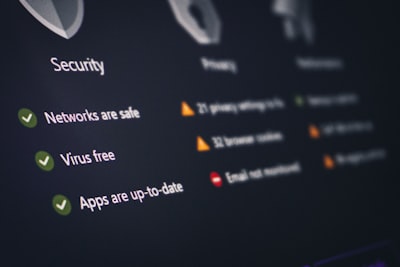
Digitalization is often associated with speed, productivity, or cost reduction, but it is rarely seen as a layer of protection for confidential information. In an analog environment, a contract can be forgotten in a drawer, an Excel file can circulate by email, or a printed copy can end up on the wrong desk. Digital transformation, carried out with rigor, turns those dispersed scenarios into a centralized, auditable, and sovereign model. The goal is not only to eliminate paper: it is to ensure that every confidential piece of data has an owner, a lifecycle, and a defined access level. When this is achieved, a company's digitalization can be considered a direct investment in security and trust.
Confidentiality does not begin at the firewall, but in the way information is classified. Many internal vulnerabilities appear because employees have more permissions than necessary or because sensitive documents are not differentiated from the rest. Digitalization makes it possible to implement automatic tagging policies: a contract containing personal data, a payroll file, or a financial report can be marked the moment it enters the system. From that tag, software applies access, retention, and distribution rules. In this way, protection no longer depends on people's goodwill but is controlled by the infrastructure itself.
Access control is another major advantage. Digital systems make it possible to define granular permissions by role, geographic area, or project. A salesperson does not need to see the compensation of the whole team; an external supplier should not access the business history. With digitalization, those restrictions are configured and enforced continuously. In addition, when an employee changes roles or leaves the company, their credentials can be automatically deactivated. This dramatically reduces the risk of residual access, one of the most common blind spots in organizations that still work with shared files without governance.
Encryption is also part of a solid strategy. Protecting data both in transit and at rest means that if an attacker intercepts or steals a file, they will not be able to read it without the corresponding keys. Advanced solutions manage those keys in hardware security modules, preventing them from being exposed alongside the data. In a well-planned digitalization process, encryption is not added at the end as a patch; it is integrated into approval, storage, and synchronization flows. Thus, confidentiality is maintained even when a laptop is lost or a user account is compromised.
To achieve these levels of protection, generic tools are not always enough. Many standard platforms offer encryption and permissions, but they do not understand the particularities of each business. The alternative is to invest in custom software that captures the real processes of the company and applies security by design. A custom development makes it possible to model approval workflows, roles, and traceability mechanisms without forcing the organizational logic into prefabricated software. Q2BSTUDIO has spent years building this type of solution, integrating authentication, auditing, and document management modules into platforms that grow with the business.
Infrastructure matters too. Hosting data in recognized cloud providers such as AWS or Azure offers security and compliance guarantees that can hardly be replicated with poorly managed local servers. These environments allow encryption by default, continuous monitoring, and automatic backups, while complying with international certifications and regulations. The key is to configure them correctly and to design an architecture that avoids exposing critical services. Q2BSTUDIO supports companies in the move to AWS/Azure cloud, defining network, identity, and encryption policies that turn the cloud into a secure environment for confidential information.
Cybersecurity does not end with technology; it requires an active vision. A digitalized system must include penetration testing, vulnerability analysis, and event monitoring to detect anomalous behavior. Digitalization makes these tasks easier because every action is recorded: who accessed, from which device, at what time, and with what result. That traceability is essential for responding to incidents and for demonstrating regulatory compliance to clients or authorities. Instead of relying on suspicions, a company can review the complete history of a document, know who consulted it and when. That capability does not exist in manual processes and provides an extremely valuable level of control.
Artificial intelligence adds an additional layer. AI agents can continuously monitor access patterns and alert about data exfiltration attempts or compromised accounts. They are also useful for automating permission reviews, detecting misclassified documents, or generating security reports without manual intervention. A model trained on company flows learns what is normal and what is not, allowing action before a small incident becomes a breach. These functionalities are not science fiction; they can be integrated into current systems through custom software and automation solutions.
The visibility provided by digitalization is also reflected in business intelligence. BI tools such as Power BI allow building dashboards that show security and compliance indicators without revealing sensitive data. It is possible to know how many accesses have been denied, which areas concentrate more confidential files, or whether a user has accumulated unusual downloads. Power BI, properly configured, applies row-level security: each person only sees the data that their role allows them to see. This is especially relevant for management committees that need to know the state of confidentiality without accessing protected details.
Digitalizing with guarantees is not installing a tool and waiting for results. It requires a diagnosis of current processes, identifying what information is critical and defining approval and custody flows. At Q2BSTUDIO we work with a methodological approach: first, processes are mapped; then, the appropriate technologies are selected; and finally, the necessary systems are built or configured. This accompaniment avoids two frequent errors: oversizing the investment or leaving security gaps due to partial implementations. Digitalization must be understood as a continuous project, with periodic reviews and constant evolution.
Regulatory compliance is another direct benefit. Regulations such as GDPR, data protection laws, or sector frameworks require evidence that information is handled in a legal, transparent, and secure manner. Digitalization makes it possible to generate complete audit trails, maintain consent records, and demonstrate that technical and organizational measures have been applied. When a regulator or a client asks how data is protected, the answer is not based on promises but on records and policies. That ability to demonstrate, in addition to avoiding penalties, builds trust and competitive advantage.
In short, digitalization does not expose confidential information: it protects it when designed with a clear strategy. Classifying data, limiting access, encrypting storage, auditing every movement, and applying intelligence to detect risks are steps that transform document chaos into a governed system. The difference lies in how the transformation is executed. With the support of a technology partner like Q2BSTUDIO, companies can digitalize their processes without giving up confidentiality, combining custom software, AWS/Azure cloud, cybersecurity, AI, and BI/Power BI to build a more efficient and much safer operation.