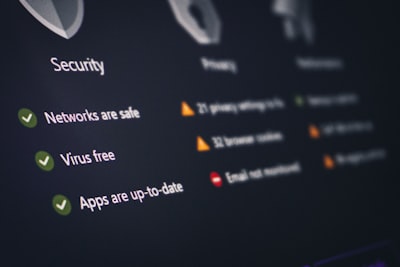
Digitizing a company is no longer a strategic option; it is a competitive necessity. The question many business leaders ask themselves is not whether they should digitize, but whether they can do so without putting sensitive customer, employee, or supplier data at risk. The short answer is yes, as long as digitalization is approached from a serious technical perspective, with well-built software and a security policy that covers every layer of the system. The long answer is what we will analyze throughout this article.
The first mistake is to confuse digitizing with scanning documents. True digitalization means redesigning processes so that information flows between systems and people automatically, without duplicates or scattered files. When a company digitizes well, every piece of data has an owner, a workflow, and an activity log. This reduces input errors, frees up team time, and makes remote collaboration easier. But it also forces us to rethink how every piece of data is protected throughout its entire lifecycle.
The security of a digital system depends not only on the software provider or the cloud, but on the joint design of architecture, processes, and people. A generic ERP can have serious flaws if it is misconfigured, just as custom software can be very secure if built with good practices. Therefore, before choosing a tool, it is advisable to know what data is processed, who can access it, how long it is kept, and what happens in the event of an incident.
At this point, the work of a software and technology development company like Q2BSTUDIO becomes essential. Its approach combines business knowledge with the technical experience needed to digitize without improvisation. They do not simply install platforms; they design processes, integrate existing systems, and build custom applications when no standard tool meets the client's requirements.
When talking about sensitive data, cybersecurity is not a separate department: it is part of the application itself. Measures must be present in the encryption of information in transit and at rest, permission management, identity verification, and detection of unusual activities. A good practice is to require a second authentication factor, connect the system to the corporate directory, and keep a complete trail of actions. All of this must be configured from the start, not as an afterthought.
One of the most common risks in digitalization is the proliferation of uncontrolled tools. One department adopts a collaboration application, another contracts a management platform, and eventually data becomes scattered with no traceability. The answer is not to forbid innovation, but to create a platform strategy in which solutions integrate and permissions are centralized. Custom software helps close those gaps because it allows modeling exactly the approval flow, access roles, and security alerts the organization needs.
Infrastructure also matters. Moving to the cloud is not in itself more or less secure than keeping on-premises servers; it depends on configuration. Services such as AWS or Azure offer security certifications, managed encryption, firewalls, and auditing tools, but if buckets or databases are left open by mistake, the risk is serious. Q2BSTUDIO deploys solutions on AWS/Azure cloud following hardening standards, with automated backups, credential rotation, and network segmentation.
Another layer of protection is artificial intelligence. Far from being a threat, AI can become an ally in detecting suspicious patterns, classifying security events, and reducing incident response time. Q2BSTUDIO designs AI agents that act with minimal permissions, correlate logs from different systems, and propose corrective actions without unnecessary human intervention. These agents must be auditable and supervised to prevent automated decisions that compromise privacy.
Once the operation is digitized, it is essential to measure what is happening. Business intelligence dashboards, such as Power BI, allow you to visualize security, performance, and compliance indicators in real time. Integrating these dashboards with internal data sources helps management make evidence-based decisions rather than relying on impressions. Q2BSTUDIO implements BI/Power BI solutions that turn data generated by digital processes into actionable information.
The transformation must also take the human factor into account. Most security incidents originate from configuration errors, weak credentials, or lack of training. Digitizing securely means defining clear action protocols, periodically reviewing permissions, and carrying out penetration tests to discover vulnerabilities before third parties do. In this regard, Q2BSTUDIO offers cybersecurity and pentesting services that help validate the strength of infrastructure and applications.
In addition, the legal framework must be met. Depending on the sector and country, companies processing personal, health, or financial data must comply with regulations such as the General Data Protection Regulation in Europe or other local laws. Digitalization is not only a technological project; it is also an exercise in governance. It is necessary to document the legal bases for processing, establish retention periods, address access, rectification, and erasure rights, and notify breaches when required. Well-designed software facilitates these obligations through traceability and version control.
Q2BSTUDIO understands security as a continuous process. First, it carries out a diagnosis of processes and risks, then selects or builds the appropriate technology, and finally supports the client during implementation, training, and continuous improvement. This support includes automation of repetitive tasks, integration with productivity tools, and the creation of workflows that reduce human error.
Which sectors benefit the most? Any organization that handles confidential information: clinics, law firms, accounting agencies, industrial companies, e-commerce, or fintech startups. In all of them, secure digitalization is a differentiator against the competition. Being able to demonstrate that data is protected increases customer and investor confidence, accelerates commercial agreements, and prevents reputational damage.
To summarize: is it safe to digitize my company to process sensitive data? Yes, if it is done with a realistic plan, appropriate technical solutions, and the support of specialists. It is not enough to buy a license or upload files to a shared folder. Security is achieved when digitalization is designed from the beginning with encryption, access control, monitoring, compliance, and continuous improvement.
Q2BSTUDIO is a technology partner that covers the entire cycle. Thanks to its experience in application development, cloud integration, cybersecurity, artificial intelligence, and Business Intelligence, any company can undertake digital transformation without giving up sensitive data protection. The key is to start with a diagnosis, prioritize critical processes, and extend digitalization in an orderly manner, ensuring that security is not a brake but an enabler of growth.