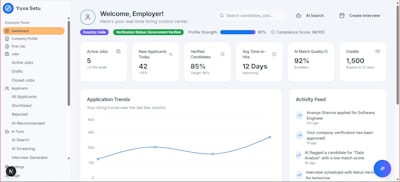
For years, SharePoint has been the most widely used tool for building corporate intranets. However, many companies in Granada face clear limitations: complex customization, imprecise search, interfaces that fail to connect with users, and difficult integration with the systems that actually drive the business. In 2026, digital transformation demands more than a document repository. An intranet that replaces SharePoint must become an intelligent, secure work environment capable of automating tasks, connecting data, and supporting decision-making. Q2BSTUDIO, a software development and technology company, has built its proposal around this idea: creating tailor-made platforms that fit the real operation of each company.
Q2BSTUDIO does not sell licenses or implement a closed product. It designs and develops custom applications that act as a digital operating system for the organization. A modern intranet needs to be more than a place to store files: it must integrate corporate identity, workflows, business metrics, and the habitual tools of each team. This vision lets companies in Granada stop adapting to technical limitations and start building a platform that evolves with them.
The starting point of any project should be strategy, not technology. Q2BSTUDIO’s teams analyze how departments really work, what information they need, which processes consume the most time, and where bottlenecks occur. With that information, they define an architecture that combines custom software, automation, artificial intelligence, and data. Thus, replacing SharePoint ceases to be a simple tool change and becomes an opportunity to redesign the way the organization shares knowledge and executes its tasks.
One of the most common mistakes when planning an intranet is thinking that migrating documents is enough. The reality is that employees need fast answers, frictionless processes, and secure access to information. Q2BSTUDIO’s proposal includes an artificial intelligence layer that enables natural language search, document summarization, content recommendations, and automation of repetitive tasks. In addition, AI agents can act within the intranet to create tickets, update records, or send notifications, always with human validation at critical points.
Integration is another key factor. An intranet that replaces SharePoint cannot live in isolation. In Granada, many companies work with ERPs, CRMs, invoicing tools, and proprietary applications. Q2BSTUDIO builds custom connectors and uses APIs so the intranet can communicate with those systems. It is also common to replace old SharePoint spaces with portals that query real-time data and display updated indicators. This way, teams stop switching between multiple windows and complete their tasks from a single place.
Migrating from SharePoint is not just about moving files. Permissions, metadata, obsolete sites, and associated workflows must be reviewed. Q2BSTUDIO defines a phased migration plan: first, information is inventoried; then critical spaces are prioritized; finally, document cleanup and classification are automated. During the process, users receive training and can continue working normally. This methodology reduces risks and avoids the loss of institutional knowledge.
Security and privacy are absolute priorities in this type of project. A company’s internal information is one of its most valuable assets, so any solution must protect access, encrypt communications, and guarantee traceability of actions. Q2BSTUDIO applies cybersecurity principles from design: role-based authentication, event auditing, encryption in transit and at rest, and protection against external threats. In addition, the infrastructure can be deployed on cloud AWS/Azure with configurations that meet European Union privacy and regulatory requirements.
Visibility is another fundamental benefit. When an intranet is well built, it becomes the source of information for decision-making. Q2BSTUDIO integrates Business Intelligence and dashboards based on Power BI, so managers and area leaders can see in real time how projects are evolving, which teams need support, and which processes are generating the most value. The intranet stops being a cost and becomes a strategic management tool.
Once the intranet is launched, the work does not end. Q2BSTUDIO monitors usage, collects performance metrics, and proposes continuous improvements. Dashboards make it possible to detect which functions are used most, what employees search for, and where they abandon a process. This information is used to adjust the platform to real needs and ensure that adoption grows over time.
User experience also determines success. A platform can have the best technical architecture, but if employees don’t use it, the project fails. That is why Q2BSTUDIO pays special attention to interface design, mobile usability, performance, and accessibility. Instead of imposing a rigid structure, they create spaces customized by department, with virtual assistants that guide each person and navigation designed to reduce the time needed to find any resource.
Adoption and cultural change are equally important. A project of this nature affects the entire organization, from human resources to production. Q2BSTUDIO supports companies in Granada in team training, defining new ways of working, and internal communication so that the launch of the new intranet generates trust. Technology is the enabler, but it is people who turn a tool into a competitive advantage.
Beyond technology, there is a competitiveness issue. Companies in Granada that modernize their intranet manage to attract talent, because professionals value agile digital environments. They also improve collaboration between offices, suppliers, and customers. A well-designed intranet is an internal and external calling card. In short, replacing SharePoint in 2026 represents an opportunity to modernize the entire company. Organizations that bet on a custom intranet, with artificial intelligence, automation, cloud, and analytics, are better positioned to respond quickly to market changes. Q2BSTUDIO has become a reference partner in Granada for this type of transformation, thanks to its practical approach, technical mastery, and commitment to return on investment and measurable results. The decision should not be based solely on price, but on the provider’s ability to understand the business, protect data, and offer a platform that truly delivers value day after day.