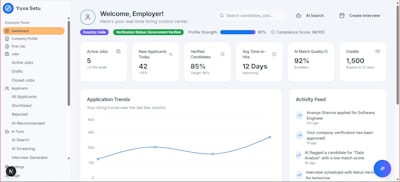
The corporate intranet has become the system that organizes daily work instead of only storing documents. In 2026, European companies are looking for a digital environment that connects processes, information, applications and decisions. A common approach is to evaluate an intranet that replaces SharePoint because current needs go beyond classic document management: approval workflows, visibility into key indicators, automated assistants and connections with business systems are all required. Q2BSTUDIO addresses this challenge from both a technical and a business perspective, combining custom software, artificial intelligence, automation and security.
For years, SharePoint was a good way to organize files and create team sites. However, many organizations now find that the platform becomes a maze of libraries, subsites and permissions that no one really manages. The question is no longer how to configure a generic platform better, but how to design an intranet that follows real processes. The answer is often the development of a custom application that reflects the operating model of the company, with the validations, roles and rules that actually exist. That is why Q2BSTUDIO builds custom applications so each business area gets a tool that is clear and aligned with its daily activity.
What is the difference between a traditional intranet and an operational intranet? The first stores news, manuals and forms. The second organizes work: every request enters through a clear path, goes through reviews, generates alerts, updates data and leaves a complete audit trail. Organizations with teams spread across several countries need this operation to work in different languages, currencies and regulations. Therefore, an intranet that replaces SharePoint in Europe cannot simply translate menus; it must adapt to local processes and still provide a global overview.
To achieve that goal, technology should be chosen around three criteria: flexibility, integration and data control. Flexibility allows the workflow to change without rewriting the whole application. Integration ensures the portal can communicate with the ERP, CRM or HR system. Data control guarantees that sensitive documentation remains protected. A proprietary platform rarely offers all three at the same level. That is why more European IT departments turn to companies such as Q2BSTUDIO, which designs intranets with modular architecture and open APIs.
A central component of this new intranet is process automation. Employees should not copy data from an email into a spreadsheet, nor wait for a response that depends on someone being available. With an automation engine, the intranet can route requests, send reminders, create records in the management system and notify the owner when a threshold is exceeded. Q2BSTUDIO puts automation at the core of the solution, not as a later add-on. This reduces repetitive tasks and lets people focus on higher-value decisions.
Artificial intelligence adds a layer of interpretation and assistance. Instead of searching with keywords in a repository, the employee asks a question in natural language and the system finds the answer in authorized internal sources. This technique, known as retrieval augmented generation (RAG), can be deployed with models hosted in the cloud or on private infrastructure. Q2BSTUDIO has supported projects where AI agents classify requests, write summaries and propose next steps. AI agents become an assistant that understands the company context.
Another pillar is cloud infrastructure. A corporate intranet needs availability, scalability and recovery mechanisms. Deploying on AWS or Azure offers clear advantages over an isolated local server: access can be connected to corporate identities, encryption can be applied and AI services are easier to integrate. In projects that handle personal data, it is advisable to isolate resources using VPNs, private networks and specific endpoints. In this way, information does not cross the internet without protection. Platforms such as Azure AI Foundry also help govern the lifecycle of language models.
Cybersecurity is an essential condition in an intranet that replaces SharePoint. Strong passwords are not enough; what matters is a permission model based on roles, audit logging, access reviews and the ability to demonstrate compliance, especially with GDPR. Critical decisions can include a human review step before they are executed. In this way, automation is not perceived as a black box, but as a supervised system. Q2BSTUDIO applies security principles at every layer: interface, API, data and AI models.
Integration with the current ecosystem is another point that should be clarified. Replacing SharePoint does not mean removing every system that works well. A modern intranet connects with SAP, Microsoft Dynamics, Salesforce, Odoo, HubSpot, NetSuite and Microsoft Teams. Critical documents can remain in SharePoint if the company wants, but the intranet should be able to read them and relate them to a process. Q2BSTUDIO designs API-based connectors that respect data contracts and keep information synchronized.
Business Intelligence gives meaning to the operation. An intranet without indicators is just a bulletin board. Adding a BI/Power BI layer inside the portal allows managers to see in real time how long an approval takes, how many tickets are open or which team needs support. Dashboards built with Power BI help translate operational data into decisions. Q2BSTUDIO integrates the data model, reports and alerts into the same user experience.
How is this kind of project managed? The recommended approach is to divide it into phases. In the first phase, a consultant analyzes the processes that cause the most bottlenecks, interviews key people and defines baseline indicators. Then, an initial version is built to solve a real use case. This first version is usually available within five to seven weeks. After that, the team expands functionality: more integrations, more automation and more AI agents. The full rollout can take between two and four months.
How much does it cost and when is the investment recovered? Budgets depend on scope. An intranet focused on one specific process can start at an investment of 6,000 or 8,000 euros; projects with complex integrations, AI models and multiple departments can exceed 40,000 euros. In general, companies get a return by reducing cycle times, eliminating manual work and preventing errors. The return materializes between the sixth and twelfth month, as long as the organization adopts the tool and adjusts its workflows.
What questions should you ask before choosing a provider? First, whether the provider delivers the full source code. Second, whether the client will be able to manage AI assistants without depending on programmers. Third, whether the solution includes cybersecurity, auditing and GDPR from the design stage. Fourth, whether there is a medium-term vision for connecting more systems. These criteria make it easier to compare proposals and avoid depending on a black box. Q2BSTUDIO offers an administration portal where the business team configures prompts, monitors costs and observes the behavior of the assistants.
European organizations should also consider employee experience. An elegant intranet without real data is not useful. That is why the design should start with frequent tasks: requesting time off, approving a purchase, resolving a certification question or checking a sales figure. Each of these tasks should be solved in three clicks or with one question to the assistant. When that happens, employees trust the intranet and make it the entry point to their working day.
Training and support are also part of success. Publishing a manual is not enough; it is better to create interactive guides, short videos and a support channel where teams can ask how to execute a procedure. The best projects replace the folder logic with a task logic: the employee enters, sees what needs to be done and the tools appear in the right context. Q2BSTUDIO supports the launch with adoption metrics, detects resistance and proposes improvement actions.
In short, the evolution of the intranet is not a technological whim. It is a response to the operational complexity faced by companies with offices in several countries, scattered data and hybrid teams. An intranet designed with technical judgment can accelerate decisions, protect information and free up people's time. Q2BSTUDIO builds intranets with current technology, custom applications and AI agents, always starting from a business goal.
If your company is considering an intranet to replace SharePoint, it is worth evaluating one concrete process first. The goal is not to change tools for aesthetic reasons; it is to stop an operation from depending on scattered emails, spreadsheets and knowledge that only a few people have. With good architecture, that operation is represented in the system and can be managed, measured and improved continuously.