Digitalization can no longer be understood as a bounded project with a delivery date. It is a continuous capability that transforms information into action, processes into experiences, and data into competitive advantages. Asking what trends will shape the future of your company's digitalization is really asking how the organization must evolve to make better decisions faster.
The first major conceptual shift is to stop digitizing documents and start digitizing decisions. For years, companies invested in scanning paper, automating workflows, and connecting departments. Today, the challenge is ensuring every process generates data that feeds analytical models and intelligent systems. This requires a solid foundation of custom software that adapts to business rules, rather than forcing the business to adapt to off-the-shelf software.
Artificial intelligence will be embedded in all processes, not as a distant promise, but as assistants working alongside teams. AI agents will be able to read an email, update a CRM, prepare a proposal, validate an order, and escalate an incident without supervised human intervention. The future is not about replacing people, but about freeing them from repetitive tasks so they can focus on situations that require judgment. Companies that learn to govern these agents with clean data and well-defined workflows will have a huge advantage.
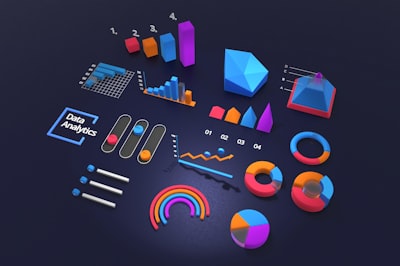
Alongside AI, data becomes the central asset. Digital transformation does not create value by itself: it creates value when the right indicators reach the right people at the right time. That is why Business Intelligence initiatives, such as those based on Power BI, stop being a separate department and become part of daily operations. Dashboards make it possible to detect trends, anticipate problems, and measure the real impact of every decision. A digitalized company is not the one with more data, but the one that makes its data actionable.
Infrastructure is also changing. AWS/Azure cloud is consolidating as the backbone of digitalization because it provides elasticity, recovery capability, and a more predictable cost model than traditional data centers. Cloud-native architectures allow business functions to be deployed separately, scaled on demand, and brought to market faster. The question is no longer whether to migrate to the cloud, but how to do so while preserving security, performance, and data sovereignty.
Cybersecurity stops being an isolated department. As processes are digitalized, the attack surface grows: APIs, devices, remote work, third-party integrations. Companies that lead the future will build security by design into every application and every workflow. This includes regular penetration testing, continuous monitoring, vulnerability management, and a culture that knows how to recognize threats. Digital trust is a prerequisite, not an add-on.
Another structural trend is composable architecture. Instead of building large monolithic blocks, organizations combine modular services that can be replaced without redoing the whole system. This provides agility to test new capabilities, adopt emerging technology, and discard what no longer creates value. APIs become the currency between systems, and integration becomes the center of the technology strategy.
Hyper-personalization will be the most visible expression of this evolution. Customers expect the company to remember their preferences, anticipate their needs, and adapt the channel, language, and offer in real time. Achieving this requires more than a CRM: it demands combining transactional data, digital behavior, predictive models, and automation of actions. This is where artificial intelligence solutions connected to proprietary systems make the difference between a generic experience and a memorable one.
Sustainability and ESG reporting will also shape the future of digitalization. Measuring carbon footprint, energy consumption, or compliance with social criteria is no longer optional, especially for large companies; supply chains are starting to demand it. Digital systems are essential for capturing these data reliably, auditing them, and generating reports that demonstrate real commitment. Technology and sustainability converge: you cannot manage what you do not measure, and you cannot measure without digitalization.
Immersive and spatial computing is reaching serious use cases: digital twins of industrial plants, employee training with augmented reality, remote maintenance assisted by holograms. Not every company needs to implement it tomorrow, but prepared architectures will be able to incorporate these interfaces without breaking current systems. The key is to design solutions with the future in mind.
Vertical accelerators will also gain weight. Technology companies increasingly offer prebuilt solutions for specific sectors, with workflows, indicators, and compliance requirements already included. This allows companies to deploy value quickly without losing differentiation. The combination of these accelerators with specific developments will produce platforms that share a common core and adapt to the particular operations of each business.
Process automation, whether through software robots (RPA), rule engines, or AI agents, is the execution engine of the digital strategy. Automating is not eliminating jobs; it is removing repetitive and high-error-risk work so people can contribute more value. Order matters: first model the process, then clean the data, and finally automate. Skipping these steps only accelerates existing problems.
In this context, Q2BSTUDIO, a software development and technology company, positions itself as a technology partner that combines all these pieces. Its methodology starts with a diagnosis and a roadmap, moves on to the design of custom software, integration with AWS/Azure cloud, implementation of Power BI dashboards, workflow automation, and cybersecurity reinforcement. The goal is not to follow a trend, but to build measurable and sustainable competitive advantages.
The future of your company's digitalization is not written in a single technology, but in the combination of people, processes, and platforms. Companies that lead the next decade will be those that integrate AI as a support for every role, turn data into decisions, protect their information, invest in flexible infrastructures, and maintain a constant focus on customer value. The question is not whether that future will arrive: it is already here, and the only way to take advantage of it is to start building the foundation today.