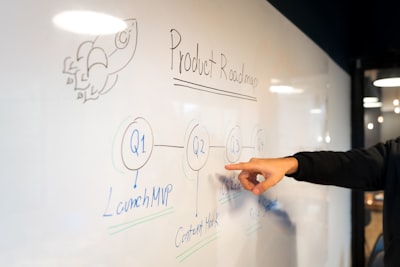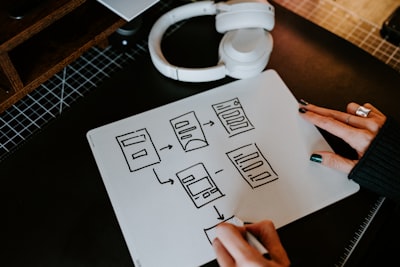
The digitalisation of a company is often understood as the adoption of tools, but it is actually a transformation in the way value is created and shared. When an organisation combines its digital transformation strategy with sustainable remote work, it achieves a double effect: it reduces operational friction and lowers the environmental impact associated with commuting and paper. To achieve this, installing software is not enough; processes, roles, data and metrics must be rethought. A clear roadmap makes it possible to start with what is urgent and scale sensibly. Q2BSTUDIO, a software development and technology company, applies this vision in real production environments, not in theoretical projects.
Before choosing any solution, it is worth identifying where information and time are lost. A manual process usually depends on emails, spreadsheets and physical signatures; every handover creates delays and errors. The first step is to map the process: who is involved, what data is used, which decisions require approval and where the bottlenecks are. On that basis, it is possible to decide which actions offer the greatest return. For example, digitalising expense management or customer onboarding provides immediate visibility. Q2BSTUDIO combines this analysis with experience in enterprise architecture and software development to prioritise investments that genuinely reduce the administrative burden.
Sustainable remote work requires an elastic and secure infrastructure. The cloud is the natural foundation of remote work because it allows access to information from any location, with automatic backups and on-demand scalability. An AWS/Azure cloud strategy provides flexibility and cost control, provided it is designed with governance. This includes centralised identity, data encryption and role-based access policies. Applying these principles prevents digitalisation from creating new operational risks. For a small or medium-sized business, moving to the cloud can be the first major step towards visible and collaborative processes.
When employees work from home, the security perimeter blurs. Every connection, device and application becomes a potential entry point. That is why well-understood digitalisation incorporates cybersecurity from the design stage, not as a final layer. Multi-factor authentication, network segmentation, device hardening and incident response plans are essential elements. In addition, continuous monitoring and penetration testing help detect vulnerabilities before they are exploited. An employee awareness programme complements the technology. Q2BSTUDIO integrates these measures into its deployments, aligning with market standards and with each client's specific needs.
One of the greatest benefits of digitalising is freeing talent for higher-judgement activities. Process automation allows software to execute repetitive tasks such as extracting data from invoices, validating documents or generating reminders. At a more advanced level, AI agents can classify requests, draft responses and propose actions based on historical information. Integrating these capabilities requires analysing processes, designing exceptions and measuring results; it is not about installing a generic assistant, but about training it with the company's context. A well-planned automation strategy directly connects with cost and cycle-time reduction.
Digitalising makes no sense if data is not exploited. Transactional systems generate valuable information that, once properly modelled, helps optimise operations and sustainability. A BI/Power BI dashboard can show, in a single view, the cost per process, the average approval time, the avoided carbon footprint or the use of physical spaces. The challenge is not technical but cultural: relevant indicators must be defined and review routines created. Business intelligence ensures that remote work is not just a contingency measure but a lever for continuous improvement. With reliable data, decisions stop being based on impressions.
Many needs are covered by standard tools, but operations often require specific processes that no generic solution fully resolves. In those cases, custom software offers a competitive advantage: it adapts to the company's language, flows and decision criteria. It also facilitates integration with legacy systems and avoids database duplication. A well-built development must be modular, scalable and maintainable. Q2BSTUDIO accompanies this process from conceptual design to deployment, and includes team training so that adoption does not become a barrier.
Reducing commuting has a direct positive effect on emissions. But sustainable remote work is not limited to working from home: it means rethinking meetings, schedules and resource use. Asynchronous meetings, collaboration tools and impact indicators help minimise unnecessary travel and digitise procedures that previously required paper. Managing shared workspaces, with bookings and occupancy control, helps avoid energy waste in offices that remain open without need. Furthermore, integrating employee wellbeing into digital workflows reduces the risk of disconnection or burnout. Technology is only a means; the goal is to create an operating model with less impact and a better quality of life.
A digitalisation plan aimed at sustainable remote work can be structured in phases: inventorying processes and pain points, defining baseline indicators, choosing cloud and security platforms, automating the most repetitive activities, modelling data and training teams. It is advisable to start with a pilot that includes a critical process and a small group of users, to learn before scaling. In this context, Q2BSTUDIO acts as a comprehensive technology partner: it analyses the situation, recommends the most suitable architecture and builds what does not exist in the market. Its experience in software development, cloud integrations and AI solutions makes it possible to move forward with clear criteria, avoiding endless projects and unnecessary costs.
Digitalising the company and making remote work more sustainable are two sides of the same coin. Without digital processes, it is difficult to be efficient remotely; without a sustainable approach, digitalisation can increase energy consumption and complexity. The key is to apply technology with purpose: reduce friction, enable data-driven decisions and measure impact. Companies that understand this connection not only improve their bottom line, but also strengthen their employer brand. With the right technical partner, transformation stops feeling like an unapproachable challenge and becomes an orderly and measurable process.