Digitizing your company is not an isolated technology project: it is a transformation that touches processes, roles and culture. Many organizations expect a new tool to solve all their problems, but the reality is that technology amplifies what already works and makes visible what does not. That is why it is wise to start with realistic expectations and a phased plan.
The first decision is to choose which process to digitize first. Instead of trying to cover the whole company, it is better to select an area with volume, pain and the possibility of measuring. The usual candidates are invoice management, purchase requests, client onboarding or incident reports. A bounded project allows you to validate the method, learn and build confidence before scaling.
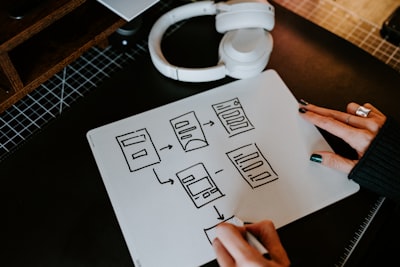
Before looking for solutions, you have to document the current process. Analyze who does each task, what data is handled, what controls exist and where delays occur. This diagnosis often reveals surprises: unnecessary steps, duplicated information and bottlenecks that no one had identified. With that map, the design of the digital future is much stronger.
The technological architecture is the foundation of everything. A company that wants to digitize must decide where its data lives and how its systems connect. The cloud, especially AWS or Azure, offers advantages in scalability, availability and security. It allows teams to work from anywhere and production and development environments to be managed in a controlled way.
When standard tools do not cover the business logic, custom software is the natural option. A custom development not only adapts to the company's way of working, but also eliminates the improvised solutions that exist around a generic ERP. In addition, the code remains documented and can evolve with the business.
Developing a custom solution does not mean starting from zero. There are frameworks and platforms that speed up construction, and the team defines the modules according to priorities. The important thing is to maintain fluid communication between business and development, so that what is built responds exactly to the need.
Integration between systems is another key element. A digitized company does not operate with information silos. APIs allow the CRM, ERP, invoicing tool and client portal to share data in real time. Without integrations, the team ends up copying information from one system to another, which causes errors and wasted time.
In parallel with development, cybersecurity must be incorporated from the first line of code. Data is one of the most valuable assets, and a security failure can paralyze operations and damage reputation. Intrusion tests or pentesting help identify vulnerabilities before someone exploits them. You also need to define access, encryption and backup policies.
Security also demands a routine, not just a one-off audit. Software updates, privileged account management and event monitoring are part of maintenance. In a cloud or hybrid environment, you have to periodically review access and test disaster recovery plans.
Process automation is where digitization stops being a promise and turns into results. Tasks such as classifying documents, sending reminders, updating databases or validating forms can be executed without manual intervention. Automation frees the team from operational load and reduces human error.
The next level is to incorporate artificial intelligence into workflows. AI agents can hold conversations, resolve queries, log incidents and even anticipate behaviors. They do not replace people, but they do absorb the repetitive tasks that used to consume hours. A virtual assistant can respond to the client at any time and route complex cases to a human.
The information generated by digital processes has to become knowledge. With a Business Intelligence solution, for example Power BI, you can design dashboards with the indicators that really matter: response time, compliance rate, cost per process or customer satisfaction. Seeing data in real time helps make decisions based on criteria.
Many companies start with a BI pilot in a specific area, for example sales or production. That pilot makes it possible to define key metrics, validate data quality and get users used to deciding with data. Then it expands to other areas without the need for a large deployment.
Technical implementation does not end with going live. Training and change management are responsible for the solution being adopted. You have to explain why the company is digitizing, what each person gains and how to resolve initial doubts. Users need to feel part of the project, not passive receivers of an imposed tool.
A digitization project advances better in short iterations. First you build a basic version that solves the main problem; then you add features and refine details. Each delivery is validated with real users, deviations are corrected and the next cycle is prepared. This reduces risk and keeps team motivation high.
What to expect in day-to-day? During the first weeks there will be learning curves. Some employees will resist changing their routine and errors that were not detected in testing will appear. That is normal. The important thing is to have a support team that responds quickly and an internal person who leads adoption. Improvement arrives when the system becomes the usual way of working.
The return on investment is neither immediate nor uniform. It depends on the chosen process, the size of the company and the quality of the implementation. In general, the first visible results appear in the third or fourth month: fewer administration hours, fewer errors and a better experience for clients and employees. From then on, the impact accumulates.
Another factor that influences return is provider support. A partner who understands the business, asks before building and offers support after launch reduces adoption time and avoids investments in features that nobody uses.
Digitization opens the door to other initiatives. Once data is clean and processes are defined, it is easier to apply predictive models, generate advanced reports or connect new sites. Technology matures with the business and decisions are made with more information and less intuition.
At Q2BSTUDIO we work as a technology partner at every stage. We help companies digitize their operations with custom applications, automation, artificial intelligence, cloud and cybersecurity. Our approach combines technical knowledge and business vision so that every investment generates measurable value. If you are considering digitizing your company, the first step is to understand your situation and define a realistic roadmap.