Deciding whether to replace SharePoint with an intranet should not be based on opinions or commercial pressure. There is a specific moment when a document platform stops being an enabler and becomes a constraint: when operations need less navigation and more automation, fewer manual copies and more real-time data. The right question is not whether SharePoint is a bad product, but whether your current setup can support the next level of growth, regulatory complexity and employee experience.
The signals appear before financial indicators reflect them. If each department maintains its own folder structure and teams need constant meetings to know what has been done, visibility is failing. If onboarding a new person takes weeks because there is no clear knowledge path, the cost of onboarding is skyrocketing. If data entry errors keep recurring in CRM, ERP or spreadsheets, the problem is not the people; it is the workflow.
Another common symptom is the proliferation of shadow systems. When employees create their own databases in Excel, use unauthorised tools or keep isolated Teams channels, the company is paying an invisible tax: wasted time, duplicated information and security risk. A modern intranet is not just another portal; it is a layer that orders work and removes the need to improvise with out-of-control tools.
In practice, a current intranet stops being a repository and becomes an operating system for the business. That does not mean eliminating SharePoint entirely. Many organizations keep it as a historical archive, but build a custom software layer that unifies the experience, enforces business rules and connects systems. This is how technology stops being an expense and becomes a competitive advantage.
The most efficient technical approach is to design a modular platform, supported by AWS/Azure cloud, that integrates AI, cybersecurity and Business Intelligence. The visible part is a clean and fast intranet; the invisible part is a set of processes, APIs and controls that make information travel with context and security. Architecture matters as much as interface, because it determines whether the intranet can grow without being rewritten every two years.
Q2BSTUDIO develops these projects with a results-driven methodology. First, it understands the current process, defines KPIs and identifies dependencies. Then it proposes a phased delivery with an MVP usually ready in four to eight weeks. Finally, it measures business indicators and adjusts the platform. Their specialty is custom software development, automation and enterprise AI, not generic product implementation. This allows the intranet to fit the company culture, not the other way around.
AI is the component that adds the most value in this type of initiative. A semantic search engine trained on internal documentation, assistants that summarize contracts or reports, and AI agents that automate repetitive tasks change productivity in measurable ways. The deployment of artificial intelligence relies on private models, RAG and Azure AI Foundry infrastructure, without losing human oversight at critical points. This prevents data from being exposed to public services and lets the business team configure prompts and monitor costs from a portal they control.
Cybersecurity is not an add-on or a final audit; it is a structural property. In a modern intranet, role-based access, action auditing, encryption, authentication integrated with Active Directory and GDPR compliance must be present from the design phase. When AI needs to query on-premises data, VPN tunnels and Azure private endpoints are used so communication never crosses public networks without control. This protects both the data and the model.
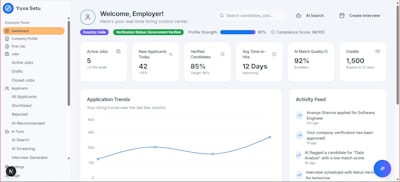
Another pillar is visibility. If the intranet centralizes processes, it should also centralize indicators. A dashboard based on Power BI allows managers to see resolution time, error rate or cost per process without asking anyone for reports. Leadership stops relying on emails and spreadsheets and starts operating with real-time data. This connection between operations and reporting is what turns a technology investment into a management improvement.
A common question is whether moving to an intranet means abandoning all current tools. The answer is no. A serious SharePoint replacement project includes integrations with Teams, Active Directory, SAP, Odoo, Salesforce, HubSpot or custom APIs. The intranet becomes the orchestrator, not the owner of the data. That is the difference between modernizing and simply changing the interface.
Regarding timing and budget, there is no universal price because each company starts from a different base. The usual path is to start the discovery phase in one or two weeks and have an MVP within the first six weeks. Focused projects can fall in an indicative range of 5,000 to 60,000 euros, with expected payback between six and twelve months. Before writing code, Q2BSTUDIO delivers a written business case with KPIs, payback timeline and risks, so the decision does not depend on a hunch.
It is also worth evaluating the moment from a human perspective. If employees spend more time managing the tool than doing their jobs, resistance to change will not be an obstacle; it will be a natural response. A well-designed intranet reduces friction: information appears when needed, tasks are delegated to AI agents and managers have a clear panel to know what works and what does not.
The best time to consider replacing SharePoint is when you see that manual work is growing faster than headcount, that errors are affecting customers or compliance, or that leadership lacks visibility. If the cost of maintaining the status quo is higher than the investment required to change it, the decision is justified. A discovery session with a technical team can organize those signals and turn them into a realistic plan.