The corporate intranet has stopped being a simple document repository. In 2026, organizations need a digital space that centralizes knowledge, automates processes, and connects people. SharePoint has been the foundation for many companies, but new requirements demand more: a modern user experience, artificial intelligence, open integrations, and end-to-end security. That is why more executives are looking for a verified partner to design an intranet that replaces SharePoint without breaking what already works.
Replacing SharePoint is not just a technical project; it is a business decision. It means rethinking how information flows, how tasks are completed, how a person is onboarded, or how employee questions are answered. Solutions based only on document libraries and connected sites fall short of the demand for internal digital services: virtual assistants, AI-powered search, real-time dashboards, and processes that cross departments and countries.
A verified partner for this transformation is not a generic software provider. It is a company that demonstrates technical capabilities, integration experience, and a solid methodology. Verification involves skills assessment, review of previous projects, compliance with standards, and continuous learning. That framework reduces the risk of failure and builds trust with the executive committee. Knowing how to build websites is not enough; you need to understand the Microsoft ecosystem, data models, security, and the daily operation of a corporate intranet.
Q2BSTUDIO has become a technology partner for this type of initiative. Its approach combines custom software development custom software development with artificial intelligence, automation, and cloud services. Instead of imposing a closed platform, it designs an intranet adapted to the company's real processes, integrating SharePoint when it creates value and adding capabilities the original tool does not offer on its own. This vision fits the 2026 trend: companies are not buying software, they are buying a business outcome.
One key idea is that you can keep your Microsoft investment and, at the same time, build a layer on top of it. A modern intranet can coexist with Active Directory, Microsoft Teams, and SharePoint. In fact, a good partner should maximize what already exists. That is why a solid proposal starts with a diagnosis: mapping interactions, identifying bottlenecks, defining KPIs, and reviewing legal or cybersecurity constraints. Only then is an architecture defined that combines the best of the cloud and the on-premises environment.
From a technical standpoint, artificial intelligence is at the center. Employees do not want to navigate menus; they want to ask a question and get a clear answer. This is where language models, retrieval augmented generation RAG, and AI agents come into play. An internal assistant trained on company documentation can answer questions about policies, procedures, or contacts, and when necessary, route the request to a human. This is not an isolated experiment; it is an operational capability that reduces workload and improves the experience.
Security is another essential pillar. An intranet handles confidential information, customer data, projects, and strategic decisions. Replacing SharePoint means reviewing permissions, audit trails, and traceability. Q2BSTUDIO applies cybersecurity measures at every layer: from user access to connectivity with internal systems through protected channels. When AI needs on-premises data, VPN tunnels or private endpoints in Azure can be used so that information does not travel over public networks. The result is a powerful but controlled intranet.
Business autonomy is another differentiator. Many solutions create a permanent dependency on the consultant. Q2BSTUDIO, instead, delivers administration portals so business owners can configure prompts, monitor costs, and adjust workflows without waiting for a developer. This capability is essential to keep AI aligned with the evolution of the company. In 2026, speed of adaptation is a real competitive advantage.
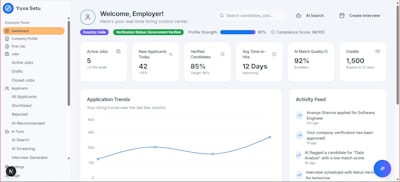
Analytics also cannot be missing. An intranet without data is a black box. By integrating Business Intelligence and tools such as Power BI Business Intelligence and Power BI, leaders get a consolidated view of usage, response times, issues, and process efficiency. Dashboards make it possible to detect areas with the most manual workload and quantify the impact of automations. This visibility helps justify the investment and decide which process to automate next.
From a business point of view, the benefits of an intranet that replaces SharePoint in 2026 can be seen in productivity, control, and satisfaction. Productivity improves because employees find information or complete tasks in fewer steps. Control improves because managers have visibility into the status of each process. Satisfaction improves because the tool responds naturally and does not force people to learn complex structures.
The implementation process is usually agile. After an initial discovery phase, a minimum viable product is built in a few weeks. This makes it possible to validate real value before rolling it out to the entire organization. The key is continuous feedback and prioritizing features that solve specific pain points. The goal is not to deliver a giant intranet on day one, but to grow with judgment and data.
Choosing a verified partner reduces uncertainty. When a company has up-to-date certifications and documented success cases, the board has evidence that the project is in good hands. Q2BSTUDIO has worked with clients of different sizes and has integrated systems such as SAP, Salesforce, Odoo, Microsoft Dynamics, or custom APIs. This experience is critical to avoiding surprises when connecting with corporate tools.
The cost of an intranet depends on scope and level of integration. What matters is not only the initial budget, but the expected return. An intranet that automates tasks, responds with AI, and provides management data can recover the investment in a few months. Companies that integrate AI into their core processes achieve much greater impact than those that use it in isolated actions. That is why we recommend starting with a high-value use case and measuring constantly.
Q2BSTUDIO is a software and technology development company that supports the full cycle: architecture, custom software development, implementation, security, and evolution. Its model gives the client autonomy and visibility. For an executive looking for a verified partner for an intranet that replaces SharePoint, the combination of technical knowledge, business focus, and experience with cloud AWS/Azure is a clear advantage.
In short, moving from SharePoint to a modern intranet in 2026 should not be seen as a tool change, but as a transformation opportunity. Companies that have a verified partner, a practical approach, and technical strength are better prepared to compete. The intranet of the future is an operations hub: it connects people, automates processes, applies artificial intelligence, and protects data.
If your company is evaluating this move, the recommendation is to do it with judgment and with a team that understands both technology and business. Q2BSTUDIO offers a free discovery session to analyze the specific case and propose next steps. A focused conversation can be the starting point for transforming the way the organization works.