A corporate intranet must be much more than a document repository. When employees use it daily, it becomes the company's operations hub: they consult policies, collaborate on projects, find expertise and run internal processes. The problem is that many intranets are designed as a one-way notice board. The communications team publishes, but no one listens. The result is an empty platform, with outdated content and an adoption rate that drops month after month. The solution is not more technology by itself, but a constant user feedback mechanism that allows the organization to understand what works, what is unnecessary and what is missing.
Feedback stops being a simple form when it becomes a productive signal within daily operations. Every suggestion, every reported error and every improvement request reveals a concrete gap between what the intranet offers and what people need to do their jobs properly. Ignoring that information is equivalent to making decisions in the dark. On the contrary, when the organization listens systematically, the intranet evolves at the same pace as the business and does not become an abandoned project after a few months.
Traditional opinion-gathering mechanisms tend to be too generic. An annual survey measures satisfaction, but it does not explain why a specific area stops using a feature. Useful feedback is contextual: it appears at the exact moment when the user performs a task, offers the possibility to rate an experience and allows commenting without interrupting the workflow. It must also be multichannel, because employees work from their computer, mobile phone or collaboration tools and expect to share their views from anywhere.
A well-designed feedback system combines several capture points. A micro-survey after completing an internal process, a button to suggest an improvement within each section, an alert when a search does not return useful results or quick access to the support team are examples of how to integrate listening into the real experience. The goal is not to collect more data just for the sake of having it, but to detect the points of friction that prevent people from being productive.
Capturing feedback is only the first part. The real challenge is prioritization. Not all suggestions have the same impact or urgency. Lightweight governance, with a committee made up of product, operations and technology leaders, can evaluate each request using objective criteria: frequency, number of affected users, implementation effort and alignment with strategic objectives. That committee needs tools that help it classify, score and decide without wasting time.
Closing the loop is as important as listening. When someone sends a suggestion, they want to know what happened to it. The organization must respond transparently: what will be done, why it was prioritized in a certain way or why it does not fit right now. Release notes, automated emails and notifications within the intranet itself are effective channels to communicate improvements. This cycle of capture, decision and communication builds trust and encourages more employees to participate.
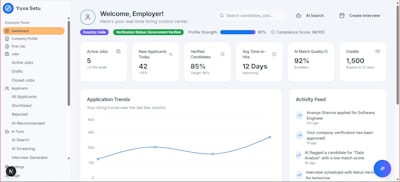
Analytics turns feedback into actionable information. A Power BI dashboard connected to the intranet makes it possible to see in real time the number of suggestions, the average closing time, satisfaction by department and search trends. These indicators help managers detect emerging problems before they become crises. Furthermore, linking feedback to business metrics makes it possible to justify investment in improvements and demonstrate that the platform generates measurable value.
Each organization has different processes, jargon and needs. A generic intranet imposes a structure that rarely matches reality. That is why custom software has become the natural choice for companies that want to capture feedback without friction. A custom development allows capture points to be placed exactly where the user works: inside a vacation request form, in a purchase order or at the end of a task. It also integrates with existing tools instead of forcing a platform change. Flexibility is the foundation for feedback to stop being a chore and become a habit.
Artificial intelligence multiplies the value of feedback. When an intranet receives hundreds of comments, it is impossible to review them all manually. AI agents can classify each suggestion by topic, urgency and sentiment, detect patterns in usage data and propose preliminary responses for the governance committee. With AI applied to this process, an organization can turn noise into a prioritized roadmap and free up team time to focus on strategic decisions.
From a technical point of view, a feedback-oriented intranet needs scalability and security. Deploying on AWS/Azure cloud makes it possible to adjust resources according to the number of users and process interaction data without compromising performance. Cybersecurity is not an extra: access control, encryption, auditing and protection against attacks are essential requirements. When artificial intelligence analyzes internal data, the design must include network segmentation, VPN connections and private endpoints so that nothing leaves the authorized perimeter.
Q2BSTUDIO supports companies in this process as a technology partner. Its software development team works on a discovery phase to map current flows, define KPIs and detect internal resistance. Then it implements in phases, integrates legacy systems, trains teams and delivers a web portal so that managers can configure their own AI agents and manage feedback without depending on engineering for every change. This approach allows organizations to gain autonomy and scale their improvements continuously.
Results usually appear within a few months. Employees feel heard, intranet content reflects real needs and processes are simplified. Companies report fewer internal tickets, faster onboarding and more fluid communication. The cost of building such a system is recovered through reduced time and operational errors. Ultimately, an intranet with active feedback is not a closed project, but a platform that improves by itself, thanks to the people who use it every day.