
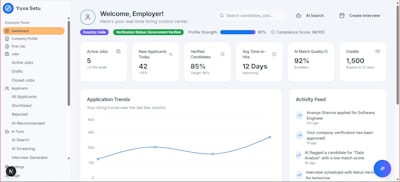
Digital transformation is not complete with disconnected tools. Organizations need a central space where processes, knowledge, data, and internal communication converge. The intranet that replaces SharePoint has become a strategic priority because it stops being a simple document repository and becomes the operating system of daily work. This article explains why this evolution drives business growth and how to approach it with confidence.
For years, SharePoint was the foundation of many corporate intranets. However, current demands —remote work, automation, security, data analytics— quickly exceed the limits of a platform that often accumulates duplicate versions, complex structure, and low adoption. People don't need a file library; they need answers, automated tasks, and visibility into what is happening across the company. That is why more executives are evaluating an intranet that replaces SharePoint: not to lose history, but to add capabilities that did not exist when the original system was deployed.
A modern intranet is designed as a custom environment that adapts to real work. This is where technology creates competitive advantage. Developing custom software makes it possible to build onboarding modules, project management, internal requests, and dashboards without starting from rigid templates. When software fits the company's processes, adoption comes naturally because people recognize their daily work in the tool.
Artificial intelligence plays an essential role. Traditional search engines return documents; AI understands questions and summarizes information. An employee can ask about the remote work policy and get a direct answer with the source. AI agents go further: they classify emails, open tickets, validate documents, and free teams from repetitive tasks. In this way, the intranet stops being an archive and becomes an active assistant.
A next-generation intranet looks more like a work platform than a corporate portal. It includes semantic search, dynamic profiles, intelligent versioning, team spaces, and above all, the ability to execute actions. HR forms, approvals, room bookings, or technical incidents can converge in the same place. This integration is only possible with custom software and an open architecture that connects internal and external services.
Infrastructure matters too. Deploying the intranet on AWS/Azure cloud provides elasticity, automated backups, and continuous maintenance. Q2BSTUDIO chooses the cloud architecture based on each project, ensuring the platform grows without disruptions. In addition, connecting with BI/Power BI solutions turns the intranet into a hub of operational data. Executives can check usage rates, resolution times, internal satisfaction, or cost per process from a single dashboard.
Cybersecurity is a non-negotiable pillar. An intranet that replaces SharePoint must protect sensitive information and comply with regulations such as GDPR. Role-based access, audit logs, encrypted connections, and secure access to private networks are basic requirements. Q2BSTUDIO applies cybersecurity practices from the design phase, avoiding last-minute patches and reducing the risk of data leaks.
The competitive difference lies in AI agents. While a traditional intranet waits for the user to search, an intelligent intranet suggests content proactively: a new hire receives an onboarding plan, a manager sees delay alerts, a sales rep obtains the latest version of a contract without asking. These agents operate on the corporate knowledge base and can act on external systems through integrations, always with human supervision in critical processes.
The hybrid work model reinforces the need for this platform. When part of the workforce works remotely, the intranet is the meeting point: meetings, projects, decisions, and corporate knowledge share the same space. A consistent digital experience reduces isolation and improves collaboration between offices. Therefore, more than a technical migration, this is a business tool that supports the evolution of the company.
How does all this translate into business growth? First, it accelerates productivity: less time searching for information, more time executing tasks. Second, it reduces operating costs by automating administrative activities. Third, it improves decision-making because company data feeds business indicators. Finally, it enables scaling without losing coherence: new offices, teams, or countries can join the same platform with standardized processes.
A common belief is that replacing SharePoint means giving up previous investments. That is not the case. A modern intranet connects with Active Directory, Microsoft Teams, SAP, Salesforce, and other applications. The key is an integration layer that unifies data and exposes processes whether they live in the cloud or on-premises. Thus, the project becomes an extension of the current ecosystem, not a radical restart.
Success also depends on adoption. A well-built but empty intranet generates no value. That is why the change plan includes internal communication, training, digital champions, and feedback loops. The interface must be clear, fast, and similar to the applications people use in their personal lives. Technology is necessary, but transformation is cultural.
From a financial perspective, an intranet that replaces SharePoint pays for itself faster when measured with objective criteria. By reducing onboarding time, avoiding rework, and automating manual tasks, savings accumulate every month. Q2BSTUDIO helps build the business case with metrics and timelines, so the investment decision is based on evidence, not intuition.
It is also important to measure impact continuously. Beyond logins, metrics such as average onboarding time, unanswered searches, percentage of automated tasks, or employee satisfaction score are more meaningful. With that information, teams can prioritize improvements and demonstrate ROI to leadership. The intranet becomes a living product, not a project that ends at launch.
In short, the intranet that replaces SharePoint drives business growth when designed with an integrated vision of strategy, technology, and people. Q2BSTUDIO, as a software development and technology company, combines custom software, artificial intelligence, automation, cloud, and cybersecurity so each organization can build its ideal platform. The result is not just a tool change, but a structural advantage that is hard to imitate.
