
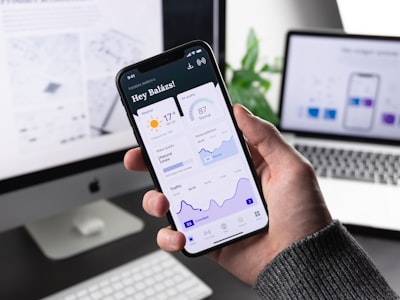
In 2026, company productivity is no longer measured only by the effort of teams, but by how smoothly information flows across departments, locations, and devices. Organizations in Valladolid that combine office, warehouse, and field staff face a common challenge: keeping everyone aligned without relying on email chains or endless meetings. A mobile-first intranet solves exactly that challenge. It allows access to processes, documents, and data from anywhere, with the same user experience as a native application installed on a mobile phone. Q2BSTUDIO, a software and technology development company, has turned this need into a real success story in Valladolid in 2026.
The mobile-first concept is not an aesthetic choice or a passing trend. It is a strategic decision that determines adoption of the entire platform. Most operational workers do not have a fixed desk with a desktop computer; they need to check information, approve requests, and update records from their phone, often outside the office. An intranet designed for mobile first reduces friction and ensures the system is used every day. On this basis, Q2BSTUDIO incorporates custom software development, process automation, and AI agents that turn the intranet into an enterprise operating system, not just a notice board.
The starting point of the project was clear. The client, a mid-sized company in Valladolid with an operations and back-office team of between 12 and 25 people, operated with an ERP, a CRM, SharePoint, Microsoft Teams, and several internal tools developed over the years. The problem was not a lack of technology, but quite the opposite: there were too many disconnected pieces. Supplier entries were created manually, approvals travelled by email, document versions were duplicated, and there was no dashboard that summarized the real state of operations. All this translated into errors, delays, and an administrative burden that consumed productive hours.
Q2BSTUDIO began with a thorough diagnosis. Before writing a single line of code, the KPIs that would guide the decision were defined: average response time for incidents, hours spent on manual tasks, process error rate, and end-to-end cycle time. This habit, putting the focus on metrics from day one, is what makes it possible to turn digital transformation into a defensible financial result. When an intranet project is approached without previous indicators, any improvement sounds like opinion; with a clear baseline, impact can be measured, compared, and communicated.
The solution was built in twelve weeks and deployed on an AWS/Azure cloud architecture, chosen for its scalability and ability to integrate with existing systems. The intranet centralizes information in a single portal and offers each profile a personalized view according to role: the operations team sees pending tasks, the manager sees alerts, and leadership sees global indicators. The platform includes an AI assistant that answers questions about internal procedures, classifies documents, and proposes actions. In addition, AI agents were designed for tasks such as invoice validation, order reconciliation, and incident prioritization, always with human supervision at points where a wrong decision would have significant cost.
Cybersecurity was a pillar from the start, not a final addition. Role-based access control, multifactor authentication, audit logging, and data encryption in transit and at rest were implemented. In addition, the infrastructure was deployed with VPN and private endpoints in Azure, so communication between the intranet, AI agents, and the client's on-premises systems never depended on public connections. This is especially relevant for companies that have already suffered intrusion attempts or that handle sensitive customer data, and it proves that agility is not incompatible with security.
In the data layer, Q2BSTUDIO integrated the intranet with the ERP and CRM, unifying information into a coherent data model. From there, the intranet feeds BI/Power BI dashboards that show the state of operations in real time: pending orders, open incidents, hours spent on manual management, and evolution of cycle times. Management went from waiting for a manually prepared weekly report to checking the data from their phone with a simple gesture. Visibility not only improves decision-making, but also encourages teams to be more disciplined in managing information.
The results measured in this success story in Valladolid are compelling. Comparing the situation before and after deployment, the company achieved a 45% reduction in repetitive manual work, a 32% faster process cycle, a 28% lower operational cost in the first six months, and 92% process accuracy, up from a 78% baseline. Return on investment was reached in nine months. These figures are not the result of a magic solution, but of removing bottlenecks and ensuring that each person has the right information at the exact moment they need to act. Automation does not replace human judgment; it empowers it.
User experience was another success factor. The mobile-first intranet is not perceived as an additional login, but as the only gateway to daily work. The team stopped switching between five systems to check pending tasks, approve requests, upload documents, and receive alerts. Training took half a day, and initial support focused on solving functional, not technical, questions. This ease of use is key when working with operational profiles without specific technical training; if a tool requires too much explanation, adoption drops and the project loses profitability.
Several lessons can be drawn from this case. First: defining KPIs before development is the cheapest investment and the one with the highest return. Second: integrating existing systems is better than imposing a new suite that forces everything to migrate. Third: maintaining human checkpoints in every AI workflow, especially in processes with economic or legal consequences. Fourth: phased deployment reduces operational impact and facilitates internal acceptance. Fifth: cybersecurity is not a last-minute technical requirement, but a design condition. For a mid-sized company in Valladolid, this means it does not need to reinvent its entire infrastructure; it needs an intelligent layer that connects, protects, and automates what already exists.
Digital transformation leaders must look beyond responsive design. In 2026, a mobile intranet is defined by its ability to integrate with the ecosystem, by the maturity of its AI agents, by the strength of its cloud architecture, and by the quality of its indicators. Q2BSTUDIO combines custom software, AI, cybersecurity, AWS/Azure cloud, and BI/Power BI under a single engagement model, with web portals that allow clients to manage AI autonomously after launch. That combination is what makes it possible to move from a pilot project to a structural solution with visible results on the bottom line.
In short, the mobile-first intranet in Valladolid in 2026 is no longer an optional competitive advantage; it is an operational condition for competing with agility. Companies that approach it with methodology, up-front KPIs, and enterprise technology will obtain measurable results in less than a quarter, as this case shows. Q2BSTUDIO has proven that it is possible to reduce manual work, accelerate cycles, and give people back the time currently lost in tasks that do not add value. The future of the intranet is not a corporate news directory; it is an intelligent, mobile, secure, and action-focused platform.

