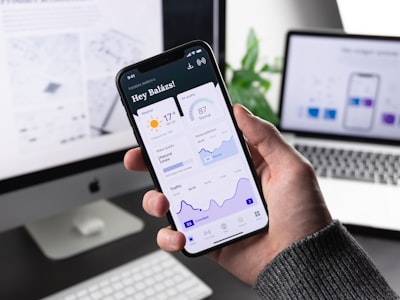
The leap from a corporate intranet concept to daily operations is one of the most delicate moments in any digital project. In Santa Cruz de Tenerife, companies in logistics, tourism and professional services are preparing their internal systems for 2026 with a clear priority: making mobile access as natural as desktop access. However, a mobile-first intranet is not just an adapted screen. It requires a product strategy, a solid architecture and a continuous evolution plan.
When organisations approach this transformation, they usually find three problems: teams working with scattered tools, processes that depend on spreadsheets, and a gap between what management wants to measure and what the systems can provide. To solve this, the technical approach must combine custom application development with flexible cloud platforms. There is no one-size-fits-all template; each intranet needs its own permission logic, approval flows and dashboards.
One of the most common mistakes is assuming that a modern intranet must replace all legacy systems. In practice, value appears when the new mobile layer connects to the ERP, CRM and internal databases. That is where integration engineering makes the difference. The key is to expose secure APIs, synchronise identities and ensure that information travels without duplicates or conflicts. At this point, custom software development makes it possible to adjust each connector to the company’s operational reality, instead of forcing processes into generic logic.
A reliable production plan starts with a functional and technical audit, continues with the definition of critical flows and ends with a phased deployment. In each phase, the team validates security, performance and usability. Operational documentation is not an extra: it is the tool that allows the IT department to manage the system without depending on the provider. That is why Q2BSTUDIO projects include manuals, training and an administration portal.
Cybersecurity is another non-negotiable pillar. An intranet accessible from mobile multiplies the exposure surface. Every new endpoint, every API and every cloud synchronisation opens a potential attack vector. Therefore, security design must be present from day one: multi-factor authentication, role-based access control, activity logging, audit trails and encryption in transit and at rest. Data protection regulations also require records to include consent and proper traceability.
Deploying to production requires choosing the best infrastructure support. Many companies in Tenerife opt for a multicloud strategy on AWS and Azure, taking advantage of managed services and horizontal scaling. A well-designed architecture separates the portal’s static components, backend services and databases, so each piece can be updated without interrupting service. Infrastructure as code and pre-production environments allow changes to be validated before reaching the end user. AWS and Azure cloud is not just a hosting decision: it is a strategic choice that affects the performance and security of the whole intranet.
Another aspect that many companies forget is configuration management. Internal mobile applications need separate environments for development, testing and production. Each environment must have its own variables, permissions and network policies. Deployment automation reduces human errors and accelerates the incorporation of new functionalities. A continuous integration pipeline compiles code, runs tests, analyses quality and prepares the release package. In this way, the IT team can launch versions with confidence and roll back quickly if something fails.
The role of artificial intelligence is increasingly relevant. Intranets in 2026 do not only display documents: they answer questions, summarise internal policies, help draft proposals and automate repetitive tasks. For this to be safe, models cannot be trained with confidential data without control. It is necessary to apply retrieval-augmented generation (RAG) techniques, configure private models or manage access through protected endpoints. In this way, AI generates answers based on corporate knowledge without compromising confidentiality.
AI agents go beyond chatbots: they are autonomous processes that can query inventory, update a CRM record or escalate an incident to the right person. Their implementation must be accompanied by supervision mechanisms and clear boundaries to avoid unwanted decisions. The key is that humans retain control and that every agent action is logged. These agents turn the intranet into an automation platform, not just a document repository.
To understand the system’s impact, the Business Intelligence layer is essential. A mobile-first intranet generates large amounts of usage data, response times and resource access. Converting that data into useful indicators requires dashboards that connect digital activity with business results. Power BI is a common option for visualising trends, comparing teams and detecting bottlenecks before they become problems. The goal is not to accumulate charts, but to answer specific questions: where is time lost? Which content is viewed most? Which automations free up more hours?
In Santa Cruz de Tenerife, the business fabric is very diverse. A port services company has different needs from a consultancy or a distribution chain. Nevertheless, all share the need to reduce time spent on administrative tasks and improve decision-making. A well-executed mobile-first intranet can achieve both goals: employees consult a process, receive a notification, complete a form and approve a request from their phone, without depending on a computer. For companies operating across several islands, this mobility is a direct competitive advantage.
Q2BSTUDIO works with this approach: it understands the starting point, defines the most suitable architecture and builds the system with the client, prioritising autonomy and continuous improvement. Its team combines web development, data engineering and AI experience to take the intranet to production with guarantees. In addition, as a company involved in the Canary Islands tech ecosystem, it knows first-hand the particularities of the local business fabric and European regulations.
The project does not end with deployment. After going live, it is necessary to measure adoption, review load times and adjust flows. Design decisions must be based on real usage data. A common mistake is to consider the intranet finished once published; in reality, that is the moment when it begins to learn from the organisation and show its true value. Companies that understand this cycle are the ones that achieve sustainable returns from their technology investment.
For a mobile-first intranet to be profitable, it should be accompanied by a change management strategy. It is not enough to make the tool available to employees; they need to understand how it makes their day easier, what tasks can be delegated to an AI agent and what information can be found through conversational search. Adoption is the difference between a used platform and an abandoned project. That is why Q2BSTUDIO also supports training and internal launch communication.
In short, taking a mobile-first intranet to production in Santa Cruz de Tenerife in 2026 is a process that demands strategic vision, technical rigour and careful execution. Mobility, artificial intelligence, cybersecurity and analytics must coexist in the same product. When that happens, the intranet ceases to be a digital notice board and becomes the organisation’s nervous system.