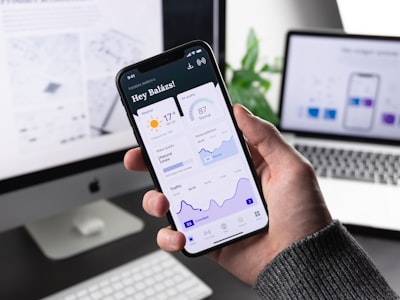
The mobile-first intranet has become a strategic asset for companies in Santa Cruz de Tenerife that need to keep teams connected while they work from the office, from home, or on the move. In 2026, an intranet designed for mobile first is not a luxury but an operational necessity. Employees expect to review documents, approve requests, update data and communicate with colleagues from any device, without depending on a desktop computer. This guide answers the most frequent questions that directors, middle managers and IT managers ask before starting this kind of project on the island.
A well-designed mobile intranet centralizes information and reduces friction in internal processes. Instead of searching through shared folders and email threads, every person accesses a unified environment with news, documents, forms, indicators and collaboration tools. For a company in Tenerife, this means less wasted time, fewer administrative errors and faster decision-making. In addition, the mobile-first approach forces teams to simplify interfaces and focus on the essential, which also benefits people working from a desktop.
To achieve this, many organizations choose custom software development, because generic solutions do not always fit internal workflows, company culture or the needs of a team that moves between different workplaces. A proprietary application makes it possible to define permissions, connect business systems and design a genuinely mobile experience, without dragging the limitations of a standard product.
From a technical perspective, a mobile intranet relies on flexible cloud architectures. Companies in Santa Cruz de Tenerife can deploy it on AWS or Azure, integrate it with systems such as SAP, Salesforce, Odoo or Microsoft Dynamics, and expose information through their own APIs. This foundation makes it easier to add Power BI dashboards and advanced analytics to measure platform usage, time spent on each task or the impact of automation.
AI agents are increasingly common in these environments. They automate requests, answer frequent questions, classify documents and help teams focus on higher-value activities. To do this, companies can use private models or cloud services, always with the necessary protection measures. A sensible strategy is to start with a limited pilot, measure its results and then scale to other areas. The artificial intelligence solutions from Q2BSTUDIO also include team training and continuous model optimization.
Before starting an intranet project, it is worth clarifying some common doubts. These are the questions that executives and IT managers ask most often, with answers oriented to the reality of a Canary Islands company.
The first question is usually deployment time. A first functional version can be available in a few weeks if the scope is well defined and the most critical processes are prioritized. The final schedule depends on the number of integrations, the volume of data and the availability of internal teams. For this reason, before committing to a date, it is advisable to carry out an analysis and planning phase.
Another frequent question is the required investment. A mobile intranet can be implemented in phases, starting with a communications and documents module, and then adding automation, BI or AI. The final cost depends on the scope and technical complexity. The most sensible approach is to evaluate the expected return: saved administrative hours, better employee experience, shorter onboarding time and fewer process errors.
People also ask whether it is necessary to replace their current ERP or CRM. It is not. A mobile intranet acts as an integration and user experience layer, connecting with existing systems through APIs, connectors and automation. This protects the investment already made and reduces the risk of a disruptive change. Before defining the architecture, it is advisable to create an inventory of systems and a data map.
Security is another major concern. Confidential information must be encrypted, with role-based access control and audit logging. Companies that process personal data must comply with the GDPR and review permissions periodically. In addition, if the intranet connects to cloud services or internal APIs, cybersecurity testing is essential to identify vulnerabilities before they can be exploited.
The role of AI in a mobile intranet is the question that raises most interest in 2026. Beyond an internal search engine, AI can summarize documents, suggest responses, automate approvals, detect anomalies and provide personalized recommendations. It also makes it possible to create AI agents that act as virtual assistants in areas such as human resources, finance or technical support. It is advisable to define from the beginning which decisions agents can make and which ones require human review.
Many managers of small companies in Santa Cruz de Tenerife believe that a mobile intranet is only for large corporations. This is not true. The modular approach allows starting with a simple solution and adding advanced features later, such as Business Intelligence, process automation or intelligent assistants. The important thing is to choose a platform that can evolve without breaking what already works.
Daily management is another point that often raises doubts. An intranet should not depend on a few technicians to stay alive. The ideal solution includes a clear administration panel, documentation for editors and a governance model that defines who publishes, who approves and who reviews access. Only in this way can the platform avoid becoming a repository of outdated information.
Q2BSTUDIO is a software development and technology company that supports organizations in Santa Cruz de Tenerife in this kind of transformation. Its team combines software engineering, experience with AWS/Azure cloud, cybersecurity, Business Intelligence and process automation. Instead of imposing a closed platform, it designs a custom solution that fits the real processes of the client and provides the keys for the internal team to operate it autonomously.
In short, a mobile-first intranet in Santa Cruz de Tenerife is a business decision, not just a technology project. It unifies communication, accelerates processes and gives every employee a simpler work experience. The combination of cloud, AI, cybersecurity and analytics turns the intranet into a digital transformation platform. Companies that act in 2026 with a clear vision and an experienced partner will have a competitive advantage that will be difficult to match.