One of the first questions that arises when a company considers digitizing a process or launching a digital product is inevitable: how much does a custom application cost? The answer cannot be a closed figure without first understanding the context. Every business has different workflows, data volumes and objectives. A custom solution is born to fit that reality, not to force the organization to change its rules. Therefore, price is built from scope, technical complexity, required integrations, security requirements, ongoing maintenance and the expected evolution over its useful life.
Custom software is also a strategic decision. Generic tools solve common problems, but they hardly provide a sustainable competitive advantage. When code, interface and processes are designed for a specific company, manual tasks can be eliminated, customer service improved, and information that was once scattered can be obtained. Q2BSTUDIO, a software and technology development company, understands application development as an engineering and business exercise, where every feature must justify its existence by the value it generates.
Custom software development involves an iterative process in which communication with the client is essential. Product teams usually start with a discovery workshop, user interviews and a review of existing systems. This initial phase makes it possible to identify assumptions, risks and priorities. It is not about writing code quickly, but about doing so on solid foundations. The better developers understand the business, the lower the probability of rework and the greater the chances of delivering a solution that people use every day.
Collaboration is one of the aspects that most influences the user experience. A custom application can include a role-based permission model, so each person sees the sections relevant to their function. This not only protects information, but also reduces visual overload and allows teams to move forward with clarity. In addition, comments and mentions associated with a task turn the application into a productive conversation space, eliminating the need to resort to email for operational matters.
In an increasingly remote environment, real-time presence is a highly valued feature. Knowing whether a colleague is editing a document, whether a manager has approved a request or whether the system is processing a request generates confidence and agility. Automatic version history management complements this experience: any error can be reverted, any change can be traced, and all participants know who did what. Integrations with chat and video conferencing tools round out the collaborative ecosystem.
From the technical point of view, the cost of a custom application is distributed across several fronts. The first is infrastructure. Choosing between a deployment on on-premises servers or in the cloud conditions both initial investment and operating expenses. AWS and Azure cloud services offer pay-per-use models, high availability and managed tools that reduce administrative burden. Q2BSTUDIO helps clients size the right resources, avoiding both waste and the risk of falling short during demand peaks.
The decision to use AWS and Azure cloud services is not only technical; it has budgetary and legal implications. The region where data is stored, expected response time, ease of integration with other platforms, and backup strategy must all be considered. A good cloud architect knows that cost is not measured only by the price of the virtual machine: bandwidth, storage, backups and retention policies also count.
Cybersecurity is another component that should not be cut. Custom software that manages personal, financial or industrial data needs protection from day one. This includes secure authentication, encryption in transit and at rest, access management, event auditing and penetration testing. Regulatory compliance, such as GDPR, adds requirements that must be present in the architecture and in the documentation. Vulnerabilities detected in production are much more expensive to fix than those found during development. Therefore, a specific budget line for security must appear, along with user training and technical documentation.
Another element that increases the value of custom software is business analytics. Integrating a dashboard with Microsoft Power BI turns data into decisions. For example, an order management system can automatically send sales, return or inventory metrics to a visual panel. Managers stop asking for manual reports and can filter information by period, customer or product. Business intelligence does not have to be a separate module; it can be embedded in the application employees use every day.
The arrival of artificial intelligence has added a new layer of possibilities. AI agents can act within custom software to automate tasks, answer frequently asked questions, classify requests or predict behavior. An integrated assistant could draft a response to a customer, suggest a discount in a specific offer, or alert about possible fraud. For these agents to work, a clear process design and an architecture that guarantees data privacy are needed. It is not about adding AI because it is trendy, but about identifying the points where the algorithm provides measurable benefit.
The contracting model is also part of the answer about cost and should be chosen according to the client's risk tolerance. A fixed-budget project offers a clear forecast, but usually requires a very detailed scope and penalizes changes. The time and materials modality is more flexible, although it demands monthly control of hours and good prioritization by the product owner. The agile approach combines the best of both worlds when executed well: a budget is defined for a period and the tasks that enter each iteration are selected according to their value. Q2BSTUDIO uses these formulas transparently, so the company always knows what it is paying for and why.
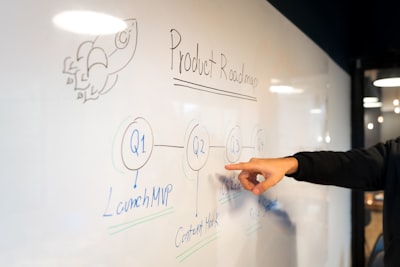
One way to reduce uncertainty is to start with a minimum viable product. Instead of addressing all desired features, a first version is built with the essentials and user behavior is measured. That information makes it possible to decide with data whether to expand the scope, adjust the design or fix the business logic. The MVP is not a careless draft; it is a real but scoped product that demonstrates the viability of the initiative and lays the foundations for incremental development.
Q2BSTUDIO applies this philosophy in every project. Its methodology starts with a requirements analysis in which both the technical team and business managers participate. Next, a scalable architecture is designed, the appropriate technologies are chosen, and the indicators that will determine success are defined. During development, the client has a collaborative work environment where they can see the progress of tasks, test intermediate versions and communicate directly with the team. This degree of transparency reduces the distance between what the client expects and what is finally delivered.
In short, the cost of a custom application is not a fixed figure, but an investment that can be planned and optimized. It depends on scope, architecture, integrations, security, business intelligence and delivery model. It also depends on the provider's ability to listen and translate a need into an operational solution. Q2BSTUDIO combines technical experience and business vision to offer clear budgets and projects that generate results. The most useful question is not only how much it costs, but what return the company can obtain with software that truly adapts to the way it works.