The cost of custom software is a strategic decision, not just a budget line. Many organizations assume they need to pay everything upfront, but there are financing models and phased payments that make custom applications possible without straining cash flow. Q2BSTUDIO, a software development and technology company, helps structure the financial plan of each project according to its objectives, maturity, and real needs.
To choose well, it is worth understanding what makes up the cost of custom software. It is not only programming: it involves discovering requirements, designing architecture, integrating systems such as ERP or CRM, protecting data, and maintaining the application as it evolves. Each of these blocks can be financed differently, and that flexibility is key to preventing the investment from blocking other initiatives.
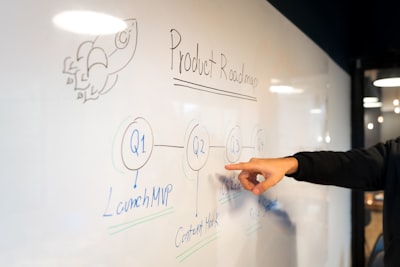
Phased payments are one of the most common models. Instead of paying a single amount, the client pays at milestones linked to results: approval of analysis, development of a minimum viable product, delivery of modules, training, and initial support. This structure reduces risk because each phase is validated before moving to the next. It also allows scope adjustments without renegotiating the entire contract.
Subscription billing is another attractive alternative. Instead of a large capital payment, monthly or quarterly fees are agreed to cover application usage, hosting, updates, and support. This model converts capital expenditure into operating expenditure, which is especially useful for companies that work with recurring budgets and need predictability.
Deferred payments also make sense when the new tool generates measurable savings. For example, if a custom application automates administrative tasks and reduces working hours, payments can be aligned with those savings. In this way, financing depends not only on initial payment capacity but on the future profitability of the project.
For larger investments, there are partnerships with specialized financial institutions. These companies can offer leasing or capital plans that distribute the cost over several fiscal years. Q2BSTUDIO works with procurement and finance teams to evaluate whether this type of financing fits better than direct payment, and provides the necessary technical documentation.
Bundled packages that combine implementation and managed services are another option. By including maintenance, monitoring, and evolution in a single fee, supplier management is simplified and surprises are avoided. This approach is common in projects that require operational continuity, such as those supported by cloud AWS/Azure or data analytics platforms.
The question of how to finance has no single answer. It depends on risk appetite, cash flow, and the internal team's capacity to oversee the project. A good provider should offer a transparent estimate after a discovery phase and propose a coherent payment schedule. At Q2BSTUDIO we work this way from the first contact, with custom applications that adapt to each organization's budget and timeline.
The technology chosen also affects financing. A cloud architecture with AWS/Azure allows gradual growth: you pay for consumption, start with small environments, and scale when demand justifies it. This directly impacts the payment plan, because infrastructure cost is not fixed and can be integrated into operating fees instead of a large initial investment.
AI systems especially benefit from a phased approach. Instead of waiting for a perfect, complete project, intelligent agents that solve a specific use case can be implemented, and once value is demonstrated, their scope can be expanded. Thus, each phase can be funded with revenue or efficiencies generated by the previous one. Q2BSTUDIO proposes integrating artificial intelligence incrementally, combining technology and business without friction.
Business analytics is another ally for financing. Including BI/Power BI in a custom solution allows key indicators to be measured from the first months, providing objective evidence of return on investment. When data shows cost reduction or revenue increase, it is easier to justify later phases or system expansions.
Cybersecurity is not an extra that can be delayed. A realistic payment plan must include audits, pentesting, monitoring, and regulatory compliance from the start. Deferring these items may seem like a saving, but in reality it exposes the organization to risks that end up costing much more. Q2BSTUDIO integrates cybersecurity into development and into the financing plan.
Our approach is to first understand business priorities and then propose the economic model. We collaborate with procurement and finance departments to structure payments linked to milestones, metrics, or fiscal calendars. We do not believe in rigid solutions; we believe in projects that generate value from the start and are paid for as that value materializes.
In summary, the cost of custom software should not be an obstacle. Phased payments, subscription, and deferred models make it possible for any company to adopt advanced technology: custom applications, AI, cloud AWS/Azure, BI/Power BI, and cybersecurity. With a technology partner like Q2BSTUDIO, each project can be planned with confidence, without compromising financial stability.