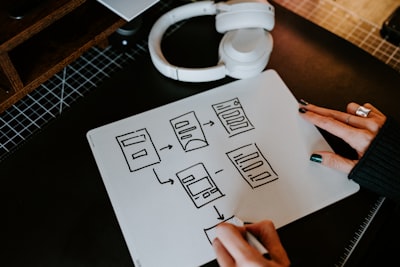
Custom software for task automation is not priced like a standard product: its cost is built from the reality of each business, the processes to be digitized, and the systems already in place. Companies looking to reduce repetitive work often start by asking how much an application costs, but a responsible answer requires first analyzing what happens today, what information is needed, who participates in each workflow, and what level of supervision the organization wants to keep. Automation is not just replacing a person with a robot; it is redesigning an operation so that each task runs at the right time, with the right data, and with enough control.
Therefore, when a company asks about custom applications for process automation, the budget depends less on the number of screens and more on the business logic that must be represented. Some automations are linear, such as reading a spreadsheet, applying simple rules, and updating an ERP. Others include complex decisions, integrations with external platforms, human interaction, and audit requirements. The combination of these factors defines the design, development, and testing effort, which is the basis of the final cost.
Process automation services can include software robotics, rule engines, task orchestrators, virtual assistants, and AI agents. In a typical project, the team interviews business owners, documents current workflows, identifies bottlenecks, and proposes a target state. That discovery work usually represents a significant part of the investment, because it avoids building a solution that automates a poorly designed process or depends on low-quality data. Automating a deficient operation multiplies the error quickly.
Artificial intelligence changes the picture because it allows an application to understand natural language, classify documents, extract data from invoices, and recommend actions. A system with AI agents can, for example, read the tickets that arrive by email, connect them with the customer account, look up information in the CRM, and suggest a response to the support team before the customer finishes describing the problem. Including this kind of capability in a custom application increases the initial budget, but it also multiplies the number of tasks that can be resolved without human intervention. The key is not to include AI for the sake of trends, but to limit it to process points where it brings measurable improvement.
The infrastructure where the software lives is one of the factors that varies most between budgets. Deploying on cloud AWS/Azure reduces the need to buy servers and allows projects to start with modest upfront costs. In addition, these providers include queues, databases, authentication, automatic scaling, and monitoring services that speed up development. A well-designed automation solution uses these services to run on-demand tasks, handle load spikes, and stay operational 24 hours. If a company prefers not to depend on an external provider, an on-premise option is also viable, although it requires more investment in operations and maintenance.
Security should not be treated as an afterthought. Software that acts on invoices, payrolls, contracts, or personal data is an attractive target for cyberattacks. Therefore, the automation budget should include user authentication, role-based permissions, communication encryption, activity logging, and failure recovery mechanisms. In regulated industries, cybersecurity also requires penetration testing and documented controls for audits. If these requirements are included during development, the extra cost is small compared with the risk of having to redesign the system months later due to a breach or compliance failure.
Measuring the result is as important as building the automation. A dashboard based on Power BI makes it possible to detect whether a flow is taking too long, whether an exception repeats too often, or whether a robot needs retraining. The indicators defined at the beginning of the project, such as average processing time, percentage of cases without intervention, and monthly savings, become the reference for evaluating return on investment. This Business Intelligence layer not only helps control costs, but also reveals new improvement opportunities within the same process.
How the project is contracted also influences how much is paid. Fixed-budget projects give clients certainty but leave limited room for changes. Other projects use dedicated teams and time-and-materials billing, which offers flexibility but requires more scope control. At Q2BSTUDIO we propose an intermediate model: we start with an analysis phase and progressive deployment, so the client sees results early and decides how to continue. This reduces the risk of investing in features that were not priorities and makes it possible to fine-tune the automation as the team uses it.
In addition, ongoing maintenance must be considered. Custom software for automation is not a static deliverable: the systems it connects to change, business rules evolve, and workloads grow. The budget should include a support plan, dependency updates, performance monitoring, and training for internal teams. Many companies underestimate this part and later find themselves with an outdated tool. A good technology partner includes evolution in the roadmap and explains from the beginning what maintenance will be needed.
At Q2BSTUDIO, a software development and technology company, we help companies in different sectors launch custom applications focused on automation. We analyze the process, estimate the effort, propose an architecture based on AI, cloud, and data, and accompany teams during implementation. We also integrate the solution with the management systems already in use, avoiding data silos. The goal is for the investment to translate into fewer operational hours, fewer errors, better customer experience, and more reliable management information.
Returning to the initial question, there is no universal price because each automation has a different scope and complexity. However, a professional estimate is possible when time is spent understanding the process and working with a team that combines technical experience, integration skills, and business vision. What matters is not choosing the lowest budget, but the one that minimizes total cost of ownership and delivers automation that really works, is secure, and can grow with the company.