
Can custom software cost predict business trends? At first glance, the answer seems economic: a development budget depends on working hours, functional scope, technical complexity, and integrations with other systems. However, when observed from a strategic perspective, the pattern of technology investment reveals much more than a figure. It speaks about priorities, future bets, and how a company expects its market to behave. The cost of an application is not an isolated data point: it is a business intelligence decision.
The price of an application has no predictive magic. No figure, however precise, can say on its own where revenue will be in six months. What it does do is make it possible to build a system that turns internal and external data into prospective information. In that sense, the cost of custom software is the gateway to an analytical capability that, when well designed, allows organizations to anticipate demand, risks, or changes in the customer base. Prediction is not born from the expense, but from the architecture that the expense makes possible.
This distinction is essential if we want to answer rigorously. Talking about trends requires separating what we pay for a platform and what that platform can return in future decisions. Most organizations already have historical data, but without an application to centralize, clean, and model that data, information remains scattered. Custom software can organize that chaos and transform scattered records into prospective knowledge, combining time analysis with business rules, alert indicators, and simulations. The usefulness lies not in the cost, but in the analytical logic.
When a company decides to invest in a custom application, it is not simply buying a tool: it is defining which metrics matter, which processes it wants to automate, and which questions it wants to answer. That choice contains a hypothesis about the future. For example, if a company asks for a module to manage customer churn, it is indicating that its biggest risk is churn. If it asks for a real-time sales dashboard, it is betting on a demand-oriented strategy. If it includes price simulation, it is saying that its market is sensitive to rate changes.
Cloud computing and artificial intelligence multiply that effect. An elastic infrastructure makes it possible to train models on huge volumes and adjust computing capacity according to demand. AWS/Azure cloud services reduce the cost of experimentation and speed up the deployment of new algorithms. By combining cloud with AI, predictions can be updated in short cycles and connected to external data sources, such as macro indicators, search trends, or supplier behavior. Technology thus becomes a radar for change.
Cybersecurity also plays an essential role. A predictive system that analyzes trends needs to be fed with reliable data. Without proper measures, a model can be manipulated, or a data leak can invalidate any competitive advantage. Security audits, encryption, and penetration tests are not an isolated expense: they protect the raw material that feeds prediction. In this sense, cybersecurity does not slow analytics down; it sustains it.
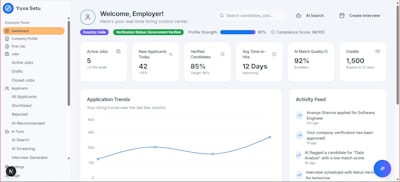
Business intelligence, known as BI, turns forecasts into decisions. With tools such as Power BI, model results are presented in executive dashboards, with visual indicators that any manager can interpret quickly. It is at this point that predictions stop being a technical exercise and become courses of action. A good dashboard does not merely show the past; it points out the forks in the road ahead and provides context for choosing.
AI agents are another layer of value. They do not only predict: they act. An agent can review inventory levels and suggest replenishment, detect anomalous variations in orders, propose responses to incidents, and recommend the next best action. These capabilities are embedded in custom software, not as isolated functions, but as part of a decision ecosystem. When an AI agent is trained with internal data, its recommendations reflect the unique logic of each business.
Building that ecosystem requires an integral view of custom applications. Q2BSTUDIO, a software and technology development company, helps companies transform their software costs into competitive advantages. Its software development projects are not limited to writing code: they include architecture design, integration with legacy systems, performance metrics, and an incremental roadmap. The work begins with discovery to understand the starting point and ends with solutions that people use every day.
In practice, custom software cost behaves like a map of aspirations. A project with predictive technology costs more at the beginning because it requires more data analysis, cloud infrastructure, and specialized talent. That apparent extra cost is really an investment in visibility. The organization that understands this dynamic stops asking how much development costs and starts asking what it wants to discover. Changing the question is the first step to making technology generate returns.
The title question, therefore, has a nuanced answer. Cost does not predict business trends by itself, but the existence of a custom software project with analytical modules does make it possible to anticipate them. Spending is a necessary condition, but not sufficient. An expensive platform without clean data cannot guess anything; a well-built platform, with access to the right sources, can illuminate areas that were previously in the dark. Profitability lies not in the moment of signing the budget, but in the quality of later decisions.
Q2BSTUDIO understands that technology must serve strategy. That is why it works with an approach in which artificial intelligence, cloud, and analytics are part of the same story: helping each client turn data into anticipation. It does not simply install models; it empowers people to turn results into business conversations and incorporate them into strategy. This way of working changes the perception of cost: it stops being an expense and becomes a dynamic capability for adaptation.
In short, the real indicator is not how much we spend, but what we do with what we learn. Custom software can predict trends if it is designed to ask, contrast, and act. Companies that take this step stop looking at the past with nostalgia and begin to build a probable version of their future. Q2BSTUDIO can be the companion on that journey, turning budget into a knowledge advantage.

