
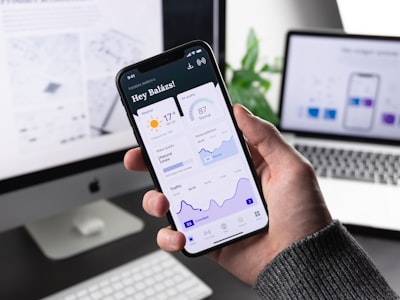
The mobile-first intranet has become a structural piece for companies that need their teams to access critical information from anywhere. In Barcelona, digital transformation is no longer just about having a corporate portal: it demands a real mobile experience, integrations with existing systems and the ability to measure business impact. Q2BSTUDIO approaches this challenge from custom software development, artificial intelligence and process automation, with the goal of delivering measurable return from the first months of every project.
Medium-sized companies in Barcelona live with data spread across ERP, CRM, spreadsheets and collaboration tools. Employees waste time searching for information, managers lack a unified view and critical processes depend on email and manual approvals. A well-designed intranet does more than organize communication: it can handle documents, approvals, incidents, onboarding and knowledge management from a single interface. The key is a mobile-first approach, because mobile devices are what guarantee the tool will be used at the office, at home or on the factory floor.
The success case presented here corresponds to a mid-sized company based in Barcelona, with an operations and back-office team of between twelve and twenty-five people. Before the intervention, the company was carrying the typical inefficiencies of poor integration: orders were confirmed in different systems, managers had to request reports manually and the information needed for decision-making took days to consolidate. The management needed a solution that would not force them to replace their ERP or CRM, but that would unify the employee experience and make every step auditable.
Q2BSTUDIO designed a mobile-first intranet built as a progressive web application, accessible from any smartphone browser and with partial offline functionality. The platform connects through APIs with the ERP, CRM, SharePoint and Microsoft Teams, so employees can consult up-to-date data without jumping between tools. On top of that, an n8n automation engine was implemented for repetitive tasks and an AI system with retrieval augmented generation (RAG) that finds answers in internal documents. AI agents, supervised by people at critical points, classify requests, generate summaries and propose next actions.
From a technical standpoint, the project relied on AWS and Azure cloud architectures to guarantee scalability and security. The intranet was deployed in managed containers, with connectivity to the client's on-premises systems through VPN tunnels and Azure private endpoints. Security was reinforced with role-based access control, an audit trail for every operation and policies aligned with GDPR. In an environment where confidential information flows through mobile devices, cybersecurity is an essential requirement, not an option. Q2BSTUDIO also integrates pentesting and vulnerability review practices into the development lifecycle.
Artificial intelligence was not introduced as an add-on, but as a cross-cutting layer of the intranet. The conversational assistant integrated into the platform answers questions based on the company's real documentation, citing the source and avoiding hallucinations through validation templates. In addition, AI agents were trained to execute concrete actions: create an incident, update a CRM record or send a notification to the right manager. When an action can have significant consequences, the system requests human confirmation. This combination of automation and human supervision reduces errors and increases trust in the team.
So that management could measure impact, Q2BSTUDIO integrated a dashboard based on Power BI and Business Intelligence techniques. Cycle time, workload and SLA compliance indicators are calculated automatically from intranet data. Executives see the same data in real time as the operations team, which eliminates manual reports and makes it possible to detect bottlenecks before they affect customers. This visibility is one of the most valued aspects among managers, because it turns intuition into evidence.
In twelve weeks, the results were compelling. Repetitive manual work fell by 45%, thanks to process automation and unified data entry. End-to-end cycle time improved by 32%, which translated into faster responses to internal and external customers. Operating costs dropped by 28% in the first six months, and process accuracy went from 78% to 92%. The return on investment was reached in nine months, a very reasonable timeframe for this type of transformation.
The deployment was structured in four phases. During the first two weeks, discovery was carried out: process mapping, KPI definition and dependency analysis. In weeks three to six, the MVP was built, including the mobile intranet, core integrations and a first AI assistant. Weeks seven to nine were dedicated to a controlled production rollout, with a pilot group of users who helped refine the experience. Finally, weeks ten to twelve were invested in optimization, training and knowledge transfer to the internal team.
One of the most important lessons is that defining KPIs before development determines the success of the project. When the starting point is measured and concrete objectives are set, any improvement is verifiable and avoids subjective debates. The second lesson is that integration with existing systems matters more than adopting the latest technology. Users trust the tool when they see ERP and CRM data appearing correctly on their mobile phone. The third lesson is that the human factor remains critical: checkpoints with people in sensitive processes generate acceptance and reduce fear of automation.
Many executives wonder if they are ready to take on this kind of project. The short answer is that there is no need to replace existing technology. Q2BSTUDIO works with APIs and adapters to extend the useful life of current systems. An MVP can be ready in four to eight weeks, and the typical investment for an intranet with AI and automation ranges from 5,000 to 60,000 euros, depending on scope. ROI is usually achieved in less than a year because saved hours and better quality offset the initial investment. That is the real value of custom applications: adapting to the exact way each company works.
The mobile-first intranet is not a fad, but a practical response to how we work today: on the move, with dispersed information and the need to decide fast. A company that combines a careful mobile experience, a well-integrated backend, useful AI and measurable data gains competitive advantage. Q2BSTUDIO has proven in Barcelona that it is possible to transform an SME operation in less than three months, without unnecessary friction and with visible results. If your organization wants to stop wasting time looking for information, this kind of initiative is the natural next step.
Q2BSTUDIO offers a free discovery session to assess the starting point, identify the processes with the highest return and define a realistic implementation plan. The goal is for the client to own their technology and be able to manage their AI agents, automations and reports without depending on a provider for every change. Digital transformation does not have to be complicated; it just needs the right approach and support.


