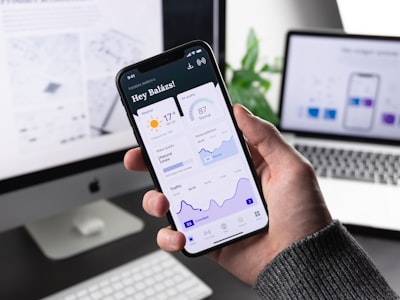
The mobile-first intranet has gone from being a trend to becoming an operational requirement. In Alicante, many companies live with disparate tools: a legacy ERP, a CRM, shared folders, messaging applications. The usual result is that information travels in emails, approvals depend on specific people and no one has a complete view of the business. Q2BSTUDIO has built its value proposition around this problem: instead of selling a closed platform, it designs a custom intranet capable of connecting existing systems and organizing daily work from the mobile device.
To understand why this approach works in Alicante's business fabric, think about the profile of its teams. A salesperson visiting clients needs to check prices, stock and documentation without calling the office. A technician working on an installation needs to log reports and upload photos from a phone. A production manager wants alerts when an order is delayed. A mobile-first intranet is not a luxury; it is the infrastructure that lets these flows happen without friction. Q2BSTUDIO addresses this with its own methodology combining process analysis, software development and cloud deployment.
The starting point is usually a diagnostic. Before writing code, Q2BSTUDIO's team interviews middle managers, operators and administrative staff to identify bottlenecks. Often the problems are not where executives see them. A logistics company in Alicante, for example, discovered that the biggest cost was not transportation but the time administrative staff spent transcribing delivery notes between systems. That finding completely changed the project's priority. Instead of building a generic intranet, a specific document reconciliation module with AI assistance was developed.
This example illustrates Q2BSTUDIO's approach: technology adapts to the process, not the other way around. The company develops custom software because every organization has its own business rules, permissions and exceptions. A standard solution can cover 70% of the need, but the remaining 30% is exactly where competitive differentiation is created. With a custom-designed intranet, employees do not have to change how they work to adapt to software; the software understands how the company works. This is achieved with APIs, integrations and an interface designed for mobile use.
The technological architecture behind a mobile-first intranet is more complex than it seems. An attractive front-end is not enough; data must travel securely between the device, the cloud and on-premises systems. In Q2BSTUDIO's projects, AWS/Azure cloud services are used for hosting, identity providers for authentication and encryption in transit and at rest. Cybersecurity is not a final add-on but a cross-cutting layer defined from the first iteration. Access roles, audit logs and approval flows are part of the product from the start.
Another essential component is artificial intelligence. In an intranet, AI should not be a decorative extra; it must solve specific tasks. That is why Q2BSTUDIO integrates enterprise AI solutions such as semantic search engines that understand natural questions, automatic document classifiers and virtual assistants that guide employees through internal procedures. Additionally, AI agents can execute actions: create an issue, update a record, request a signature. These capabilities are activated with human oversight at critical points, reducing risk and increasing team confidence.
The value of an AI agent inside a mobile-first intranet is also measured in user experience. Instead of navigating menus, the employee types what they need. The system interprets the intention, consults authorized data sources and returns a specific answer. If the request requires a manual step, the agent starts it and makes clear what has been done and what remains pending. This interaction fits naturally with mobile work: fast, direct and frictionless.
Management also benefits. By incorporating BI/Power BI, intranet data becomes real-time dashboards. A manager can see from a phone how many orders are pending, each team's workload or which processes are taking longer than expected. This visibility did not exist when information was spread across spreadsheets. The mobile-first intranet gives leadership the ability to decide with data, not impressions.
In terms of deployment, the project is organized in phases. The first is discovery and definition of metrics. Then a minimum viable product is built to validate the hypothesis with real users. Next, a controlled pilot period opens and finally the remaining modules are deployed. This approach reduces risk and lets employees adopt the tool naturally. In the Alicante case mentioned, the first module was operational in less than two months and business results began to be felt the following quarter.
One of the most common mistakes in this type of project is wanting to replace all systems at once. Q2BSTUDIO recommends the opposite: the intranet should act as an integration layer that respects the investment made in ERP, CRM and SharePoint. Migration is gradual, with objective indicators. This way, return on investment is easier to calculate and impact is visible from the first weeks.
The question many companies ask is whether it is worth starting such a project now. The answer depends on each company's situation, but there is a clear signal: when employees use consumer tools in their daily lives, they do not accept slow intranets or ones designed only for desktop. A poor mobile experience generates rejection and, in the long run, the system ends up underused. Designing mobile-first is not an aesthetic whim but a condition for adoption. And without adoption, there is no return.
Through 2026, demand for intelligent intranets will continue to grow. Q2BSTUDIO, as a software development company based in Alicante, is prepared to accompany SMEs and mid-sized companies in this process. Its proposal combines custom software, AI, automation, cloud, cybersecurity and BI into a single coherent project. The team also works to make the client autonomous in managing the platform, with training, documentation and simple administration portals.
In short, the mobile-first intranet in Alicante in 2026 should not be understood as a technological fad but as an investment in efficiency. Companies that take this step reduce errors, accelerate operating cycles and offer a work experience closer to what their employees expect. Q2BSTUDIO brings technical knowledge and local closeness to make that transformation safe, measurable and sustainable over time.