Corporate sustainability has stopped being a mission statement and has become an operational criterion. Every purchasing decision, every internal process and every digital tool affects the environmental footprint, economic efficiency and people's well-being. The question is no longer whether digitalization helps to be more sustainable, but how to do it without losing productivity or competitiveness.
One of the most effective answers is the mobile intranet. When employees can access processes, documents and communications from anywhere, the organization reduces travel, paper and wasted time. But activating a generic tool is not enough; the intranet must be understood as an ecosystem of custom software applications that reflect the real way each company works.
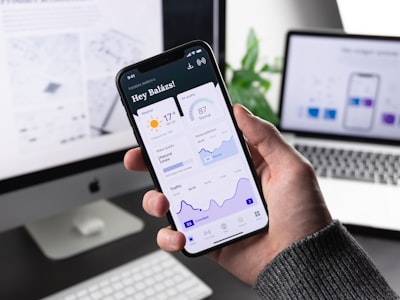
Mobile-first design does not simply mean adapting screens. It means rethinking workflows so that mobile is the first experience: contextual push notifications, offline data capture, automatic synchronization and response times below one second. In this way, mobility becomes a lever for energy and operational efficiency, because duplicated work and unnecessary use of infrastructure are avoided.
User experience in a mobile intranet has a direct impact on sustainability. If the application is fast and intuitive, employees spend less time searching for information and more time deciding. Every minute saved in administrative tasks becomes hours of productive work over the course of a year. Conversely, a confusing interface forces people to repeat processes, multiplies support requests and consumes energy in unnecessary messages and meetings.
The mobile intranet is also an integrator. It connects with ERP, CRM, Active Directory and other corporate sources so that information is available in a single place. Q2BSTUDIO builds these connections with up-to-date and proven integration methods, prioritizing stability, traceability and respect for legacy systems. The goal is to ensure that the intranet is not an island, but the layer that organizes and adds value to data that already exists.
Automation takes sustainability to another level. AI agents can answer frequent questions, classify incidents, update records or anticipate bottlenecks. By delegating these tasks to a machine, errors are reduced, cycles are shortened and human time is freed. That time is the most valuable resource; investing it in continuous improvement, innovation or customer care is a deeply sustainable decision.
For AI agents to deliver real value, they need clean data and clear rules. Q2BSTUDIO helps define decision flows in which the system proposes and a person confirms. This avoids uncritical automation of processes that are not yet standardized. The result is a progressive improvement in efficiency without losing human control over relevant decisions.
The information generated by a mobile intranet produces another benefit: visibility. Integrating the platform with Business Intelligence and Power BI dashboards makes it possible to relate operational data to environmental indicators. For example, a company can monitor energy consumption by department, emissions associated with travel or the percentage of digitalized procedures. When sustainability is measured, it stops being abstract and becomes a manageable objective.
A sustainable mobile intranet project also needs a clear data model. Defining who can modify each piece of data, how long it is kept and which indicators it feeds prevents digital disorder. Data governance is as important as visual design: it establishes rules that protect the company's main asset, its knowledge.
Security is the foundation of any project of this type. A mobile intranet handles personal data, contracts, projects and internal communications; a breach not only causes economic losses, it also damages trust. For this reason, Q2BSTUDIO embeds cybersecurity into the development cycle: multi-factor authentication, encryption, role-based access management and event auditing. In addition, penetration tests and code reviews are applied to minimize vulnerabilities.
Infrastructure also matters. Deploying the intranet on AWS/Azure cloud environments makes it possible to adjust resources to demand and avoid oversized in-house data centers. Major cloud providers invest in energy efficiency and renewable sources, multiplying the positive impact of digitalization. At the same time, the pay-per-use model turns IT into a variable and more predictable cost.
Sustainability also has a social dimension. A mobile intranet accessible from different devices enables people with reduced mobility, remote teams or flexible working hours to work effectively. Equitable access to information reduces dependence on intermediaries and fosters a more transparent culture. In this sense, the intranet stops being a simple repository and becomes a tool for inclusion and empowerment.
Adoption depends as much on people as on technology. Therefore, the intranet design must include contextual training, help material inside the application and an experience that does not require reading manuals. When people understand the daily benefit, resistance to change disappears. Q2BSTUDIO supports that process with an iterative methodology: first high-value functionalities, then improvement cycles based on real usage.
Implementing a mobile intranet does not require replacing all systems at once. A common strategy is to start with a pilot in one department or process, measure results and expand progressively. This approach reduces risks, generates internal success stories and allows the solution to be adjusted before reaching the whole organization.
The return on investment appears on multiple fronts: lower printing costs, fewer internal trips, less manual administrative work and better data quality. In the medium term, the mobile intranet also protects the company against contingencies, because it keeps operations running from anywhere. Sustainability and resilience are two sides of the same coin.
In short, the mobile intranet drives corporate sustainability by transforming the way work is organized. It reduces material and energy waste, improves the quality of working life and provides data to govern strategy with sound criteria. Companies that bet on this combination of technology and purpose gain a difficult-to-imitate advantage.