The mobile-first intranet has become a strategic asset for companies that need to operate without interruption. It is no longer just an internal portal for company news or downloads; it is a way to keep teams, tools and business processes moving when an unexpected event occurs, an office goes down or the organization shifts to a hybrid working model. An intranet accessible from any device and designed with mobile as the first priority is not a technological luxury: it is a piece of operational continuity.
Business continuity depends on an organization's ability to maintain visibility, communication and control in critical situations. Disruptions can come from a cyberattack, a power failure, a pandemic or a natural disaster. In those scenarios, employees need to access updated information, approve workflows, resolve incidents and coordinate with their teams from remote locations. A well-designed mobile intranet makes it possible for those operations to keep moving, reducing the economic impact and protecting the trust of customers and suppliers.
From a technical point of view, the mobile-first approach implies that the experience is designed for small screens and variable connectivity first. This requires a lightweight architecture, high-contrast interfaces and offline features that allow documents to be consulted or data to be recorded without a stable connection. When connectivity is restored, information is synchronized automatically and securely. Applied to the intranet, this approach turns a mobile phone into a complete workstation for sales profiles, plant operators, healthcare staff or technical teams that spend the day away from a desk.
The infrastructure behind a mobile intranet must be ready for high loads and partial failures. This is where AWS or Azure cloud services come into play, with multiple availability zones, load balancers and automatic recovery mechanisms. A platform hosted in the public cloud can scale horizontally when the number of users rises, and it reduces the risk that a single point of failure will stop the whole operation. The cloud also makes it possible to deploy backup environments in geographically distant regions.
A robust infrastructure is not enough if the software does not fit the internal processes of the company. Generic solutions limit continuity because they force organizations to change their workflows to fit a standard product. Custom software development, on the other hand, makes it possible to model approvals, delegations, alerts and access profiles with precision. An intranet built as custom software integrates with the management systems already used by the company, whether ERPs, CRMs or internal databases, and evolves with the operation instead of becoming a barrier. Q2BSTUDIO is a software development and technology company that applies this approach to create mobile intranets focused on measurable results. Custom software development is the foundation for an internal platform that truly protects business continuity.
Artificial intelligence adds a layer of protection and efficiency to the mobile intranet. When a company has large volumes of manuals, policies, procedures and internal knowledge, employees lose time looking for answers. An AI assistant can answer natural language questions, summarize internal documents or guide a user through incident resolution. AI agents can also automate tasks such as classifying requests, updating records or sending notifications to the person responsible. These capabilities are especially useful in crisis situations because they reduce dependence on a small group of specialists and speed up decision-making. Enterprise AI solutions make it possible to deploy these assistants with control over data and access.
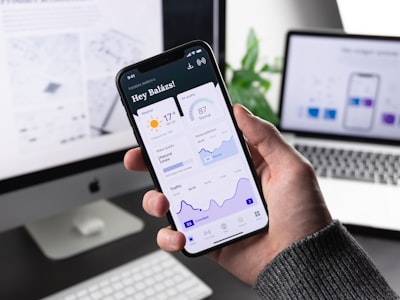
Operational visibility is another pillar of continuity. A mobile intranet must give business leaders a clear view of what is happening in real time: production indicators, open incidents, response times, resource usage or project status. Integration with Business Intelligence platforms, especially Power BI, turns operational data into dashboards accessible from any device. A manager facing a disruption can quickly assess which teams are operational, which processes have slowed down and where intervention is needed. This analytical capability turns the intranet into a management tool, not just a file repository.
Cybersecurity is an inseparable component of any mobile intranet project. Remote access expands the attack surface, so it is essential to implement multi-factor authentication, role-based access control and data protection policies. When the intranet interacts with internal systems, it is advisable to use VPN tunnels, private endpoints in Azure or equivalent mechanisms that prevent critical services from being exposed to the internet. A cybersecurity plan should not be limited to the firewall; it must include continuous monitoring, anomaly detection and incident response. The trust of employees and customers depends on information being visible only to authorized people.
The design of a mobile intranet for continuity should also include a testing plan. Building the platform and waiting for an emergency to discover its weaknesses is not a valid strategy. Organizations must simulate office shutdowns, connectivity loss or access spikes. Recovery tests, backup verification and internal communication exercises are part of a mature continuity program. The more these plans are practiced, the faster the response will be when a real incident occurs. The intranet can include a specific section with action protocols, critical contacts and checklists, so everyone knows what to do in each phase of an emergency.
For a mobile intranet to work as a continuity tool, it must be integrated with the existing application ecosystem. Many companies accumulate information in legacy systems, local databases, spreadsheets and messaging platforms. An isolated intranet does not solve the problem; it needs connectors to management systems, active directories and collaboration tools. Q2BSTUDIO approaches each project with a dependency analysis, a phased roadmap and an integration strategy that avoids replacing systems that already work. The priority is for users to access the right information at the right time, without duplication and with security guarantees.
Adoption by people is another relevant aspect. The best technical platform fails if employees do not use it. A mobile intranet must therefore offer a simple experience, with relevant notifications, smart search and guided processes. Training is part of the project, as are usage metrics that make it possible to detect areas where teams find difficulties. When access to critical information is easy, people trust the intranet and make it their first way of working, even under pressure. Business continuity is not only technology; it is also organizational culture.
The recommended deployment model combines agile deliveries and continuous improvement. A first version of the mobile intranet can be available in weeks if the most critical use cases are prioritized. New features, integrations and AI modules are added progressively from that base. This approach allows the project to generate value from the start and lets teams adjust the product based on real experience. Companies that wait for a perfect project before launching run the risk of arriving late when they need to respond to a disruption.
Investment in a mobile intranet should also be evaluated as an operational insurance policy. The costs of a prolonged shutdown, with employees blocked and customers without answers, easily exceed the budget needed to implement a well-designed platform. A mobile intranet also reduces time spent on repetitive administrative tasks, improves data quality and facilitates collaboration across departments and countries. Organizations that treat it as optional spending are taking on a risk that can materialize at the worst possible moment.
In conclusion, the mobile intranet is much more than an internal communication channel. It is infrastructure that ensures business continuity, preserves organizational knowledge and provides visibility for leadership. To achieve this, it is necessary to combine custom software, artificial intelligence, cloud AWS/Azure, cybersecurity and BI/Power BI dashboards. Q2BSTUDIO supports companies throughout this process, from design and development to operation and evolution of the system, so the organization can respond with agility to any unexpected event. The real test of an intranet is not how it looks on a normal day, but its ability to keep the business moving when everything else fails.