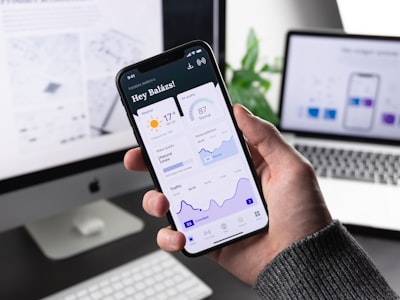
The question of whether a mobile-first intranet can protect sensitive data is increasingly common in executive committees. The short answer is yes, as long as security is not treated as an add-on but as a structural pillar of the project. The fact that employees access from their phones does not in itself introduce a vulnerability; what determines the level of protection is the architecture, access management and encryption applied at every layer.
A well-built mobile-first intranet is not a simple portal squeezed onto small screens. It is a working environment where applications, data and decision flows are designed for mobility, but also for traceability. When an organization handles personal, financial, clinical or strategic information, every interaction must be logged, every permission must be controlled and every connection must be verifiable.
The first security front is the device. A phone can be lost or stolen, so a secure intranet needs mobile device management, application containers and remote wipe capabilities. In this way, access from a personal device does not compromise the rest of the corporate information. Security does not depend on employees being careful; it depends on the system enforcing the same rules in any context.
The second front is identity. The strongest solutions combine multi-factor authentication, single sign-on and access policies based on the principle of least privilege. A password is not enough: the context, connection risk and device trust level must be verified. A zero trust model assumes that no user or network is safe by default, turning the intranet into an active barrier against unauthorized access.
The third front is information. Sensitive data must be encrypted in transit and at rest, with centrally managed keys and periodic rotation. It is also advisable to implement data loss prevention mechanisms to stop critical information from leaking through screenshots, downloads or external sharing. A secure intranet also defines retention periods and removes information when it is no longer needed, reducing the attack surface.
Artificial intelligence adds enormous value, but it also introduces new risks. An assistant that answers questions based on internal documents needs controlled access to sources and an authorization model that prevents an employee from seeing information they are not authorized to see. Techniques such as retrieval-augmented generation (RAG), private deployments of language models and secure connections to on-premises infrastructure come into play here. Q2BSTUDIO integrates these capabilities with AI solutions in Azure or AWS environments, always with encryption and auditing.
Deploying AI agents inside an intranet must be done with caution. An agent can automate tasks, summarize files or update records, but it must operate with least-privilege permissions, human oversight and complete audit logs. Automation cannot become a black box: every automated decision must be auditable. That is why smart organizations start with small workflows, measure results and scale only what proves to be reliable.
Security also depends on infrastructure. An intranet hosted in a private cloud, or in a public cloud with private endpoints, can easily meet the most demanding regulatory requirements. Both AWS and Azure offer advanced networking, encryption and monitoring tools, and allow the intranet traffic to be completely isolated. Q2BSTUDIO designs cloud architectures that separate the data plane from the management plane, avoiding a single component failure compromising the whole system.
Visibility is another pillar. A well-designed dashboard in Power BI allows management to know usage, performance and security indicators without having to request manual reports. However, those reports must also apply row-level security: each manager only sees data from their team or area. The advantage of integrating BI with the intranet is that data governance is centralized and the risk of uncontrolled local copies is reduced.
In organizations with legacy systems, the temptation to replace everything is great, but not always necessary. A secure intranet integrates with the ERP, CRM or active directory through APIs and custom software, extending the useful life of existing investments. What matters is that integrations are documented and protected with mutual authentication, instead of letting systems communicate without controls.
Q2BSTUDIO approaches these projects with a practical methodology. First, it analyzes workflows and the points where sensitive information is most vulnerable. Then it builds a first deliverable in short cycles, with penetration testing and code review. Finally, once in production, it monitors business indicators and adjusts security settings and permissions continuously. This approach combines custom software development, cybersecurity services and automation, with the goal of giving the client autonomy without sacrificing control.
Companies that hesitate about the security of a mobile-first intranet usually share the same fear: that the convenience of mobile access exposes critical information to unacceptable risk. The reality is that risk does not disappear, but it can be managed precisely if the provider understands both technology and business. A well-designed intranet not only protects data, but also increases adoption because it offers the same agile experience employees expect from a consumer app.
Moreover, security management does not end at launch. Threats evolve, permissions change and teams grow. That is why it is essential to have a technology partner that supports the entire lifecycle, updating dependencies, reviewing access and training internal administrators. Q2BSTUDIO delivers web portals that allow clients to manage AI models, monitor costs and adjust workflows without depending on the technical team for every change.
Q2BSTUDIO's working model combines custom software, artificial intelligence and automation in a single platform. This avoids tool fragmentation and allows security decisions to be made in one place. The company not only builds the intranet, but also helps define success indicators, from onboarding time for new employees to the speed of internal processes.
In short, a mobile-first intranet is safe for sensitive data if it is built with layered security architecture, strong identity, end-to-end encryption and a clear AI and cloud strategy. Organizations that adopt this approach achieve a more productive and, at the same time, more resilient working environment. The right question is not whether the mobile phone is secure, but whether the provider knows how to design a system where the mobile phone is just another access point, protected by the same level of control as any other.
If you are evaluating a corporate intranet, the first step is to conduct a security audit and a proof of concept with real use cases. Q2BSTUDIO can help you with that initial phase, bringing experience in cybersecurity, custom software development, AWS/Azure cloud and AI agents. Contact their team to learn how to protect your sensitive data while giving your employees a flawless mobile experience.