
When a company operates in several languages without an intranet designed for that reality, productivity suffers silently: documents are translated at the last minute, employees consult outdated versions, and management loses sight of the overall workflow. In 2026, a mid-size company in Zaragoza was facing exactly that situation. Its operations and back-office team, made up of twelve to twenty-five people, used an ERP, a CRM, SharePoint, Microsoft Teams and several internal tools that were disconnected from one another. The result was predictable: repetitive errors, slow response times, rising operating costs and almost no visibility for business leaders.
Faced with this diagnosis, management evaluated several options. The first was to replace all systems with a full market solution, but the cost and risk of disruption were too high. The second was to hire a traditional consultancy that would deliver a recommendations document, without guaranteeing execution. Finally, Q2BSTUDIO proposed something different: build a multilingual intranet on top of the existing infrastructure, combining custom software, process automation and artificial intelligence models with human supervision. The proposal promised not only a more organised platform, but a measurable change in day-to-day operations.
The technical design started from a clear premise: security cannot be an afterthought. The platform was therefore deployed on an AWS/Azure cloud architecture with VPN tunnels for connections to on-premise systems, role-based access control, complete audit logging and policies aligned with GDPR. Every action inside the intranet is traced, from viewing a document to approving a workflow. In addition, offensive cybersecurity criteria were applied during development, including penetration testing and vulnerability reviews before production. This protection layer was essential for obtaining the approval of the legal team and the security committee without friction.
The multilingual intranet was built as a custom application rather than a generic product. This allowed workflows to reflect the reality of the company, not the other way around. The platform includes an automatic translation service with human review for critical documents, a semantic search engine that understands the user's language, and a notification system that adapts the preferred language according to the profile. For the most frequent queries, AI agents were incorporated to answer questions about internal procedures, holiday policies or the use of corporate tools, reducing the workload of the internal support team. All of this is supported by Q2BSTUDIO's experience in AI solutions applied to real business processes, not isolated experiments.
One of the most common mistakes in intranet projects is treating the platform as an isolated destination. Q2BSTUDIO avoided that trap by connecting the new intranet to the systems the company already used: the ERP for master data, the CRM for commercial information, SharePoint for documents, Microsoft Teams for communication and several custom APIs for internal applications. The integration was not a simple technical connector; an orchestration layer was designed to guarantee data consistency. When an employee updates a customer in the CRM, the intranet reflects the change in real time, and if a workflow fails, the system retries the operation with error handling and observable alerts.
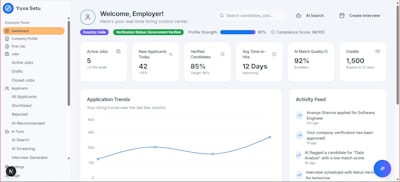
Management needed to stop relying on manual Excel reports. For this reason, the solution included a Business Intelligence module with Power BI and real-time dashboards. Managers can see the evolution of cycle times, workload by department, workflow compliance rates and the accumulated savings from automation. This visibility changed the internal conversation: decisions stopped being based on perceptions and began to rely on verified data. The management committee receives an automatic summary every week with the indicators that matter, without having to ask anyone to prepare a presentation.
The results obtained after twelve weeks exceeded initial expectations. Repetitive manual work was reduced by 45%, freeing valuable hours in the operations team. The cycle time of critical processes, from internal request to final approval, accelerated by 32%. In the first six months, the operating cost of the affected processes dropped by 28%. Workflow accuracy went from an initial 78% to 92%, and return on investment was reached in the ninth month. These figures are not theoretical projections: they correspond to the real case developed by Q2BSTUDIO in Zaragoza during 2026.
The project was executed in four phases, designed to minimise risk. The first two weeks were devoted to deep discovery: mapping current processes, identifying bottlenecks, defining baseline indicators and documenting dependencies between systems. Between week three and week six, a minimum viable product was built with the highest-impact workflows. From week seven to week nine, a controlled rollout was carried out with a pilot group that validated the experience and reported issues. In the last three weeks, workflows were optimised, translation models were adjusted and internal administrators were trained. The result was a stable platform, adopted by the team and with clear performance indicators from day one.
The experience left several lessons for any company that wants to modernise its intranet. The first is that defining KPIs before writing a single line of code is the best predictor of return on investment. The second is that integration with existing systems matters more than choosing the most advanced artificial intelligence model. The third is that human checkpoints in critical decisions reduce risk and improve employee adoption. The fourth is that a phased rollout, with a pilot group and constant communication, prevents resistance to change and accelerates internal acceptance.
Q2BSTUDIO is not a consultancy that delivers reports; it is a software development company with experience in automation, AI and cloud projects. In this case, in addition to building the intranet, it delivered an administration portal so that the company's team could manage workflows, translation models and AI agents without depending on a provider for every change. That autonomy was decisive in keeping the solution alive after launch. Training, documentation and support during the first months ensured that knowledge stayed inside the organisation rather than in an external contract.
A well-designed multilingual intranet is much more than a place to store documents: it is the nervous system that connects people, data and processes. The Zaragoza case shows that this can be achieved without replacing everything that already exists, using a pragmatic and measurable approach. For companies operating in several languages, this capability stops being a competitive advantage and becomes an operational requirement. Having a partner that understands both technology and business, and that delivers quantifiable results, makes the difference between a decorative project and a real transformation.
If your company needs a multilingual intranet or wants to replicate this case in Zaragoza, Q2BSTUDIO offers a free discovery session to analyse the starting point, define the scope and establish a realistic implementation plan. Technology makes sense when it produces results, and that is exactly the kind of project Q2BSTUDIO supports.
